Your Cart is Empty


Finding practical, sustainable materials that genuinely reduce waste can feel overwhelming for American property managers and restaurant owners committed to eco-friendly operations. Bamboo stands out as a versatile, renewable alternative, offering complete biodegradability and rapid regeneration cycles that directly support zero-waste goals. Discover how bamboo solutions transform commercial spaces by lowering waste, cutting costs, and elevating your environmental reputation with proven, stylish products.
| Point | Details |
|---|---|
| Bamboo Supports Zero Waste | Bamboo’s rapid growth and biodegradability align with a zero-waste philosophy, making it an excellent alternative to single-use plastics. |
| Economic Efficiency | Investing in bamboo products reduces long-term costs through durability and lower replacement rates, enhancing profitability. |
| Sustainability Credibility | Utilizing bamboo improves your facility’s environmental reputation, attracting eco-conscious clients and enhancing marketing potential. |
| Adaptability Across Spaces | Bamboo products are versatile and can effectively replace single-use items in various commercial settings, promoting a sustainable shift in operations. |
Zero waste is about eliminating single-use materials and creating circular systems where products get reused, recycled, or naturally biodegrade. Bamboo fits this philosophy perfectly because it’s renewable, durable, and fully biodegradable at end-of-life.
Unlike plastics that linger for centuries, bamboo returns to the earth without toxic residue. This makes it ideal for commercial spaces where waste management directly impacts operating costs and environmental reputation.
Bamboo grows remarkably fast—some species mature in just 3-5 years—without requiring replanting or pesticides. The rapid regeneration cycle means sustainable harvesting doesn’t deplete forests the way timber harvesting does.
More importantly, bamboo products serve multiple lifecycle stages:
This aligns with circular economy principles that keep materials flowing rather than accumulating in landfills.
The real innovation lies in converting all bamboo components into valuable products. Advanced recycling methods now transform bamboo waste into chemicals, biofuels, and new materials, creating zero-waste biorefinery models.
For property managers and restaurant owners, this means:
Here’s what matters to your bottom line: reducing waste cuts disposal costs and attracts environmentally conscious clients. Restaurant guests and building occupants increasingly notice sustainable choices in commercial spaces.
Bamboo solutions like stylish paper towel dispensers and drawer organizers reduce material consumption without sacrificing appearance. They signal genuine commitment to sustainability, not performative greenwashing.
Bamboo’s rapid growth, complete biodegradability, and potential for circular manufacturing make it foundational to true zero-waste commercial operations.
The core concept is simple: zero waste isn’t about perfection—it’s about choosing materials that work with nature instead of against it. Bamboo does exactly that.
Pro tip: Start your zero-waste transition by auditing your highest-waste streams (paper towel use, food storage, packaging) and swap those items to bamboo equivalents first, then expand to other areas as staff adopt the new systems.
Bamboo’s versatility makes it ideal for replacing single-use plastics across nearly every commercial space. From kitchen to restroom to storage areas, bamboo products substitute conventional materials that typically end up in landfills within weeks.
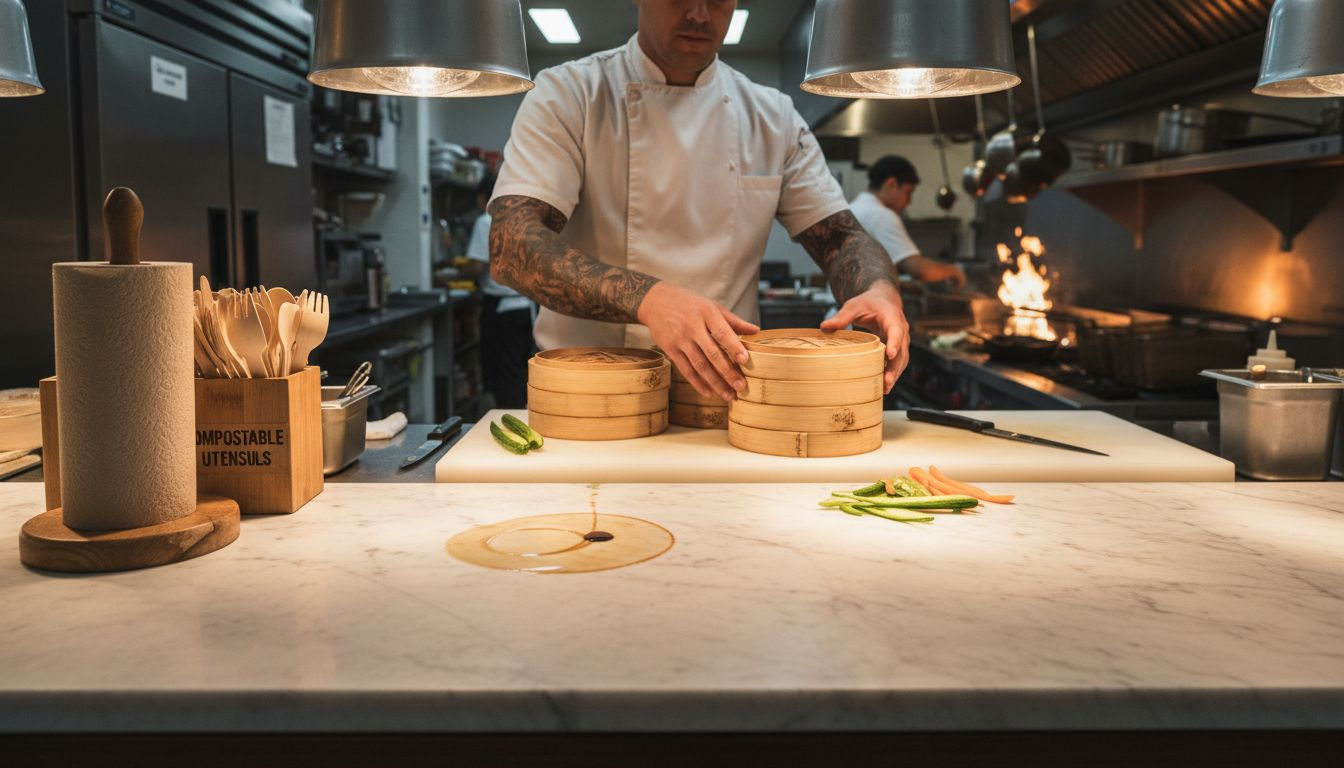
The key difference: bamboo items are designed for durability and reuse rather than disposal. This shift in mindset directly reduces your facility’s waste footprint and operating costs.
Restaurant kitchens generate enormous amounts of plastic wrap, food storage containers, and paper waste. Bamboo replacements tackle this head-on.
Food storage and organization products eliminate the need for plastic containers and disposable wrapping:
These items last years instead of days, dramatically cutting replacement frequency and waste volume.
Paper towel dispensers represent one of the biggest waste opportunities in any commercial facility. Traditional plastic dispensers end up in dumpsters after a few years of use.
Bamboo paper towel dispensers are stylish, durable, and built to last a decade or longer. They reduce visual clutter while signaling sustainability to guests and employees. The aesthetic advantage matters—sleek bamboo finishes upgrade restroom appearance compared to institutional plastic.
Additional restroom solutions include:
Clutter drives waste. When staff can’t find supplies, they buy duplicates or use inefficient alternatives.
Bamboo drawer organizers, cabinet dividers, and shelving systems create visible, accessible storage that encourages reuse over replacement. Property managers see immediate cost savings when supplies stay organized and inventory doesn’t get wasted.
These organizational products also apply to:
Bamboo fabric and fiber products represent the next frontier in zero-waste commercial spaces. Bamboo textiles are softer than many alternatives and fully biodegradable at end-of-life.
Applications include staff uniforms, kitchen towels, and cleaning cloths that replace disposable paper alternatives. Over a year, these reduce paper consumption and associated waste streams significantly.
Bamboo products eliminate the “disposable” mindset by being built for durability, making zero waste achievable rather than theoretical.
Pro tip: Audit your highest-waste category first (likely paper towels in restrooms or food storage in kitchens) and replace those items with bamboo solutions before expanding to other areas—this delivers immediate cost savings and staff buy-in for broader zero-waste adoption.
Bamboo delivers genuine environmental advantages, but it’s not a perfect solution. Understanding both sides helps you make informed purchasing decisions for your commercial space and set realistic sustainability expectations.
The real value of bamboo lies in recognizing where it excels and where alternatives might work better.
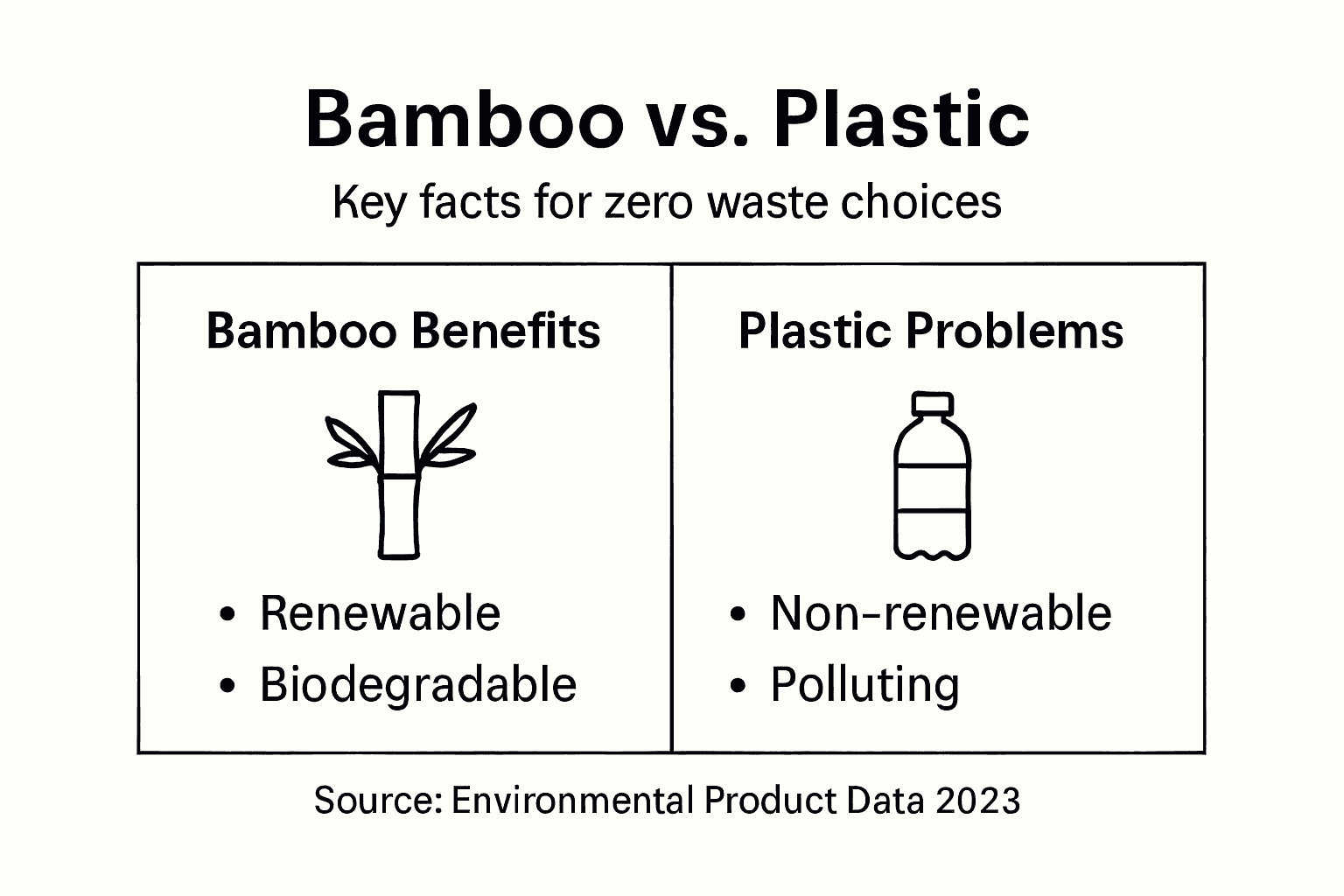
Bamboo grows faster than almost any other plant used in manufacturing. Some species mature in 3-5 years, compared to 20-30 years for hardwood trees. This rapid regeneration cycle eliminates replanting requirements while maintaining carbon sequestration benefits.
Key benefits include:
Bamboo’s environmental benefits extend beyond the product itself. Bamboo forests support biodiversity and require minimal intervention once established, reducing agricultural pressures on natural ecosystems.
For property managers and restaurant owners, durability matters most. A bamboo paper towel dispenser lasting 10 years beats replacing plastic alternatives every 2-3 years. The math works: fewer replacements mean lower procurement costs and reduced landfill contributions.
Bamboo isn’t perfect, and acknowledging limitations builds credibility. Not all bamboo species perform equally—mechanical strength varies significantly depending on species, growth conditions, and processing methods.
Common challenges include:
Bamboo processing methods impact overall sustainability significantly. Some manufacturers use toxic chemicals during treatment, offsetting environmental benefits. This is why supplier transparency matters—choose vendors who disclose their processing approaches.
Cost can be higher upfront compared to plastics, though lifetime value favors bamboo. Transportation from Asia adds carbon emissions for U.S.-based facilities, though this is offset by the product’s lifespan.
Summary of core benefits and limitations of bamboo in commercial use:
| Aspect | Benefit | Limitation |
|---|---|---|
| Growth Cycle | Rapid, 3-5 years | Not all species equal |
| Durability | High tensile strength | Decay in moisture without sealing |
| Disposal | Biodegrades safely | Some require chemical treatment |
| Procurement | Supports eco-marketing | Upfront cost, transport emissions |
| Maintenance | Minimal after installation | Needs protective finish for longevity |
Balancing benefits and limitations means asking specific questions before buying. Verify that suppliers use non-toxic processing methods and provide durability guarantees.
For your facility:
Bamboo works best when you treat it as a long-term investment rather than a quick sustainability fix.
The limitations dissolve when bamboo replaces plastic waste streams directly. Yes, processing has environmental costs. But those costs spread across a decade-long product lifespan beat creating new plastic waste every few months.
Pro tip: Before purchasing bamboo products at scale, request samples for your specific use case—test how they handle your actual moisture levels, temperature changes, and cleaning protocols to confirm they’ll deliver the durability advantage you’re counting on.
When evaluating sustainable solutions for your commercial space, the comparison isn’t close. Bamboo outperforms most conventional materials on environmental impact, durability, and long-term cost efficiency. But understanding the specifics helps you justify the investment to stakeholders.
The numbers tell a compelling story for eco-conscious business decisions.
Life cycle assessments demonstrate bamboo reduces carbon footprints by 46.2% to 87.6% compared to traditional materials like steel, concrete, and plastics. This dramatic difference stems from bamboo’s rapid growth cycle and minimal processing requirements.
Consider the comparison:
For restaurant owners and property managers tracking sustainability metrics, bamboo delivers measurable environmental advantages that impress guests, tenants, and auditors.
Plastic paper towel dispensers typically survive 2-3 years before cracking or failing. Steel alternatives last longer but corrode in humid restroom environments. Bamboo dispensers designed for commercial use last 10+ years with basic maintenance.
This longevity difference cuts procurement costs dramatically. Replacing plastic dispensers four times costs more than purchasing one quality bamboo unit upfront, even at a premium price.
Here’s where the comparison becomes stark. At end-of-life, bamboo products can be upcycled or safely incinerated, creating value through energy recovery or returning to soil as compost.
Conventional alternatives create waste:
Bamboo eliminates this liability. Your facility can compost expired organizers and dispensers through commercial composting services, aligning with genuine zero-waste goals.
Initial bamboo costs run 20-40% higher than plastic equivalents. But spread across a decade, the math shifts dramatically. A $150 bamboo dispenser costs $15 annually versus $80 annually for plastic replacements.
Plus, you avoid disposal costs and reduce procurement labor for frequent replacements.
Bamboo’s regenerative cycle, durability, and complete biodegradability make it the only option that genuinely supports zero-waste operations, not just delay landfill impact.
The comparison is straightforward: conventional materials prioritize short-term affordability while pushing environmental costs forward. Bamboo prioritizes long-term value and genuine sustainability.
Here’s how bamboo compares to conventional alternatives for commercial zero waste initiatives:
| Criteria | Bamboo | Plastic | Steel | Hardwood |
|---|---|---|---|---|
| Maturity Time | 3-5 years | N/A (synthetic) | N/A (mined) | 20-30 years |
| Biodegradability | Fully, within months | Not biodegradable | Not biodegradable | Slow biodegradation |
| Upfront Cost | 20-40% higher | Lowest | Moderate | High |
| Lifespan (Years) | 10+ | 2-3 | 7-10 | 8-15 |
| Carbon Footprint | Very low | Very high | High | Moderate |
| End-of-Life Options | Compost, incinerate | Landfill only | Recycle (energy-intensive) | Landfill, slow decay |
Pro tip: Build a cost comparison spreadsheet showing 10-year total cost of ownership (purchase price plus replacement and disposal costs) for bamboo versus conventional alternatives—this business-focused data resonates with decision-makers and justifies premium pricing to your team.
Bamboo isn’t just an environmental choice—it’s a sound financial investment for commercial spaces. The numbers reveal that sustainable solutions deliver measurable returns while reducing your facility’s ecological footprint. Understanding both dimensions helps you build a compelling business case for stakeholders.
Investing in bamboo solutions creates value on multiple levels simultaneously.
Bamboo’s global market exceeds USD 41 billion and continues expanding as businesses recognize the financial benefits of sustainable materials. This growth reflects genuine demand from companies seeking long-term cost reductions, not just environmental compliance.
For your facility, this market growth means:
The bamboo industry creates sustainable livelihoods globally while driving green innovation. When you purchase bamboo products, you’re supporting an economic model that rewards sustainable practices rather than extractive resource consumption.
A bamboo paper towel dispenser costs roughly $150 upfront. A plastic equivalent costs $40 but requires replacement every 2-3 years. Over a decade, you’ll purchase plastic dispensers four times—totaling $160 in acquisition costs plus disposal fees.
The bamboo unit costs less overall and generates zero disposal costs. This simple math applies across your entire product category—organizers, trash systems, food storage solutions.
Breakdown of 10-year costs:
Carbon sequestration from bamboo growth isn’t just environmental—it translates to measurable business advantages. Facilities can market genuine sustainability credentials to attract eco-conscious tenants, guests, and employees.
Value-added bamboo products support zero-waste business models by enabling closed-loop operations. Bamboo residues generate biochar and bio-energy, meaning waste becomes a resource. Your facility can participate in this circular economy by composting expired bamboo items instead of paying for disposal.
Environmental benefits with financial upside:
Present data in terms your decision-makers understand: cost per unit over lifespan, waste reduction percentages, and reputation benefits. Quantify the environmental impact using verified carbon sequestration rates.
Key metrics to track:
Bamboo solutions deliver genuine financial returns while advancing environmental goals—they’re not competing priorities, they’re aligned outcomes.
The analysis is straightforward: sustainable doesn’t mean sacrificing profitability. Bamboo products cost less over time while improving your facility’s environmental profile and market positioning.
Pro tip: Create a simple spreadsheet showing 10-year total cost of ownership, carbon sequestration benefits, and waste diversion metrics—this integrated financial-environmental analysis convinces budget-conscious decision-makers more effectively than environmental claims alone.
The article highlights the critical challenge of reducing single-use waste and transitioning to truly circular systems that align with zero waste principles. You want durable, stylish, and sustainable products that replace plastics while promoting biodegradability and long-term cost savings. With concerns about waste disposal expenses, environmental impact, and facility reputation, bamboo emerges as the ideal material to make this change meaningful and achievable.
At Cozee Bay, we understand these pain points and offer a curated selection of premium bamboo products designed specifically for zero waste commercial and residential spaces. From our highly durable bamboo paper towel dispensers to wrap and foil dispensers, food bag organizers, and drawer organizers, each item is crafted to reduce waste, enhance organization, and reinforce your commitment to sustainability. Choosing our bamboo solutions means investing in quality, eco-conscious materials that fully biodegrade, lower your operational costs, and make a visible statement to guests and employees.
Take the first step toward a zero waste future today.

Explore our full range of eco-friendly bamboo products at Cozee Bay. Bring style, durability, and sustainability together in your space by browsing our selection of paper towel dispensers, food bag organizers, and more. Make the switch now and enjoy free shipping within the contiguous U.S. while showing your genuine commitment to environmental responsibility.
Bamboo offers multiple benefits for zero waste solutions, including rapid growth without replanting, complete biodegradability, and durability. It helps reduce reliance on single-use plastics and can be repurposed or composted at end-of-life, aligning perfectly with circular economy principles.
Bamboo products like dispensers, organizers, and food storage items help eliminate single-use plastics and reduce landfill contributions. They are designed for longevity and reuse, making them effective in driving down operating costs and enhancing environmental reputations in commercial settings.
Common bamboo products for kitchens include food storage organizers, wrap dispensers, and compostable utensils. For restrooms, bamboo paper towel dispensers, soap dispensers, and towel racks can significantly cut down on paper waste, offering sustainable alternatives to traditional materials.
While bamboo has many advantages, it does have some limitations. These can include susceptibility to pests without proper treatment, decay risk in high-moisture environments, and variations in strength depending on the species and processing methods. It’s crucial to consider supplier transparency and processing methods when purchasing bamboo products.
Comments will be approved before showing up.