Your Cart is Empty


TL;DR:
- Indoor bamboo wall design involves installing panels, slat systems, or decorative art to create natural, eco-friendly interiors. Limiting bamboo to one accent wall and choosing durable Moso Bamboo ensures a stylish, long-lasting result. Proper installation, lighting, and maintenance enhance the aesthetic and longevity of bamboo wall features.
Bamboo wall design indoor is defined as the practice of installing bamboo panels, slat systems, or decorative bamboo art on interior walls to create natural, stylish, and eco-friendly spaces. As of 2026, three primary treatment categories exist for residential use: solid bamboo panels, individual slat systems, and sculptural art pieces. Bamboo is one of the fastest-renewing natural materials on earth, which makes it a top choice for sustainable interior design. Premium grades like Moso Bamboo are engineered to resist warping and cracking, giving you a wall treatment that holds up beautifully for years.
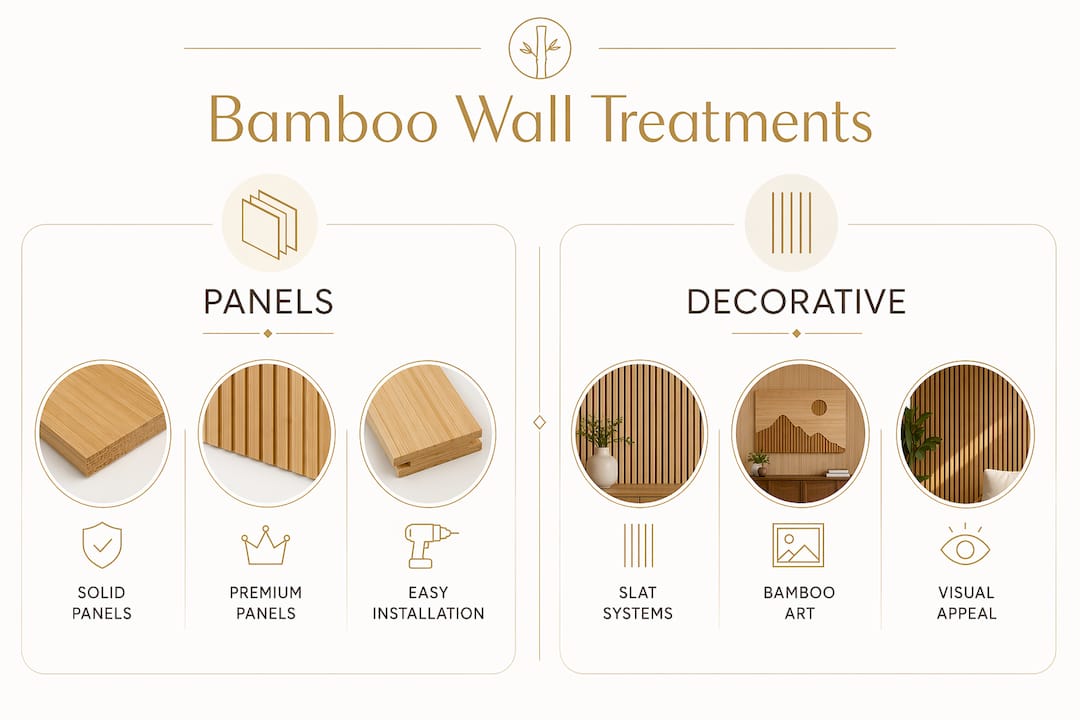
Bamboo wall treatments fall into three distinct categories, each with its own look, installation method, and ideal application.
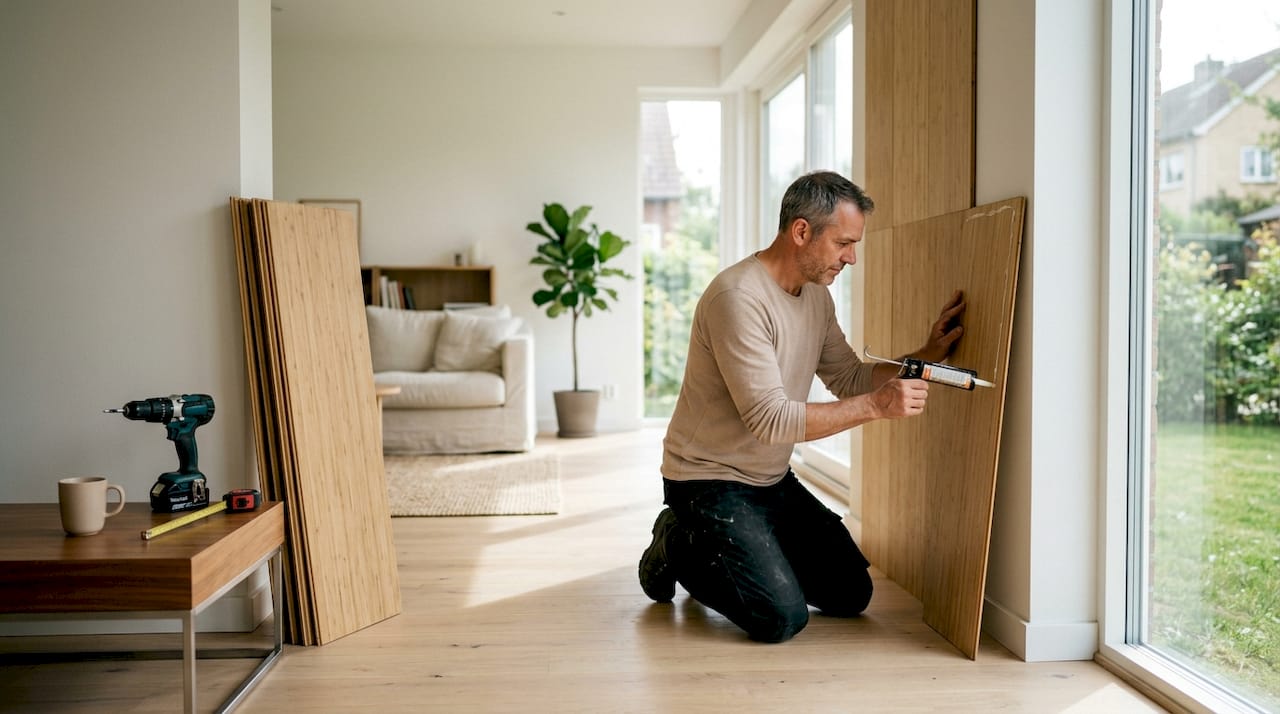
Solid bamboo panels are engineered, laminated sheets that install like standard sheet goods. They typically come in 4×8-foot dimensions and are secured with construction adhesive and finish nails. Panel finishes include horizontal grain, vertical grain, and woven patterns, so you can match almost any interior style from mid-century modern to coastal casual.
Individual bamboo slat or pole systems use poles typically ranging from 1–3 inches in diameter, arranged vertically or horizontally with deliberate spacing between each piece. That spacing is not just decorative. It creates depth, allows airflow, and opens up opportunities for hidden LED lighting. Slat systems take more time to install than panels but deliver a more textural, architectural result.
Decorative bamboo art pieces include woven panels, framed bamboo mats, and sculptural wall hangings. These require no structural installation and work well for renters or anyone who wants to test the look before committing to a full wall treatment.
| Treatment type | Best for | Installation complexity | Durability |
|---|---|---|---|
| Solid bamboo panels | Full accent walls, large rooms | Moderate | High |
| Individual slat systems | Entryways, partitions, feature walls | High | High |
| Decorative art pieces | Accents, renters, small spaces | Low | Moderate |
Premium panels are typically crafted from Moso Bamboo, which is specifically engineered to resist the warping and deformation caused by everyday indoor temperature and humidity swings. That engineering matters most in rooms like kitchens and bathrooms where conditions fluctuate.
The single biggest design mistake with indoor bamboo decor is using too much of it. Covering every wall in a room with bamboo quickly produces a dated tiki-bar look rather than a modern, sophisticated one. Limit bamboo to one accent wall or a specific focal point, and the material reads as intentional and refined.
Here are the most effective design approaches by room type:
Pro Tip: Route LED strip lights behind bamboo slat walls during installation. The gaps between poles act as a natural diffuser, producing a warm, glowing effect that looks far more expensive than it actually is.
Lighting integration is the detail that separates a good bamboo wall from a great one. The gaps between bamboo poles serve as a hidden chase for LED strip lighting, creating a dimensional, backlit effect that elevates the entire room. Plan for this during installation, not after.
Good installation starts before you open a single package of bamboo. Skipping the prep steps is the fastest way to end up with panels that buckle, crack, or look uneven within a year.
Pro Tip: In high-humidity rooms like bathrooms, apply two coats of water-based polyurethane and allow full cure time between coats. One coat is rarely enough for long-term moisture resistance.
For rooms where you plan to use home decor fabric alongside bamboo wall panels, finalize your wall installation first. Fabric elements like curtains or upholstered panels are easier to fit around a finished bamboo wall than the other way around.
Bamboo walls are low maintenance, but they are not no maintenance. A simple routine keeps them looking sharp for years.
Choosing Moso Bamboo from the start reduces how often you need to intervene. Its engineered density makes it significantly more resistant to the everyday stresses that cause cheaper bamboo products to fail early.
Bamboo’s sustainability and rapid renewability make it a natural fit for green building goals, and the design possibilities go well beyond a simple accent wall.
The most forward-thinking interiors treat bamboo not as a trend but as a material system. When bamboo appears on the walls, the floor, and in the furniture, the room tells a coherent story about how the homeowner lives and what they value.
Bamboo wall design indoor works best when you limit coverage to one accent wall, use Moso Bamboo for durability, and plan for LED lighting integration from the start.
| Point | Details |
|---|---|
| Limit bamboo coverage | Use bamboo on one accent wall or focal point to avoid a dated, cluttered look. |
| Choose Moso Bamboo | Moso Bamboo resists warping and cracking better than standard bamboo grades. |
| Acclimate before installing | Leave bamboo in the room for 48–72 hours before installation to prevent expansion issues. |
| Use the right cutting tools | A high-tooth-count miter saw or Japanese pull saw prevents fiber fraying on cuts. |
| Seal for moisture resistance | Apply water-based polyurethane or tung oil to protect bamboo in humid rooms. |
The homeowners who get bamboo walls right share one habit: they treat restraint as a design decision. The ones who struggle almost always go too far, covering three or four walls and then wondering why the room feels heavy and dated. One well-placed bamboo accent wall, lit from behind with LED strips, does more for a room than four walls of bamboo ever could.
I’ve also seen too many DIY installations fail because of the acclimation step being skipped. Bamboo that goes straight from a cold garage to a warm, humid bathroom will move. Panels gap, slats bow, and the whole project looks amateur within months. Forty-eight hours of patience prevents years of regret.
The detail I find most underrated is lighting integration. Most people think of it as a bonus. It’s actually the feature that makes a bamboo slat wall look like it belongs in an architectural magazine rather than a weekend project. Plan the wiring before the first slat goes up.
Bamboo’s natural variations, the slight color shifts, the grain irregularities, are not flaws. They are the material’s character. Embrace them. A wall that looks perfectly uniform is probably not bamboo at all. The imperfections are what make the space feel alive and authentic.
Bamboo is not a passing trend in sustainable interior design. It is a material with genuine performance credentials, a strong environmental story, and a visual warmth that synthetic alternatives cannot match. The designers and homeowners who treat it seriously get results that hold up for a decade or more.
— Cozee
Cozee-bay carries a curated selection of eco-friendly bamboo products crafted for homeowners and designers who want quality they can feel good about. Every piece reflects the same commitment to natural materials, clean craftsmanship, and lasting style that makes bamboo such a rewarding choice for indoor spaces.

Whether you’re planning a full bamboo accent wall or looking for the right decorative pieces to pull a room together, Cozee-bay’s bamboo wall design ideas blog gives you the inspiration and practical guidance to get it done with confidence. Free shipping is available within the contiguous U.S., and every purchase is backed by a money-back guarantee.
Bamboo wall design indoor refers to using bamboo panels, slat systems, or decorative bamboo art on interior walls to create natural, eco-friendly spaces. The three main treatment types are solid panels, individual slat systems, and sculptural art pieces.
Moso Bamboo is the preferred grade for interior wall panels because it is engineered to resist warping, cracking, and deformation from indoor humidity and temperature changes.
Bamboo slat walls are installed using construction adhesive and mechanical fasteners on a flat, clean, dry surface. Bamboo should acclimate in the room for 48–72 hours before installation, and cuts should be made with a high-tooth-count miter saw or Japanese pull saw.
Yes. Bamboo wall panels sealed with water-based polyurethane or tung oil resist mold and moisture damage, making them suitable for bathrooms and other high-humidity indoor spaces.
Dust bamboo walls regularly with a dry microfiber cloth, wipe with a barely damp cloth when needed, and reapply sealant every two to three years. Keep bamboo at least 12 inches away from direct heat sources to prevent cracking.
Comments will be approved before showing up.