Your Cart is Empty


TL;DR:
- Bamboo plant decoration in living rooms is achievable for both renters and homeowners when choosing the right plant and placement. Proper identification, styling, and consistent care are essential for healthy, attractive bamboo displays that enhance calming, natural decor. Focusing on fundamental plant health practices yields better results than following fleeting styling trends.
You want your living room to feel calming, natural, and a little bit intentional, but every time you eye those beautiful bamboo arrangements online, you wonder whether you can actually pull it off at home. Bamboo plant decoration in living room spaces is genuinely achievable for renters and homeowners alike, but the difference between a thriving, gorgeous display and a pile of yellowing stalks usually comes down to two things: choosing the right plant and knowing exactly where to put it. This guide walks you through everything you need, from picking your variety to styling it like you meant it all along.
| Point | Details |
|---|---|
| Choose the right bamboo type | Distinguish lucky bamboo from true bamboo to meet their differing light and watering needs. |
| Place bamboo in filtered light | Bright indirect light near east or north windows keeps bamboo healthy without leaf scorch. |
| Water quality matters | Use distilled or filtered water and change weekly if growing lucky bamboo in water culture. |
| Style with layering | Combine tall and trailing plants or group in threes for balanced, stylish bamboo décor. |
| Focus on fundamentals | Consistent care beats trends — monitor light, water, and pruning for thriving plants. |
Before you buy anything, you need to answer one critical question: is it lucky bamboo or true bamboo? These two plants look similar enough in photos to cause real confusion, and that confusion causes most of the yellowing, drooping, and dying you see when people give up on indoor bamboo altogether.
As indoor bamboo care guides clarify, lucky bamboo is actually a Dracaena species that prefers indirect light and water culture, while true bamboo needs deeper soil and brighter light. That distinction changes almost every decision you make, including pot type, watering routine, and window placement.
Here is a quick breakdown to keep things clear:
Getting this identification right before you shop saves you money and frustration. You can also check out helpful bamboo plant comparisons to see how these varieties stack up side by side.
With a clear understanding of the main plant types, you can now explore popular bamboo options suited for living room decor.
Once you know what you are working with, the fun part starts. Choosing the right variety shapes the entire mood of your living room greenery, and the options are more varied than most people realize.
Lucky bamboo is the go-to for modern, minimalist spaces. Florists and home decor shops often sell it in braided, twisted, or spiral configurations that turn the plant itself into a piece of art. A tall single stalk in a clear glass vase looks stunning on a coffee table. A braided arrangement in a brushed ceramic pot works beautifully on a bookshelf. Because lucky bamboo stays relatively small, it fits into tight spaces without overwhelming the room.
True bamboo brings a more dramatic, architectural quality to your decor. Dwarf bamboo varieties and clumping indoor types (like Bambusa ventricosa, sometimes called Buddha belly bamboo) give you that lush, full-screen effect that makes a corner feel like a garden. These work best in larger living rooms where there is space to let the plant breathe and grow upward.
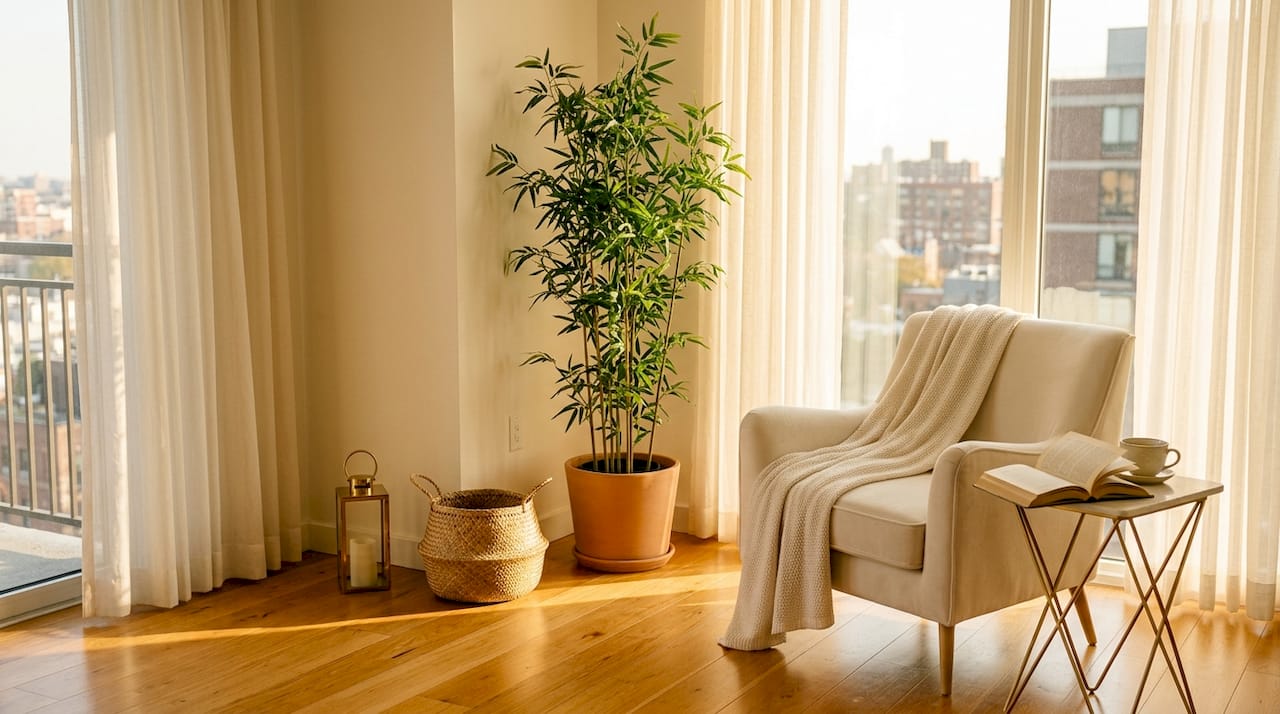
As Elle Decor’s lucky bamboo guide points out, lucky bamboo is adaptable and forgiving, perfect for beginners, while true bamboos offer a more dramatic, natural look if space and care allow. That is a fair summary of the trade-off. If you are new to indoor plants, lucky bamboo gives you a lot of grace while you find your rhythm.
Here are the most popular choices, ranked by ease of care for beginners:
Pro Tip: If you love the look of true bamboo but live in a smaller apartment, try a single dwarf clumping variety in a tall, narrow planter. It gives you the vertical drama without crowding the room.
For even more inspiration, browse smart bamboo decor ideas to see how these varieties translate into real living room setups.
Having identified the plant type and options, it is helpful to understand how to style and position bamboo plants effectively in your living room.
Bamboo plant styling is where most people either nail the look or accidentally make their living room feel cluttered. A few placement rules go a long way.
Creating a calming space with bamboo is less about perfection and more about keeping the plant healthy and giving it room to be the focal point. Clutter around the base of the pot undermines the whole effect.
Pro Tip: Place lucky bamboo on a small elevated stand or stacked books to bring it to eye level when seated. That slight elevation makes it feel intentional rather than like an afterthought.
For more ideas on weaving bamboo into your overall room design, check out these eco-friendly bamboo design tips.
This decision trips up a lot of people because both options work, but each has distinct trade-offs in terms of aesthetics and ongoing maintenance. Here is a direct comparison.
| Feature | Water culture | Soil planting |
|---|---|---|
| Visual aesthetic | Clean, modern, roots visible | Natural, earthy, lush |
| Maintenance level | Weekly water changes required | Water when top inch is dry |
| Best container | Transparent glass vase | Deep pot with drainage holes |
| Nutrient source | Occasional liquid fertilizer | Potting mix provides nutrients |
| Risk factors | Algae, chlorine damage | Root rot from overwatering |
| Best for | Lucky bamboo, minimalist decor | True bamboo, naturalistic style |
Water culture using transparent vases with decorative pebbles is a genuinely beautiful look. The roots and stalks become part of the display. But as Elle Decor’s water culture guide explains, water culture demands weekly water changes with distilled or filtered water to prevent algae and brown leaf tips. Tap water with chlorine or fluoride will visibly damage the plant over a few weeks.
Soil planting gives your bamboo more stable nutrition and works well for larger or more mature plants. The trade-off is that you need to monitor moisture carefully. Too dry and the tips brown; too wet and the roots rot.
Take a look at these lucky bamboo design ideas for visual examples of both approaches styled in real living rooms.
Understanding these care options helps in making an informed decision about your bamboo plant décor and ongoing upkeep.
A beautiful bamboo arrangement only stays beautiful with consistent, simple care. The good news is that once you establish a routine, it takes very little time each week.
“Key care essentials for lucky bamboo include proper lighting, water quality, regular pruning, and avoiding environmental stressors like drafts or temperature swings.” — The Old Farmer’s Almanac
Pro Tip: If your lucky bamboo’s leaves are turning yellow at the tips but the rest of the plant looks fine, tap water with fluoride is almost always the culprit. Switch to filtered water for two weeks and you will see the difference.
For a full walkthrough of each care step, this bamboo care step-by-step guide has you covered.
With these care essentials in place, you will enjoy beautiful bamboo décor that enhances your living room for years to come.
Here is something you will not read in most decor guides: the majority of people who struggle with indoor bamboo are not struggling because of bad taste or poor design choices. They are struggling because they skipped the fundamentals and went straight to aesthetics.
We see this pattern constantly. Someone buys a gorgeous braided lucky bamboo arrangement, places it in a dark corner because it looks dramatic there, waters it with tap water, and then wonders why it is yellowing within a month. The problem was never the plant or the pot. It was the corner and the tap water.
As Martha Stewart’s lucky bamboo care advice confirms, the biggest success factor for lucky bamboo is nailing fundamentals: correct light, clean water, and regular hydration. Experienced horticulturists say this consistently because it is consistently true.
Water quality is the most overlooked variable in bamboo plant decoration in living room settings. Chlorine and fluoride in regular tap water gradually damage the roots of lucky bamboo, leading to slow decline that people often blame on everything but the water. Switching to distilled or filtered water is one of the simplest changes you can make, and it costs almost nothing.
The other habit worth building is what we call leaf feedback. Instead of sticking to a rigid watering or rotation schedule, look at what your plant is telling you. Pale, washed-out leaves mean too much sun. Leggy growth leaning hard toward one side means not enough light from above. Small adjustments over time, guided by what you observe, beat any fixed routine.
Invest in care first. The styling will feel effortless once your bamboo is actually thriving. Explore these essential bamboo care tips to build that solid foundation before you focus on the aesthetics.
Ready to bring bamboo plants into your living room and keep them looking their best? Cozee Bay’s curated selection of eco-friendly bamboo home accents gives you the tools to create a natural, inviting space without the guesswork. From beautifully crafted bamboo accessories to practical organizational pieces that keep your plant corners clean and uncluttered, everything at Cozee Bay is designed with sustainability and real-home functionality in mind.

Their bamboo decor ideas blog is packed with practical styling guides and care advice written specifically for eco-conscious homeowners and renters. Whether you are just getting started or looking to refresh your current setup, the Cozee Bay bamboo decor collection makes it easy to find products that match your aesthetic and your values. Check out their smart bamboo living room ideas for room-by-room inspiration you can act on today.
Lucky bamboo is actually a Dracaena species adapted to low light and often grown in water, while true bamboo is a grass that requires brighter light and deeper soil planting to thrive indoors.
Lucky bamboo thrives in filtered light near east or north-facing windows and can handle low-light conditions, but direct afternoon sun will scorch the leaves and cause brown tips quickly.
Yes, lucky bamboo grows well in water, but water quality is critical: use distilled or filtered water and change it every week to prevent chlorine damage, fluoride buildup, and algae growth in the vase.
Group plants in threes, mix upright bamboo with a trailing plant at a lower level, and place the arrangement in a naturally bright, uncluttered spot for a layered, intentional look that feels both designed and effortless.
Comments will be approved before showing up.