Your Cart is Empty


TL;DR:
- Stylishly organizing counters requires keeping only essential items and making them look intentional. Using the rule of three, trays, and natural materials creates cohesive, purposeful counter spaces. Regular daily resets and sustainable choices like bamboo help maintain a tidy, attractive kitchen environment.
Styling countertop organizers well comes down to one discipline: keep only what earns its place, and make what stays look intentional. A cluttered counter isn’t just an eyesore. It slows you down every single morning. The good news? A few clear principles fix it fast.
The Rule of Three is the fastest way to make a countertop look styled rather than stored. Group three objects together, vary their heights, and your eye reads the whole cluster as one finished vignette.
Pro Tip: Place your tallest item toward the back of the tray and your flattest piece at the front. This creates depth and keeps the grouping from looking flat when viewed from across the room.
For more ideas on shelf styling techniques that translate directly to countertops, the Rule of Three applies just as powerfully there.
The fastest fix for a chaotic counter is a simple audit. Organizing professionals treat countertops as valuable workspace, not storage. When non-daily items crowd that space, the whole kitchen feels harder to use.
Target: keep a substantial portion of your counter surface empty. That open space is what makes the styled clusters read as designed rather than just tidy.
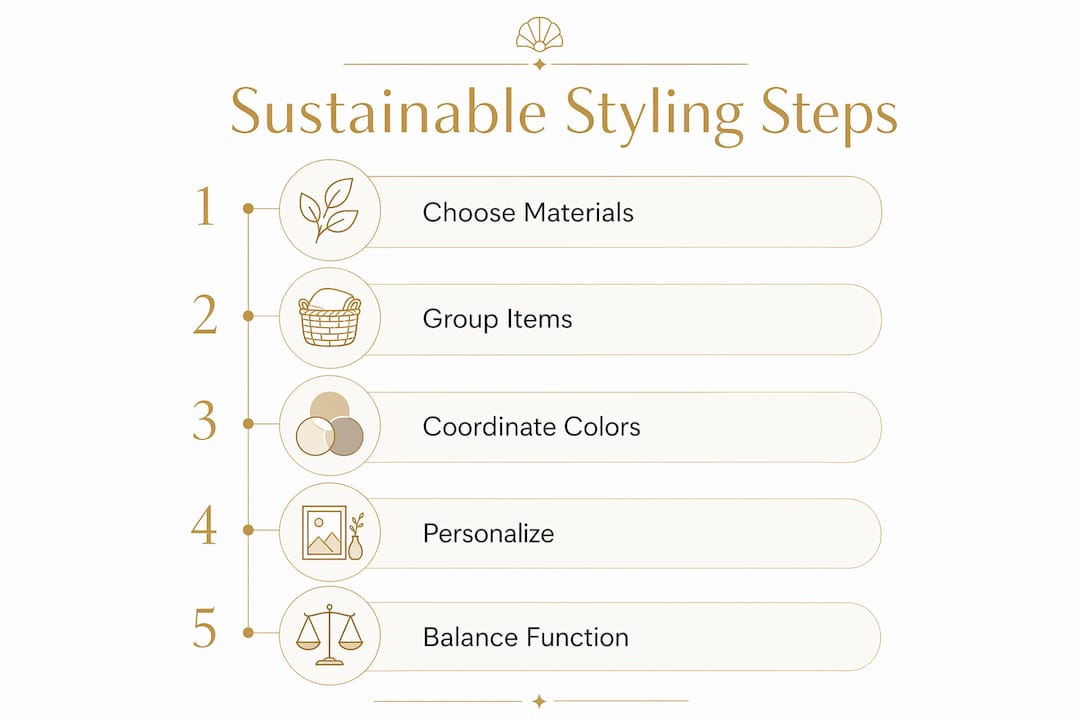
Mismatched metals and materials are the quiet culprit behind counters that look busy even when they’re not overcrowded. The fix is simpler than most people expect.
For a deeper look at sustainable kitchen organization and how material choices affect both style and environmental impact, Cozee-bay’s resource library covers it thoroughly.
Cozee-bay handcrafts its countertop organizers and dispensers from real bamboo, one of the fastest-renewing natural materials available. Every piece is built for both residential kitchens and commercial settings like coffee shops, restaurants, and senior living centers.
Getting your counters right is one thing. Keeping them that way takes a system, not willpower. The good news is that the right habits take about three minutes a day.
Bamboo leads the field for sustainable countertop organization. It grows to harvest maturity in three to five years, compared to decades for hardwoods, and it requires no pesticides or irrigation in most growing regions. Bamboo also resists moisture better than most woods when properly finished, making it practical near sinks and stoves.
Ceramic and stone are strong secondary choices. They’re durable, easy to clean, and free of plastics. For clutter-free kitchen storage, pairing bamboo organizers with ceramic canisters or stone trays creates a cohesive, low-impact setup. Avoid acrylic and plastic organizers if sustainability is a priority. They’re lightweight and cheap, but they don’t biodegrade and they rarely age well visually.
Color is where most counters go wrong. The fix isn’t choosing bolder colors. It’s choosing fewer.
Build your base layer from neutrals: cream ceramics, natural bamboo, warm linen, pale wood. These never fight each other. Then add one accent color, maybe two if they share a family. A deep green herb pot, a terracotta bowl, a cobalt canister. The accent reads clearly because everything around it is calm. When every object competes for attention, nothing wins.
Match your accent to your countertop surface, too. Dark granite or slate reads best with light, warm-toned objects. White quartz gives you the most flexibility, so use it to bring in one strong color through a plant pot or tray.
Personalization doesn’t mean adding more. It means making what’s there feel like yours.
Decant everything you can. Olive oil in a beautiful glass bottle, dish soap in a bamboo or ceramic dispenser, coffee beans in a labeled canister. Branded plastic packaging undoes all the other styling work instantly. Lean a wooden cutting board against the backsplash. It doubles as texture and art when you’re not using it. Swap seasonal accents without changing your whole setup: a small vase of citrus in summer, dried botanicals in fall. The structure stays the same; the feeling shifts.

The best-styled counters don’t choose between beautiful and useful. They insist on both. Interior designer Shannon Slattery puts it plainly: “If it’s going to live out in the open, it should be beautiful or essential. Ideally, both.”
Start with function. Identify your true daily-use items and give each a defined home on a tray or in a zone. Then ask whether each item looks good enough to earn visible space. A bamboo paper towel dispenser, a ceramic utensil crock, and a small potted herb check both boxes. A plastic-wrapped roll of paper towels and a branded dish soap bottle check neither. The goal isn’t a sparse, cold counter. It’s a counter where every visible object pulls its weight, looks right, and makes the space feel calm rather than chaotic.
Styling countertop organizers sustainably means grouping daily essentials in clusters of three to six items on trays, keeping 60% of the surface clear, and choosing natural materials like bamboo that are both eco-friendly and visually warm.
| Point | Details |
|---|---|
| Rule of Three | Group items in odd numbers with varied heights so each cluster reads as intentional. |
| Tray zoning | Place each grouping on a tray to define zones, contain items, and protect surfaces. |
| 60% empty surface | Keep 60% of your counter clear so styled clusters read as designed, not just tidy. |
| Material choice | Bamboo and ceramic outperform plastic on sustainability, durability, and visual warmth. |
| Daily reset habit | A three-minute end-of-day reset returns items to their zones and prevents clutter buildup. |
Ready to bring this all together with organizers built for the job? Cozee-bay’s handcrafted bamboo paper towel dispenser is a practical, beautiful anchor for any counter zone, and it ships free within the contiguous U.S.

Explore the Cozee-bay bamboo dispenser and see why kitchens from home counters to commercial coffee bars keep coming back to it.
Comments will be approved before showing up.