Your Cart is Empty


Struggling to keep your kitchen organized despite trying countless containers and shelves? Practical kitchen organization is about more than just extra storage. Common myths suggest that bigger storage leads to better results, but research shows tailored solutions matter most for efficiency and sustainability. Discover how stylish bamboo organizers designed for modern urban homes and commercial kitchens offer a smarter, eco-friendly way to create order while supporting environmental responsibility.
| Point | Details |
|---|---|
| Understanding Myths | Kitchen organization is not about having more storage but optimizing space and workflow. Avoid misconceptions about organization methods that can hinder effectiveness. |
| Sustainable Design | Incorporating eco-friendly materials in kitchen organizers enhances both functionality and environmental responsibility. Choose materials that minimize impact while ensuring durability. |
| Tailored Solutions | Effective organization strategies must be customized for individual kitchen layouts and cooking styles. Avoid one-size-fits-all solutions to achieve optimal efficiency. |
| Ongoing Maintenance | Kitchen organization is an ongoing process that requires regular reassessment and adaptation. Review the organization every six months to align with changing needs. |
Kitchen organizers are specialized storage solutions designed to maximize efficiency, optimize space, and create systematic approaches for managing cooking tools, ingredients, and kitchen accessories. These systems range from drawer dividers and shelf inserts to dedicated containers and wall-mounted racks, each tailored to streamline kitchen functionality.
Contrary to popular belief, effective kitchen organization isn’t about accumulating more storage containers, but strategically designing spaces that enhance workflow. Kitchen organizing challenges depend on layout and resource management/12%3A_Case_Studies/12.5%3A_Organizing_a_Kitchen) and require thoughtful planning beyond simple storage solutions.
Several persistent myths can derail kitchen organization efforts. Here are the most common misconceptions:
Understanding these myths helps homeowners develop realistic, sustainable approaches to kitchen organization. Practical organizing strategies challenge traditional misconceptions by focusing on functionality rather than appearance.
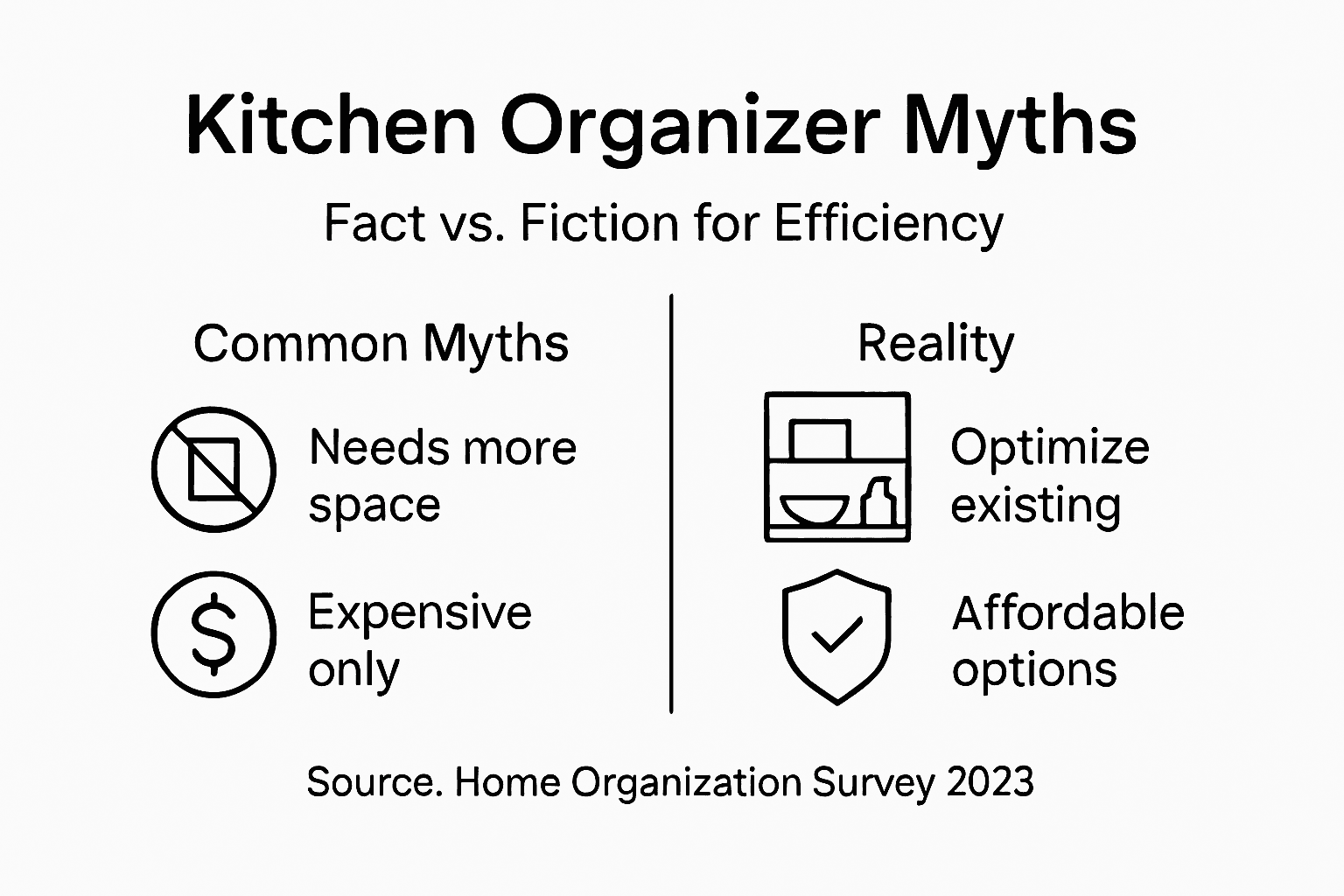
Pro tip: Start your kitchen organization journey by analyzing your actual cooking habits and workflow, not by purchasing storage containers.
Kitchen organizers come in diverse styles tailored to different spatial requirements and cooking needs. Kitchen organizational systems adapt to specific layout constraints/12%3A_Case_Studies/12.5%3A_Organizing_a_Kitchen) and must be thoughtfully selected based on individual kitchen configurations.
The primary categories of kitchen organizers include:
Vertical Storage Solutions
Drawer Organization Systems
Cabinet Optimization Tools
Ergonomic Considerations play a critical role in selecting appropriate kitchen organizers. Kitchen organizational tools must balance efficiency with spatial dynamics, ensuring that storage solutions enhance rather than hinder cooking workflows.
Modern kitchen organizers prioritize not just storage capacity, but also accessibility, visibility, and ease of use. By strategically implementing these organizational systems, homeowners can transform cluttered spaces into streamlined, functional cooking environments.
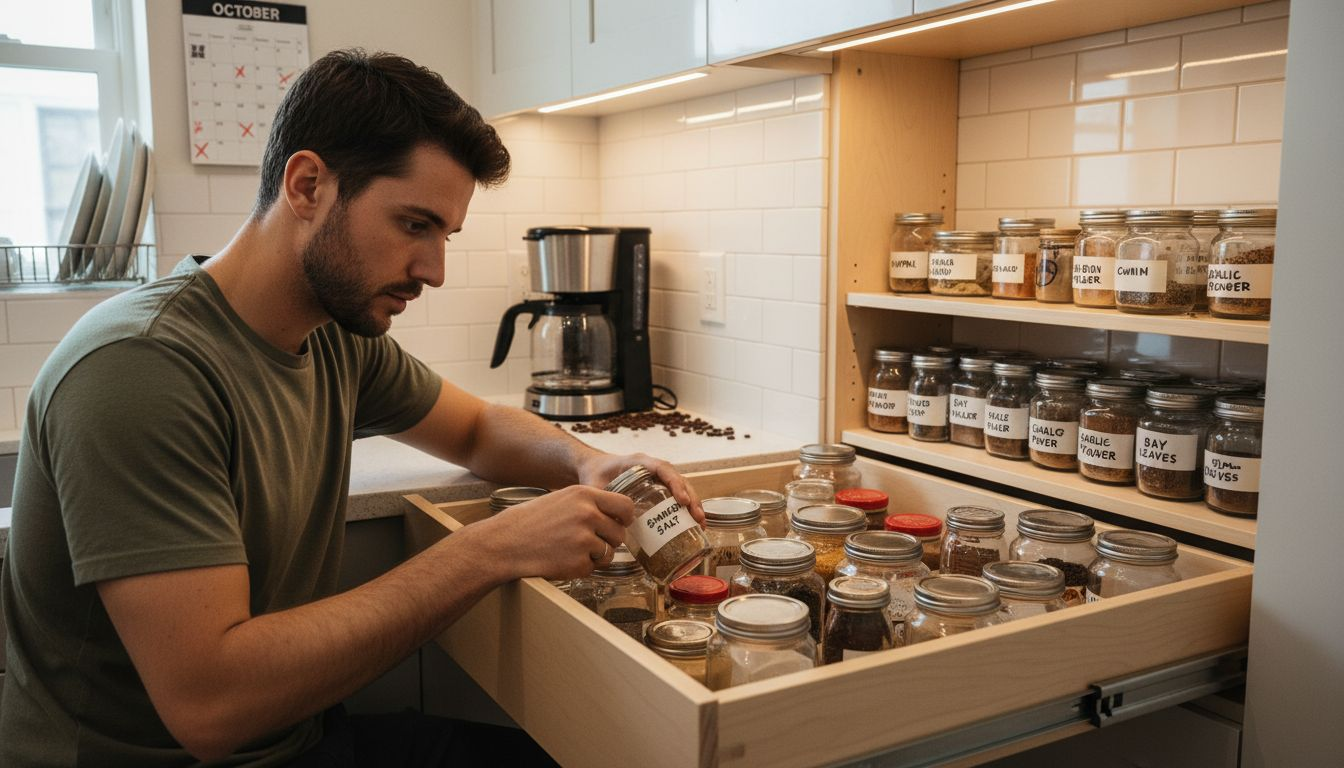
Pro tip: Measure your kitchen spaces precisely before purchasing organizers to ensure perfect fit and maximum utility.
Sustainable kitchen design trends are revolutionizing how we approach kitchen organization, prioritizing both environmental responsibility and functional efficiency. Modern kitchen organizers now integrate eco-friendly materials that reduce environmental impact while maintaining superior performance and aesthetic appeal.
Key sustainable materials and design features include:
Renewable Materials
Low-Impact Manufacturing
Advanced Eco-Design Features
Smart kitchen technologies now integrate sustainability by combining innovative materials with intelligent design principles. These solutions not only reduce environmental footprint but also enhance kitchen efficiency through thoughtful, adaptable organizational strategies.
By prioritizing sustainable materials and design, homeowners can create kitchen spaces that are both environmentally responsible and functionally superior. The evolution of kitchen organizers reflects a growing commitment to ecological consciousness without compromising on performance or style.
Pro tip: Choose kitchen organizers made from renewable materials that offer both durability and minimal environmental impact.
Kitchen ergonomics vary significantly between residential and commercial environments, demanding specialized organizational approaches that address unique spatial and functional requirements. Each setting presents distinct challenges and opportunities for implementing effective kitchen organization strategies.
Key differences in kitchen organization between residential and commercial spaces include:
Residential Kitchen Priorities
Commercial Kitchen Requirements
Shared Organizational Principles
Domestic kitchen designs now accommodate increasingly versatile use cases that blur traditional boundaries between residential and commercial environments. Modern kitchen organizers must be adaptable, supporting everything from home cooking to small-scale catering and collaborative culinary spaces.
Here’s a comparison of how kitchen organizers differ for residential and commercial environments:
| Factor | Residential Kitchens | Commercial Kitchens |
|---|---|---|
| Primary Focus | Comfort and style | Efficiency and regulation |
| Storage Flexibility | Adjusts to family routines | Designed for large volume flow |
| Material Durability | Home-grade, aesthetic choice | Industrial, heavy-duty options |
| Space Utilization | Maximizes small areas | Optimizes for workflow speed |
| Design Customization | Coordinates with decor | Prioritizes standardization |
The evolution of kitchen organization reflects broader trends in workspace design, emphasizing flexibility, efficiency, and user-centric solutions across different contexts and scales.
Pro tip: Select kitchen organizers that offer modular components, allowing seamless adaptation between different usage scenarios.
Kitchen organization strategies offer significant financial advantages that extend far beyond immediate storage solutions. By implementing thoughtful organizational systems, households can dramatically reduce unnecessary spending and optimize resource utilization.
Key practical benefits of effective kitchen organization include:
Financial Savings
Time Management Benefits
Psychological Advantages
Kitchen organization significantly impacts workflow efficiency/12%3A_Case_Studies/12.5%3A_Organizing_a_Kitchen) and contributes to long-term economic benefits by creating systematic approaches to resource management. Strategic organization transforms kitchens from cluttered spaces into productive environments that support both financial prudence and personal well-being.
The economic impact of kitchen organization extends beyond immediate cost savings, creating a holistic approach to household management that promotes sustainability, efficiency, and personal satisfaction.
Below is a summary of how organized kitchens contribute to both financial and personal benefits:
| Benefit Type | Example Impact | Long-Term Advantage |
|---|---|---|
| Financial | Reduced food waste | Savings grow over time |
| Time Management | Quicker meal preparation | More free hours daily |
| Psychological | Lowered stress level | Improved home satisfaction |
| Household Control | Less clutter, more structure | Better family organization |
Pro tip: Invest in modular, multi-purpose kitchen organizers that grow with your changing needs, maximizing long-term value.
Kitchen organization requires strategic planning to prevent common mistakes that undermine efficiency and sustainability. Understanding these pitfalls is crucial for creating a functional, streamlined kitchen environment.
Most frequent kitchen organization errors include:
Storage Capacity Misconceptions
Categorization Challenges
Maintenance and Adaptability Issues
Spatial planning is critical for effective kitchen organization/12%3A_Case_Studies/12.5%3A_Organizing_a_Kitchen), with successful strategies tailored to individual kitchen environments and user habits. Thoughtful organization transforms chaotic spaces into efficient, sustainable culinary workstations.
Effective kitchen organization is an ongoing process that requires continuous assessment, adaptation, and intentional design aligned with personal and household needs.
Pro tip: Review and reorganize your kitchen systems every six months to ensure they remain functional and aligned with your evolving lifestyle.
The article highlights how kitchen organizers enhance efficiency and sustainability by focusing on workflow optimization and eco-friendly materials. If you struggle with cluttered drawers or wasteful storage systems, it is essential to invest in durable, space-saving organizers that support your cooking habits and reduce environmental impact. At Cozee Bay, we offer a range of handcrafted bamboo products designed specifically for these needs, blending functionality with eco-conscious craftsmanship.

Discover our Drawer Organizers | Cozee Bay® to transform your kitchen drawers into orderly, accessible spaces using sustainable bamboo. Complement your setup with our Bag Organizer with Wrap Dispenser | Cozee Bay® for efficient storage that minimizes waste. Take control of your kitchen today by choosing stylish, eco-friendly products at https://cozee-bay.com. Act now and enjoy a clutter-free kitchen that supports your sustainability goals and daily efficiency.
Kitchen organizers are specialized storage solutions that maximize efficiency by streamlining workflows and optimizing space in the kitchen. They help manage cooking tools, ingredients, and accessories more effectively, resulting in a smoother cooking process.
To choose the right kitchen organizers, assess your kitchen layout, cooking habits, and storage needs. Consider measuring your available space and select organizers that fit well and enhance functionality while keeping your specific culinary activities in mind.
Yes, eco-friendly kitchen organizers made from renewable materials not only reduce environmental impact but also offer durability and functionality. Investing in sustainable options contributes to long-term ecological benefits without compromising on efficiency or design.
Proper kitchen organization minimizes food waste by making it easier to track ingredients and plan meals. This reduces duplicate purchases and impulse buying, leading to significant savings on grocery bills over time.
Comments will be approved before showing up.