Your Cart is Empty


TL;DR:
- Bamboo organizers provide a sustainable, stylish solution for kitchen utensil clutter.
- They are durable, antimicrobial, and significantly reduce plastic waste annually.
- Proper planning and zoning improve efficiency, especially in small or rental kitchens.
Opening a kitchen drawer only to find a tangled mess of spatulas, tongs, and whisks is one of those small daily frustrations that quietly drains your energy before you’ve even had your morning coffee. If every meal prep session starts with a drawer rummage and ends with a countertop covered in scattered tools, it’s time to rethink the whole system. Bamboo organizers offer a practical, stylish, and genuinely eco-friendly way to bring order to your kitchen, and the upgrade is easier than you might think.
| Point | Details |
|---|---|
| Bamboo organizers win | Bamboo outperforms plastic and metal for durability, eco-friendliness, and style. |
| Prep with purpose | Planning and measuring before organizing leads to a better fit and lasting results. |
| Zone for efficiency | Storing utensils by use and area makes cooking smoother and reduces clutter. |
| Small spaces welcomed | Even renters and those with tiny kitchens can use modular bamboo solutions for neatness. |
| Eco habits add up | Switching to bamboo and resetting routines weekly can dramatically cut household plastic waste. |
With the problem of clutter in focus, let’s explore why sustainable bamboo is redefining utensil organization.
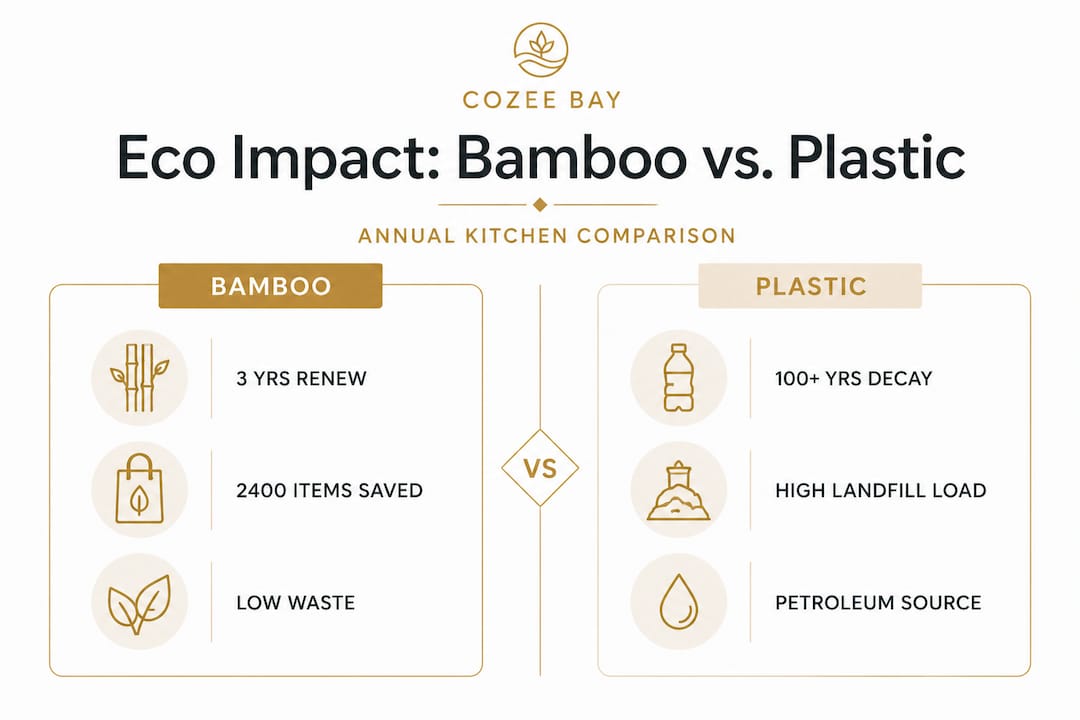
Bamboo is one of the fastest-growing plants on earth, reaching harvestable maturity in just three to five years compared to decades for hardwood trees. That speed makes it a truly renewable material, and it grows without pesticides or chemical fertilizers, which is a significant win for both the environment and your kitchen. When you understand why bamboo matters as a material choice, the decision to switch from plastic or metal organizers starts to feel obvious.
Beyond sustainability, bamboo is remarkably tough. It resists warping, cracking, and moisture damage far better than standard wood, and it cleans up easily with a damp cloth. What really sets it apart is that bamboo organizers are antimicrobial by nature, meaning bacteria have a harder time taking hold compared to porous plastic surfaces. For a space where you handle food daily, that matters more than most people realize.
The environmental numbers are equally compelling. The average household that switches to bamboo kitchenware can eliminate the need for up to 2400 plastic utensils per year, a direct reduction in microplastic contamination in your home and the broader ecosystem. Plastic organizers degrade over time and shed tiny particles that end up in food, water, and soil. Bamboo simply does not do that.
And let’s be honest, bamboo just looks better. The warm, natural grain adds a calm, organic feel to your kitchen that cold metal or colorful plastic can never replicate. If you’ve been comparing bamboo vs plastic organizers and wondering whether the switch is worth it, aesthetics alone often seal the deal for most homeowners.
| Feature | Bamboo | Plastic | Metal |
|---|---|---|---|
| Renewability | Fast-growing, highly renewable | Petroleum-based, not renewable | Mining-dependent |
| Antimicrobial | Yes, naturally | No | Varies |
| Durability | High, resists warping | Moderate, cracks over time | High but can rust |
| Aesthetics | Warm, natural grain | Clinical, varies | Industrial |
| Microplastic risk | None | High over time | Low |
| Eco-friendly disposal | Biodegradable | Landfill waste | Recyclable |
There are also several types of bamboo organizers available today, from simple single-tray dividers to modular multi-compartment systems, so no matter the size or layout of your kitchen, there’s a bamboo solution that fits.
Now that you know why bamboo is best, let’s get everything ready before you start the transformation.
Jumping straight into reorganizing without a plan is a recipe for frustration. You’ll pull everything out, feel overwhelmed, and shove it all back in. A little preparation goes a long way, and the good news is that the setup is straightforward. Here’s what you’ll need:
Measuring your drawers correctly is the most important step most people skip. A complete kitchen organization guide recommends grouping tools by use frequency and measuring first, then buying organizers that fit your actual space rather than hoping for the best. It sounds obvious, but a surprising number of people buy organizers before measuring and end up with gaps or tools that don’t fit.
Use the table below to record your key measurements before you shop:
| Drawer or cabinet | Width (inches) | Depth (inches) | Height (inches) | Notes |
|---|---|---|---|---|
| Main utensil drawer | ||||
| Prep tool drawer | ||||
| Serving utensil drawer | ||||
| Cabinet shelf |
Once you have your measurements, sort your existing utensils into three piles: keep and use often, keep but use rarely, and let go. This decluttering step is the foundation of organizing utensils sustainably. Keeping items you genuinely use means your system will stay functional for months, not just days.
Pro Tip: After your initial setup, schedule a five-minute reset at the end of every week. Just return stray tools to their zones, toss anything that’s crept in, and you’ll never face the dreaded drawer avalanche again.
With your materials prepped, put your plan into practice with these actionable steps.
The biggest mistake people make with utensil organization is treating every tool the same. Not every spatula deserves prime real estate next to the stove. Zoning, which means grouping tools by where and how often you use them, is the real secret to a kitchen that runs smoothly. Here’s how to do it well:
Clear everything out first. Empty all drawers and cabinets at once. Lay everything on the counter so you can see the full scope of what you own. It’s often eye-opening.
Create your zones. Divide your kitchen into four functional areas: cooking (near the stove), prep (near the cutting board and sink), serving (near the dining area or island), and specialty (rarely used items like cake decorating tools or a turkey baster). Store cooking utensils near the stove and prep tools near the sink, following the natural flow of how you actually cook.
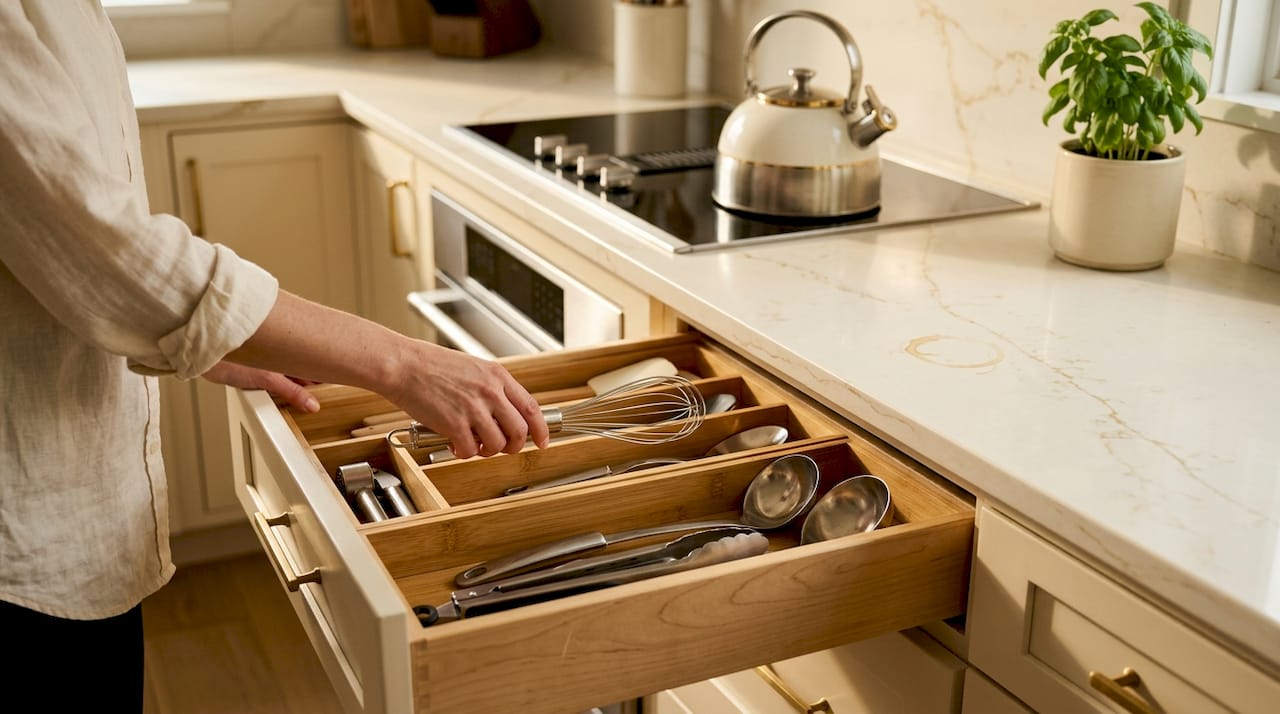
Place your bamboo organizers. Fit the dividers into each drawer based on your measurements. Most bamboo organizers come in interlocking or adjustable configurations, so you can build custom sections for specific tools like peelers, ladles, and spatulas.
Load by priority. Put the tools you grab every single day in the front compartments closest to the drawer opening. Less-used items go toward the back or in secondary drawers.
Label if needed. A simple label on each compartment removes all guesswork, especially useful for households where multiple people cook.
Test the system for a week. Use your kitchen normally and notice what feels awkward. Adjust the zones until the layout matches how you naturally move and cook.
“Drawers are preferred over crocks and countertop containers for both hygiene and aesthetics. Bamboo adds a stylish warmth that plastic and metal simply cannot match.”
For deep drawers, consider two-tier inserts that let you store smaller tools on the top tier and larger ones beneath. This is one of the best bamboo storage solutions for maximizing vertical space without adding bulk.
Pro Tip: Keep your most-used tools in the drawer closest to your primary cooking zone. Studies in kitchen ergonomics consistently show that reducing reach time during cooking reduces both errors and stress.
If you’re working with a small kitchen or can’t make permanent changes, these smart bamboo-based hacks fit seamlessly.
Not everyone has the luxury of a wide, deep kitchen with ample drawer space. Whether you’re renting an apartment, living in a studio, or simply working with a galley kitchen, the challenge of organizing utensils is real but very solvable. The key is working with the space you have instead of wishing for more.
Tension-style bamboo dividers require no hardware, no drilling, and no adhesive, making them completely renter-friendly. You simply press them into position inside a drawer, and they hold firm. When you move out, they come with you. This is a huge advantage over plastic organizers that often require adhesive strips that damage surfaces.
Here are some specific hacks for smaller kitchens:
“For renters or those in small apartments, the goal is creating a functional, organized system that you can take with you. Bamboo organizers for small spaces offer that portability without sacrificing style.”
The beauty of bamboo solutions for renters is that they adapt to your life, not the other way around. You invest in quality tools once and carry them from home to home, always arriving with a system ready to go.
With your utensils arranged, here’s how to ensure lasting results and real environmental progress.
Getting organized is one thing. Staying organized is where most people stumble. The good news is that a well-designed bamboo system is naturally self-maintaining because every item has a dedicated place, and returning things where they belong takes seconds rather than minutes.
Run through this quick verification checklist after your first week:
The environmental impact of your new system is also worth tracking. Switching from plastic utensils and organizers to bamboo alternatives can replace 2400 plastic items per year in your household alone. Multiply that across years of use, and you’re making a genuinely meaningful contribution to reducing plastic waste in your home and community.
Consider keeping a simple eco-log, just a note on your phone where you track what plastic items you replaced each month. It’s a small act, but seeing the numbers grow is genuinely motivating and helps reinforce the habit of choosing sustainable materials in every part of your kitchen.
Here’s the honest truth that most organization guides won’t tell you: buying bamboo organizers and arranging your drawers is a great start, but it’s not the finish line. The kitchens that stay organized and stay eco-friendly are the ones where the people living in them have changed how they think about their space, not just how they set it up.
Real sustainable organizing means regularly asking yourself what you actually need. It means resisting the urge to buy a new kitchen gadget every time one goes on sale. It means donating that avocado slicer you’ve used twice and the pasta maker still in its box, not storing them in a beautifully organized drawer where they take up space that useful tools could occupy.
Bamboo tools are fantastic, but they only deliver their full value when paired with the habit of intentionality. A weekly sustainable organizing habit doesn’t have to be a production. Five minutes on a Sunday evening to return everything to its place, wipe down the bamboo surfaces, and decide if anything needs to leave the kitchen is all it takes.
The best kitchens we’ve seen aren’t the biggest or the most expensively outfitted. They’re the ones where every item earns its place, and the person cooking knows exactly where everything is. That clarity is a product of consistent small choices, not a single grand overhaul. Sustainable organizing becomes sustainable living when it stops feeling like a project and starts feeling like just how things are.
If reading through this guide has you itching to finally sort out those chaotic kitchen drawers, you’re in exactly the right place. A thoughtfully organized kitchen starts with the right tools, and that means choosing materials that are as kind to the environment as they are functional in your home.

At Cozee Bay, we offer a curated range of eco-friendly bamboo organizers crafted for real kitchens and real lifestyles, whether you’re outfitting a compact studio apartment or a full family kitchen. Every product is built with sustainable bamboo, designed to last, and sized to fit a variety of drawer and cabinet configurations. Browse our top bamboo storage solutions to find the right fit for your space, and enjoy free shipping across the contiguous U.S. with every order.
Each bamboo set can completely replace up to 2400 plastic utensils yearly for the average household, significantly cutting down on microplastic contamination throughout your home.
Use two-tier or stackable bamboo organizers to maximize vertical space and keep every layer of tools visible and easy to reach.
Yes, tension-style bamboo dividers require no tools, drilling, or adhesive and pop in and out easily, making them an ideal no-damage solution for renters.
Set a weekly or biweekly reset and always group by use frequency, placing the tools you reach for every day at the front of each compartment for effortless maintenance.
Bamboo carries natural antimicrobial properties that actively resist bacterial growth, making it a cleaner and safer choice than plastic or metal for everyday kitchen use.
Comments will be approved before showing up.