Your Cart is Empty


TL;DR:
- Proper measurement and decluttering are essential for effective and sustainable drawer organization.
- Bamboo organizers last longer, are antimicrobial, and enhance kitchen efficiency and style.
- Customizable zones and modular solutions improve accessibility and adapt to irregular or deep drawers.
If you’ve ever yanked open a kitchen drawer only to have spatulas, tongs, and whisks tumble out in a chaotic heap, you already know the struggle. Finding the right utensil in a cluttered drawer wastes time and adds unnecessary stress to your cooking routine, especially on busy weeknights when every second counts. The good news is that a clean, eco-friendly, and genuinely stylish drawer setup is completely within reach. This guide walks you through every step, from prepping your space to choosing sustainable bamboo organizers, so you can finally cook with calm confidence.
| Point | Details |
|---|---|
| Prioritize sustainability | Eco-friendly bamboo and PLA organizers last longer, are more hygienic, and reduce plastic waste. |
| Sort by usage | Place frequently used utensils front and center for easy access and visibility. |
| Use zones and dividers | Create functional zones with expandable dividers and trays to keep categories separated and organized. |
| Handle edge cases creatively | For deep drawers or odd utensils, stackable modular systems and customized bins optimize space and usability. |
Before you rearrange a single spatula, you need to set yourself up for success. That means pulling everything out, assessing what you actually have, and gathering the right tools to build a system that will last. Skipping this prep phase is exactly why so many drawer organizing attempts fail within a week.
Start by completely emptying the drawer onto a clean counter or table. This empty, sort, and declutter approach gives you a full picture of what you’re working with before you make any decisions about placement or organizers. You’ll likely discover duplicates, broken tools, and gadgets you forgot you owned.
Next, measure your drawer carefully. Width, depth, and height all matter, especially if you plan to use stackable systems. Write those numbers down before you shop, because even an inch of difference can mean an organizer won’t fit or won’t expand properly.
Here’s a quick checklist of what to gather before you start organizing:
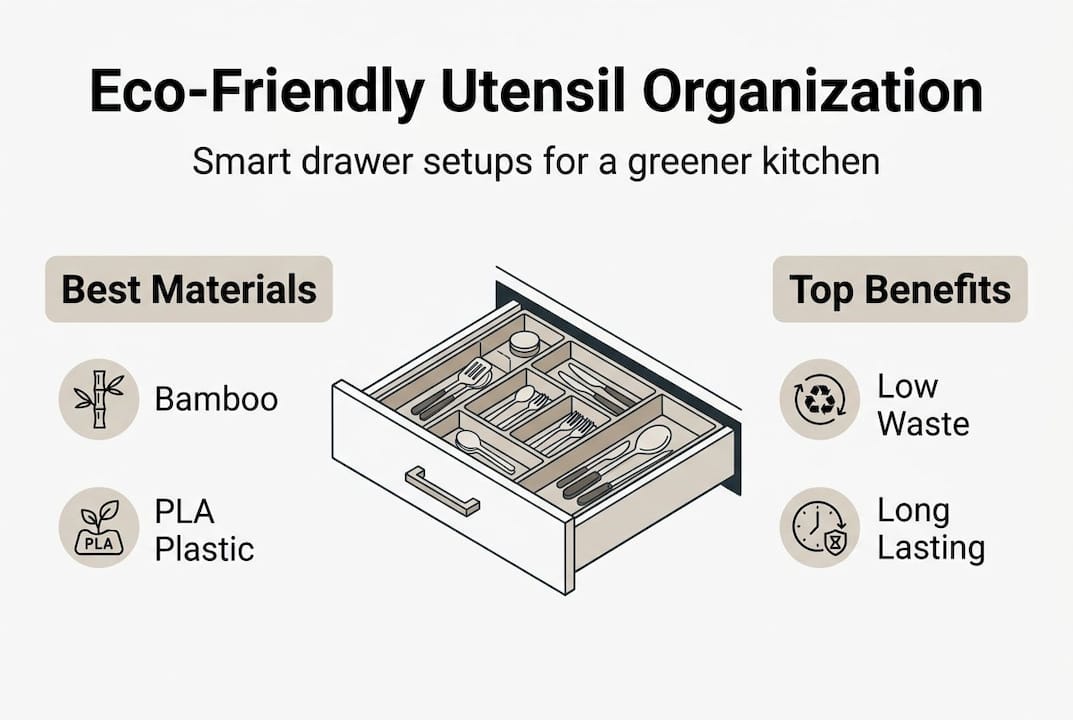
When it comes to choosing your organizers, eco-friendly organizers made from bamboo are a particularly smart pick. They are naturally antimicrobial, sustainably harvested, and built to last far longer than plastic alternatives.
| Organizer type | Material | Best for |
|---|---|---|
| Expandable tray | Bamboo | Most drawer sizes |
| Fixed-slot tray | Bamboo or wood | Standard utensil sets |
| Modular bins | Recycled plastic | Irregular shapes |
| Drawer liners | Cork or felt | Added grip and protection |
For a deeper look at how to approach this process sustainably from the very start, sustainable drawer organization offers a great workflow to follow before you even open a product package.
Pro Tip: Wipe the inside of the drawer with a damp cloth and let it dry completely before placing any organizers. This removes crumbs, moisture, and buildup that can shorten the life of even the best bamboo tray.
Now that you have your tools ready, it’s time to tackle the sorting phase, which is honestly where the magic happens. Most people skip straight to buying new organizers without ever asking whether they actually need all the utensils they own. Spoiler: you probably don’t.
Here’s a simple numbered process to sort your utensils effectively:
Why does this step matter so much? Because bamboo lasts 10+ years compared to plastic’s 1 to 2 year lifespan, reduces search time and frustration by 73%, and its antimicrobial properties actively cut down on bacteria growth in your drawer. Those numbers are hard to argue with.
“A well-sorted drawer isn’t just tidy. It’s a kitchen efficiency tool that saves you real time every single day.”
Placement matters too. Your daily tools like your favorite wooden spoon and your go-to silicone spatula should sit at the front of the organizer where you can grab them without digging. Less-used items like a specialty pastry brush or a melon baller can live further back.
For drawer vs countertop storage, drawers almost always win on hygiene and style. And choosing organizers that produce less plastic waste makes every meal prep session feel like a small act of environmental responsibility.
Pro Tip: Take a photo of your sorted piles before placing anything in the drawer. If the layout ever gets disrupted, you have a reference point to reset quickly.
With your sorted utensils in hand, it’s time to assign everyone a home. Zone-based organizing is the key concept here. Instead of tossing everything into one long tray, you create distinct areas based on how and when you use each tool.
Think of your drawer in three zones:
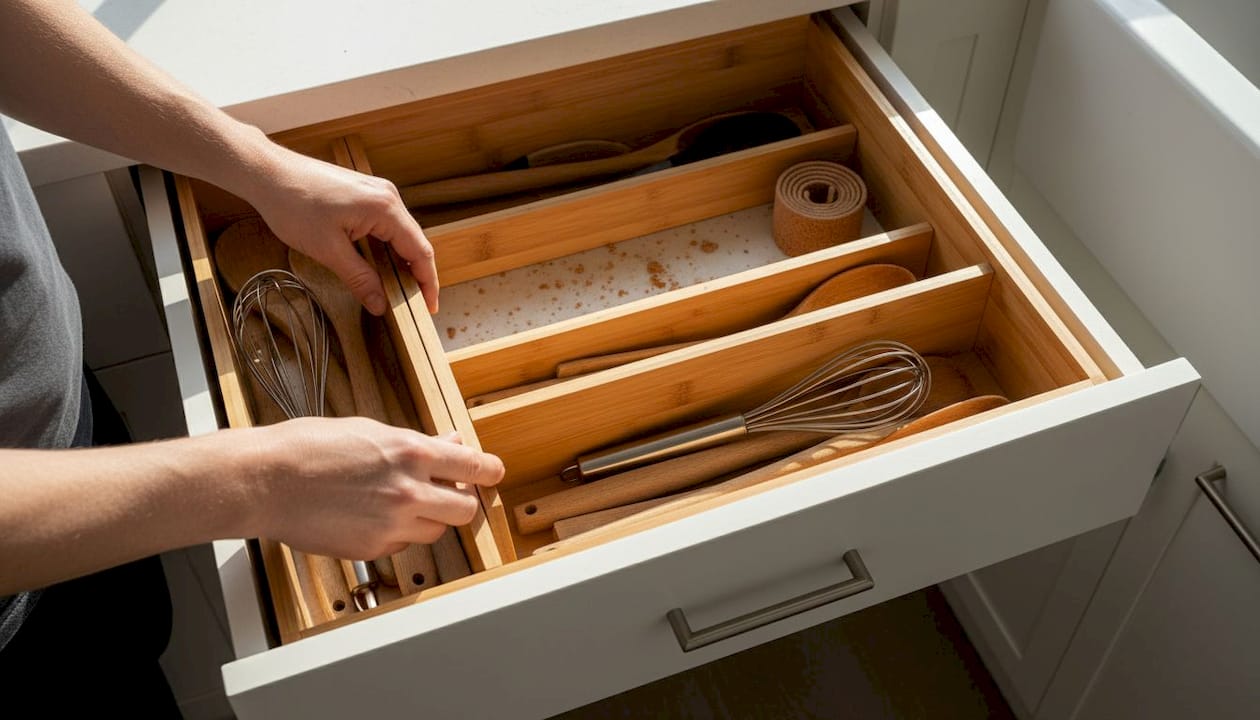
Expandable bamboo dividers are especially useful for zone creation because they adjust to fit your specific drawer dimensions. Expandable bamboo dividers with non-slip feet keep everything stable even when the drawer is yanked open in a hurry, which let’s be honest, happens often.
Here’s a side-by-side comparison to help you choose the right organizer style:
| Feature | Bamboo expandable tray | Plastic modular bin |
|---|---|---|
| Eco-friendly | Yes | Sometimes |
| Antimicrobial | Yes | No |
| Adjustable fit | Yes | Limited |
| Lifespan | 10+ years | 1 to 2 years |
| Appearance | Warm, natural finish | Generic |
For a deeper breakdown of your choices, bamboo vs plastic organizers gives you a thorough comparison that can help you invest wisely. And if you’re looking for curated recommendations, best bamboo storage highlights top picks for different drawer sizes and cooking styles.
The natural finish of bamboo also adds a visual warmth that plastic simply cannot match. When you open your drawer and see everything neatly arranged in a beautiful, natural tray, cooking feels more intentional and enjoyable. Style and function really can coexist.
For added stability, look for organizers with rubber or cork feet. These prevent sliding during use and protect the interior of your drawer from scratches. As bamboo organizer longevity research confirms, the right materials genuinely outlast cheaper alternatives by years.
Pro Tip: If your drawer is extra wide, use two expandable trays side by side rather than one oversized tray. This gives you more flexibility to rearrange zones as your cooking habits evolve.
Some drawers and utensils pose extra challenges, and a standard flat tray just won’t cut it. Deep drawers in particular are notorious for becoming black holes where spatulas disappear for months. Here’s how to solve those trickier setups.
For deep drawers, the key is using the vertical space, not just the floor. Adjustable spring-loaded dividers and stackable modular systems or two-tier trays help you utilize the full height of the drawer while keeping items visible and accessible. Zoning front, middle, and rear prevents dead zones where things get lost.
| Deep drawer solution | Best use case |
|---|---|
| Two-tier stackable tray | Flatware and small utensils |
| Spring-loaded dividers | Adjustable sections for varied sizes |
| Modular bamboo bins | Grouping irregular tools |
| Vertical knife block insert | Safe, space-efficient blade storage |
For odd-shaped tools like avocado slicers, corn peelers, or extra-long pasta tongs, standard trays are rarely the answer. Here’s what works better:
“The mistake most home cooks make is forcing irregular utensils into trays that weren’t built for them. The result is a drawer that looks organized for a day, then quickly devolves into chaos.”
The solutions for odd utensils approach that works best is modular and customizable rather than rigid. Look for systems you can reconfigure as your cooking tools evolve.
If you want to go deeper on this topic, eco-friendly deep drawer solutions covers sustainable options specifically designed for those tall, tricky drawers. And for inspiration on creative configurations, creative bamboo organizer ideas showcases some clever layouts you might not have considered.
Here’s an honest take that most organizing guides won’t give you: the biggest mistake people make isn’t buying the wrong organizer. It’s buying the right organizer in the wrong size because they skipped the measuring step. A beautiful bamboo tray that doesn’t fit properly is just an expensive source of frustration.
Beyond fit, there’s a real case to be made that bamboo organizers cut search time, reduce bacteria, and last over a decade, making them one of the highest-return investments in your kitchen. You’re not just tidying a drawer. You’re reducing daily friction, cooking more confidently, and doing it with materials that don’t end up in a landfill after two years.
There’s also a hygiene argument that often gets overlooked. Drawer dividers keep utensils hidden and hygienic, unlike countertop crocks that collect dust, grease splatter, and moisture around the rims. If you’ve ever had to wash a countertop crock and found sticky residue at the base, you know what we mean.
Choosing bamboo also means choosing a material that is naturally renewable and processed without harsh chemicals. For an overview of which formats work best for different needs, bamboo organizer types breaks it down clearly. The bottom line is this: organizing your drawers with sustainable materials is not a trend. It’s a practical decision with lasting benefits for your kitchen and the planet.
You now have everything you need to transform that frustrating, chaotic drawer into a space that actually works for you. The steps are clear, the products are out there, and the benefits, from reduced stress to reduced plastic waste, are very real.

At Cozee Bay, we make it easy to take that next step. Our handcrafted bamboo organizers are designed with real kitchens in mind, built to fit, built to last, and built beautifully. Whether you’re starting fresh or upgrading what you have, you can shop eco-friendly organizers and find the right fit for your drawers today. Not sure which style suits your space? The bamboo organizer comparison guide makes choosing easy and stress-free.
Bamboo dividers with non-slip feet are the most reliable fix, or you can size your organizer to fit the drawer snugly so it has no room to shift.
Absolutely. Bamboo lasts 10+ years and its natural antimicrobial properties reduce bacteria growth, making it a far more hygienic and cost-effective choice than plastic over time.
Mix and match clear bins with bamboo dividers to create custom slots that accommodate unusual shapes and sizes without forcing anything into a space it wasn’t meant for.
Drawer dividers are more hygienic than countertop crocks, which trap dust, grease, and moisture, and drawers also free up valuable counter space for actual cooking.
Comments will be approved before showing up.