Your Cart is Empty


Every eco-conscious homeowner and interior designer knows that choosing decor materials can be a test of style, values, and responsibility. Bamboo stands out as a truly elegant solution, prized for its rapid renewability and natural beauty while boasting a much lower environmental impact compared to traditional wood. This guide reveals how to select eco-friendly bamboo materials and transform them into unique home or commercial pieces that support both sustainability and modern design.
| Key Insight | Explanation |
|---|---|
| 1. Choose Sustainable Bamboo | Select bamboo with certifications and traceable sourcing to support eco-friendly practices and minimize environmental impact. |
| 2. Explore Creative Design Techniques | Utilize bamboo’s flexibility and natural patterns to create functional and artistic decor pieces that reflect both innovation and sustainability. |
| 3. Use Proper Cutting Tools | Invest in high-quality cutting tools like pruning shears and fine-toothed saws to ensure clean cuts and safety in your bamboo projects. |
| 4. Master Assembly Techniques | Employ effective joining methods, such as lashing and drilling, to create stable and visually appealing bamboo decor pieces. |
| 5. Inspect and Finish Details | Conduct thorough inspections and apply eco-friendly sealants to enhance durability and appearance, ensuring a professional final product. |
Selecting the right bamboo materials is crucial for creating stunning and sustainable home decor pieces that minimize environmental impact. Understanding how to choose quality, responsibly sourced bamboo will help you craft beautiful items while supporting ecological practices.
When sourcing bamboo for your DIY projects, prioritize materials with proven sustainable material standards. Not all bamboo is created equal - look for materials harvested from managed forests that follow responsible cultivation practices. Sustainable bamboo should demonstrate:
Quality bamboo materials typically come from specific species known for durability and versatility. Moso bamboo and Guadua bamboo are excellent choices for home decor, offering superior strength and aesthetic appeal. These species grow quickly, require minimal water, and regenerate naturally without replanting.
Here’s a comparison of popular bamboo species for home decor projects:
| Bamboo Species | Key Benefits | Best Uses |
|---|---|---|
| Moso Bamboo | High strength, smooth grain | Furniture, wall panels |
| Guadua Bamboo | Superior durability, thick walls | Structural decor, support pieces |
| Tonkin Cane | Fine texture, light weight | Decorative items, crafts |
Consider the intended use of your bamboo when selecting materials. Different projects require varying material characteristics - furniture demands structural integrity, while decorative items might prioritize aesthetic qualities like grain pattern and color variation. Bamboo material processing techniques have advanced significantly, providing more refined and specialized options for creative craftspeople.
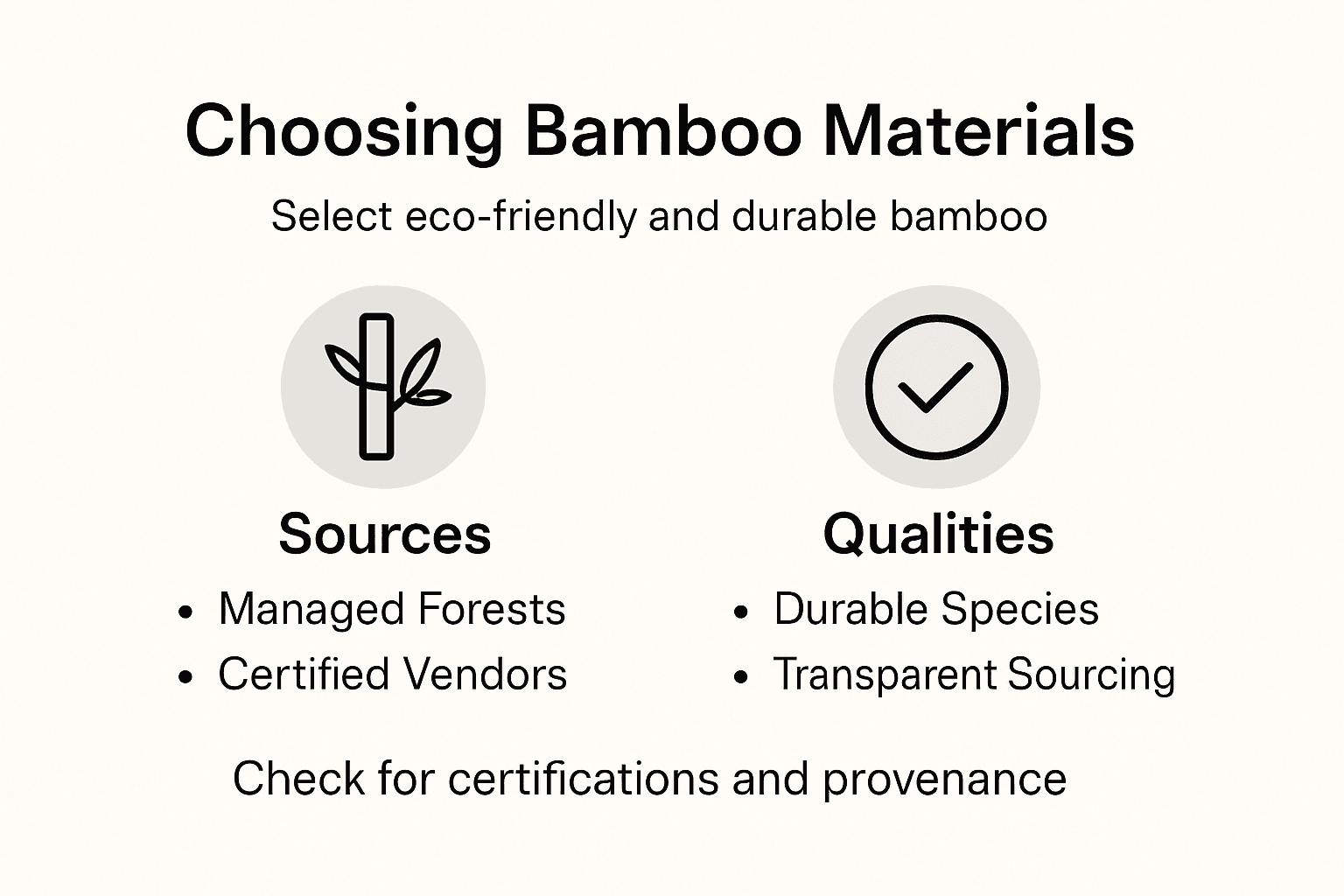
Pro tip: Always purchase bamboo materials from reputable suppliers who provide transparent sourcing information and can demonstrate their commitment to sustainable forest management practices.
Designing unique bamboo decor requires a creative approach that balances aesthetic appeal with sustainable principles. Your goal is to transform raw bamboo materials into stunning pieces that reflect both artistic vision and environmental consciousness.
Start by exploring innovative bamboo design techniques that leverage the material’s natural strengths. Bamboo offers remarkable versatility - its inherent flexibility allows you to craft everything from minimalist wall art to intricate sculptural pieces. Consider these design approaches:
Understand bamboo’s structural properties to maximize design potential. Thin strips can be woven into intricate textures, while thicker sections provide robust structural support. Some designers create geometric wall hangings by carefully arranging bamboo strips at different angles, producing captivating shadow play and depth.
Sustainable design isn’t just about material selection - it’s about creating pieces that tell a story of environmental respect and artistic innovation.
Make sure each piece reflects both sustainable interior design principles and your personal aesthetic. Consider color variations, natural textures, and how your decor will interact with existing room elements.

Pro tip: Sketch multiple design concepts before cutting your bamboo, and always leave extra material for unexpected creative adjustments.
Cutting and shaping bamboo requires precision, patience, and the right techniques to transform raw materials into beautiful home decor pieces. By understanding proper cutting methods, you’ll create clean, professional-looking designs while minimizing potential risks.
Begin by selecting appropriate cutting tools that ensure safety and precision. Essential equipment includes sharp pruning shears, fine-toothed saws, protective gloves, and safety glasses. Remember that different bamboo projects demand specific cutting approaches:
To clarify project planning, here’s an overview of essential tools and their cutting roles:
| Tool | Primary Use | Tips for Best Results |
|---|---|---|
| Pruning Shears | Cutting thin bamboo strips | Use for flexible, small cuts |
| Fine-Toothed Saw | Slicing bamboo stalks | Cut slowly to avoid splintering |
| Safety Equipment | Protect hands and eyes | Always wear during cutting |
Cutting techniques are critical for achieving smooth, splinter-free results. Wrap masking tape around your intended cut line to prevent splintering, and mark measurements carefully before making any cuts. Make slow, steady movements to maintain control and accuracy.
Precision in cutting bamboo transforms raw material into an artisan craft - every careful movement matters.
Explore bamboo bending and shaping techniques to expand your design possibilities. Methods like steaming or soaking can soften bamboo, allowing you to create curved shapes and intricate designs without compromising structural integrity.
Pro tip: Always cut slightly longer than your final measurement to allow for potential adjustments and unexpected design modifications.
Assembling bamboo decor requires precision, creativity, and understanding of effective joining techniques that ensure both structural integrity and aesthetic appeal. Your goal is to transform individual bamboo pieces into cohesive, beautiful home decor elements that will stand the test of time.
Bamboo joining techniques are critical for creating sturdy and visually appealing designs. Explore various lashing methods that can transform your individual bamboo pieces into integrated decor pieces:
Drilling and reinforcement play a crucial role in secure assembly. Pole connection methods require careful preparation to prevent splitting and ensure maximum structural stability. Select drill bits slightly smaller than your fastening hardware to minimize potential damage.
Precision in assembly transforms individual bamboo pieces into a unified, elegant design.
When connecting bamboo pieces, consider the wall thickness and species of bamboo you are working with. Thicker-walled bamboo varieties provide more robust connection points and can support more complex design structures.
Pro tip: Always test your connections with gentle pressure before completing your final design, and be prepared to make incremental adjustments to achieve perfect alignment and stability.
Transforming your bamboo decor from raw materials to a polished final product requires careful finishing and thorough inspection. Your goal is to create a piece that not only looks beautiful but also meets high standards of quality and durability.
Product testing protocols are essential for ensuring the integrity of your bamboo decor. Conduct a comprehensive inspection that covers multiple aspects of your creation:
Surface treatment plays a crucial role in protecting and enhancing your bamboo piece. Apply a natural, eco-friendly sealant or oil that will:
Quality is not an act, but a habit - every detail matters in crafting sustainable bamboo decor.
Pay special attention to edges and connection points. Sand down any rough areas, ensuring smooth transitions and eliminating potential splinter risks. Test the stability of your piece by gently applying pressure and checking for any unexpected movement or weakness.
Pro tip: Allow your finished bamboo piece to rest in a controlled environment for 24-48 hours before final placement, which helps stabilize the materials and allows any sealants to fully cure.
Creating your own bamboo home decor pieces brings unique beauty and sustainability to your living space. However, finding high-quality, ready-made bamboo products that combine durability, elegant design, and responsible sourcing can be a challenge as you strive to complement your DIY creations. Cozee Bay offers expertly crafted bamboo essentials that seamlessly blend with your eco-conscious vision, making it easier to enhance your home with natural charm.

Discover our collection of premium Bamboo Paper Towel Dispensers that bring a sleek look to any home or office while embracing sustainable materials. Complement your handcrafted projects with smart storage and organization by exploring our Plastic Wrap Dispenser With Cutter. Each piece represents quality craftsmanship and thoughtful design built to last. Start transforming your space today by visiting Cozee Bay for eco-friendly bamboo products designed to fit your creative lifestyle.
To select eco-friendly bamboo materials, prioritize those harvested from managed forests with sustainable practices. Look for bamboo that has certifications from recognized ecological organizations to ensure responsible sourcing.
The best design concepts involve leveraging bamboo’s natural grain and structural properties, such as creating three-dimensional wall installations or functional decor like planters. Experiment with varying widths and lengths of bamboo strips to achieve unique textures and styles.
Essential tools for cutting bamboo include sharp pruning shears and fine-toothed saws, along with safety equipment like protective gloves and glasses. Always use clean, sharp tools to ensure smooth cuts and minimize splintering.
To assemble bamboo decor, use effective joining techniques like square lashing or diagonal lashing to connect pieces securely. Make sure to drill carefully to prevent splitting, and test connections for stability before finalizing your design.
To finish bamboo decor, apply a natural, eco-friendly sealant to protect against moisture and enhance the bamboo grain. Sand down rough areas for a smooth finish, and allow the piece to rest for 24-48 hours to stabilize the materials and cure sealants.
Comments will be approved before showing up.