Your Cart is Empty


TL;DR:
- Lucky bamboo, a member of the Dracaena family, mainly offers psychological, aesthetic, and sustainability benefits indoors. While it can remove some airborne pollutants, its air purification effect is limited compared to ventilation and proper airflow. The plant’s true value lies in enhancing mood, reducing stress, and improving home decor with minimal environmental impact.
Lucky bamboo, known botanically as Dracaena sanderiana, is the most popular indoor bamboo plant and delivers real benefits across three areas: mental wellbeing, home aesthetics, and sustainable living. Most people call it bamboo, but it is technically a member of the Dracaena family, not true bamboo. That distinction matters because it shapes realistic expectations around bamboo house plant benefits, especially claims about air purification. The good news is that the benefits you actually get from growing this plant indoors are genuinely worth your attention.
Bamboo house plants, specifically Dracaena sanderiana, deliver benefits that fall into three clear categories. They improve your mood and reduce stress, add striking visual character to any room, and support a more sustainable home environment. Understanding which benefits are proven and which are overstated helps you get the most out of your plant.
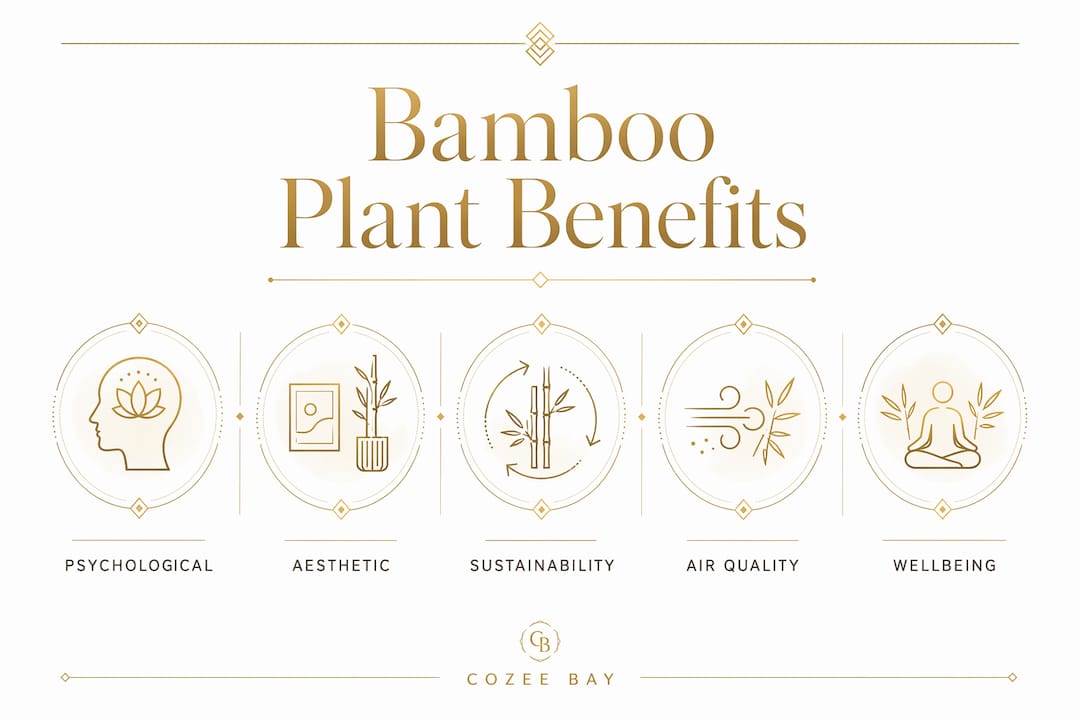
The strongest and most consistent benefit is psychological. RHS 2026 guidance confirms that houseplants improve mood, reduce stress, and support productivity. These effects are well-documented across both home and office settings. The calming visual quality of bamboo’s vertical stems and layered green leaves plays a direct role in that response.
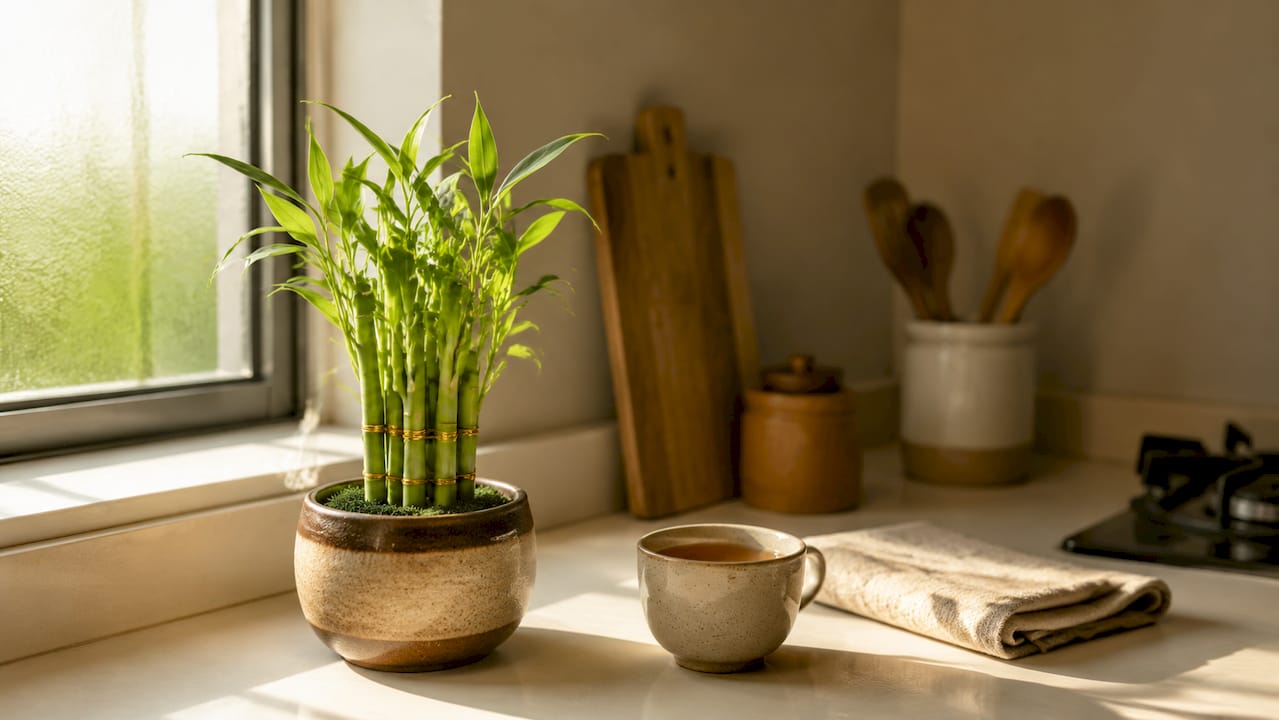
The second benefit is aesthetic. Lucky bamboo grows in compact vertical arrangements, making it ideal for small apartments, office desks, and minimalist interiors. You can find it styled in braided stems, spiraling towers, and glass vases filled with pebbles and water. It fits naturally into modern, Zen-inspired, and traditional Asian decor styles without taking up much floor space.
The third benefit is sustainability. Bamboo plants are long-lived, low-maintenance, and biodegradable. They do not require electricity, replacement filters, or synthetic materials. That makes them a genuinely low-impact addition to your home compared to mechanical air purifiers or synthetic decorative pieces.
Air purification is the most misunderstood of all bamboo indoor plant benefits. The short answer is this: lucky bamboo can remove some airborne pollutants, but not at a scale that replaces proper ventilation in your home.
Research published in Scientific Reports confirms that Dracaena sanderiana removes benzene under controlled light conditions. That is a real finding. The catch is that those studies use sealed chambers with concentrated pollutant levels, not the open, ventilated rooms where most people actually live. Air exchange rates in a typical home dilute pollutants far faster than any houseplant can process them.
“Studies estimate needing up to 1,000 plants per square meter to equal the air-cleaning effect of standard mechanical ventilation.” That number puts the popular NASA clean air study claims into perspective. A single plant on your windowsill is not a substitute for opening a window.
The air quality benefits you do get from lucky bamboo are indirect but real. Plants release moisture through transpiration, which raises indoor humidity. Higher humidity reduces the concentration of airborne dust particles and makes the air feel fresher. Indoor plants also reduce stress, which changes how you perceive your environment. A calmer person in a slightly more humid room genuinely feels better, even if the VOC count has not dropped dramatically.
Plant placement and lighting also shape how much metabolic activity your bamboo performs. Adequate indirect bright light is critical for Dracaena sanderiana’s air-filtering and metabolic activity. A plant sitting in a dark corner is not doing much for your air.
Pro Tip: Place your lucky bamboo near a bright window with indirect light, not direct sun. That positioning maximizes the plant’s metabolic activity, which is what drives any air-filtering effect it has.
Psychological and productivity improvements are the strongest, most consistent benefits that houseplants deliver, according to RHS 2026 research. Lucky bamboo earns its place in this category through both its visual presence and the indirect environmental effects it creates.
Here is what the research and practical experience show:
The wellbeing benefits of bamboo plants are not abstract. They show up in how you feel when you sit in a room that has living greenery versus one that does not. Most people notice the difference within days of adding a plant to their space.
Lucky bamboo’s vertical growth suits compact living areas and offers more styling flexibility than most houseplants. You can shape it, group it, and display it in ways that feel intentional rather than incidental.
| Style | Container | Best room |
|---|---|---|
| Single straight stalk | Ceramic pot with soil | Bedroom, bathroom |
| Braided or spiraled stems | Glass vase with pebbles | Living room, entryway |
| Grouped stalks by number | Bamboo or stone tray | Office desk, dining table |
| Tall tower arrangement | Tall glass cylinder | Corner accent, hallway |
The number of stalks carries cultural meaning in feng shui traditions. Three stalks represent happiness, five represent wealth, and seven represent good health. Whether or not you follow feng shui, these groupings create natural visual rhythm that works in almost any decor style.
For living room decoration ideas, bamboo pairs well with natural materials like linen, stone, and wood. A glass vase with clear pebbles and a single spiraled stalk reads as modern and minimal. A wider ceramic pot with several straight stalks feels more grounded and traditional. Both work. The plant adapts to your room rather than demanding that the room adapt to it.
Pro Tip: Rotate your bamboo arrangement every two weeks so all sides receive equal light. This keeps the stems growing straight and prevents the plant from leaning toward the window.
Bamboo plants are a genuinely low-impact home addition, and RHS 2026 notes sustainable decor benefits while cautioning against relying on plants alone for air cleanliness. The sustainability case for bamboo rests on several practical points.
For readers interested in sustainable gardening and decor, bamboo plants fit naturally into a broader low-waste home philosophy. They are not a silver bullet for indoor air quality, but they are a genuinely responsible choice for anyone who wants living greenery without a heavy environmental footprint.
One important note: do not replace your home’s ventilation strategy with plants. Open windows regularly, use exhaust fans in kitchens and bathrooms, and treat your bamboo as a complement to good ventilation, not a replacement for it.
Bamboo house plants deliver their strongest value through psychological wellbeing and aesthetic appeal, with air purification playing a supporting rather than leading role.
| Point | Details |
|---|---|
| Air quality is limited | Lucky bamboo removes some VOCs but cannot replace mechanical ventilation in real homes. |
| Wellbeing benefits are proven | RHS 2026 confirms mood improvement, stress reduction, and productivity gains from indoor plants. |
| Lighting drives performance | Place Dracaena sanderiana in bright indirect light to maximize its metabolic and air-filtering activity. |
| Aesthetics are highly flexible | Braided, spiraled, and grouped arrangements suit minimalist, modern, and traditional interiors equally. |
| Sustainability is genuine | Long lifespan, no electricity, and biodegradable materials make bamboo a low-impact home choice. |
I have kept lucky bamboo in my home for years, and the thing that surprised me most was how quickly it changed the feel of a room. Not the air readings. The feel. Walking into a space with a well-placed bamboo arrangement is noticeably different from walking into the same room without one. The calm is real, even if it is hard to measure.
What I have learned is that most people set their bamboo up in the wrong spot. They tuck it into a dark corner because it looks good there, and then wonder why the plant yellows within a month. Bright indirect light is non-negotiable. A north-facing windowsill or a spot a few feet back from a south-facing window works well. Get the light right, and the plant practically takes care of itself.
I am also realistic about air quality. I do not expect my bamboo to clean my air. I open windows, I run the kitchen exhaust fan, and I let the plant do what it actually does well: look beautiful, add humidity, and remind me to slow down for a moment when I walk past it. That combination is worth more than any air purifier claim.
If you are thinking about adding bamboo to your home, start with one arrangement and put it somewhere you will actually see it every day. The benefits of bamboo plants indoors are cumulative and quiet. They build over time, and you will notice them more than you expect.
— Cozee
Cozee-bay brings the same philosophy behind bamboo plants into its full range of handcrafted bamboo home products. Whether you are outfitting a kitchen, organizing a workspace, or refreshing your living room, Cozee-bay’s eco-conscious designs pair naturally with the green, low-waste home you are building.

From bamboo paper towel dispensers used in homes, restaurants, and schools to drawer organizers and wrap and foil dispensers, every Cozee-bay product is built with sustainable materials and a clean, modern aesthetic. Free shipping is available within the contiguous U.S., and every purchase is backed by a money-back guarantee. Browse the full Cozee-bay bamboo collection and find pieces that complement your bamboo plant arrangements and your values.
Lucky bamboo is Dracaena sanderiana, a member of the Dracaena family, not a true bamboo species. The distinction matters for care and realistic benefit expectations.
Bamboo plants remove trace amounts of VOCs like benzene under good light conditions, but air purification claims from sealed lab studies do not translate directly to typical home environments. Ventilation remains the most effective air-cleaning method.
Place Dracaena sanderiana in bright indirect light, change its water every one to two weeks, and keep it away from direct sun and cold drafts. Root zone health in water culture directly affects the plant’s vitality and appearance.
Yes. If your home lacks adequate natural light, pairing indoor plants with LED grow lights is an effective way to maintain the light levels Dracaena sanderiana needs for healthy growth and metabolic activity.
Lucky bamboo works well in living rooms, home offices, bedrooms, and entryways. Any room where you spend regular time benefits most from the plant’s mood and humidity effects.
Comments will be approved before showing up.