Your Cart is Empty


TL;DR:
- Vacuum storage bags effectively compress bulky household items, saving up to 80% space in closets or bins. Proper use involves decluttering, precise folding, thorough sealing, and checking for leaks to maintain airtight conditions. Choosing the right bag type and size, along with quality materials and careful storage, ensures long-lasting, efficient organization.
Storage vacuum bags are specialized plastic bags designed to compress bulky household items by removing air, shrinking their volume by up to 80% so you can reclaim closets, under-bed space, and storage bins you thought were already full. If you have ever wrestled a puffy winter comforter into an overstuffed closet or lost an entire shelf to a single pile of off-season sweaters, these bags are the fix you have been waiting for. Also called vacuum seal storage bags or vacuum compression bags in the industry, they work with a standard household vacuum cleaner or a handheld pump to pull air out through a one-way valve, leaving your items flat, compact, and protected. The right approach to using storage bags goes beyond just stuffing things in and sucking out the air. This guide walks you through every step, from choosing the right bag to troubleshooting leaks, so you get the most out of every square inch of storage space you have.
Getting good results starts before you ever open a bag. Having the right supplies and matching them to your items makes the difference between a tidy, compressed bundle and a frustrating mess of air leaks and overstuffed plastic.
Bag types and sizes at a glance:
| Bag Type | Best For | Key Feature |
|---|---|---|
| Standard flat bag (small) | T-shirts, sweaters, pillowcases | Easy retrieval without resealing full bag |
| Standard flat bag (large/jumbo) | Comforters, duvets, bulky jackets | Maximum compression for seasonal bedding |
| Cube-shaped bag | Folded clothing sets, towels | Stackable, uniform shape for shelves |
| Hangable vacuum bag | Heavy blankets, coats | Built-in hook preserves fabric loft |
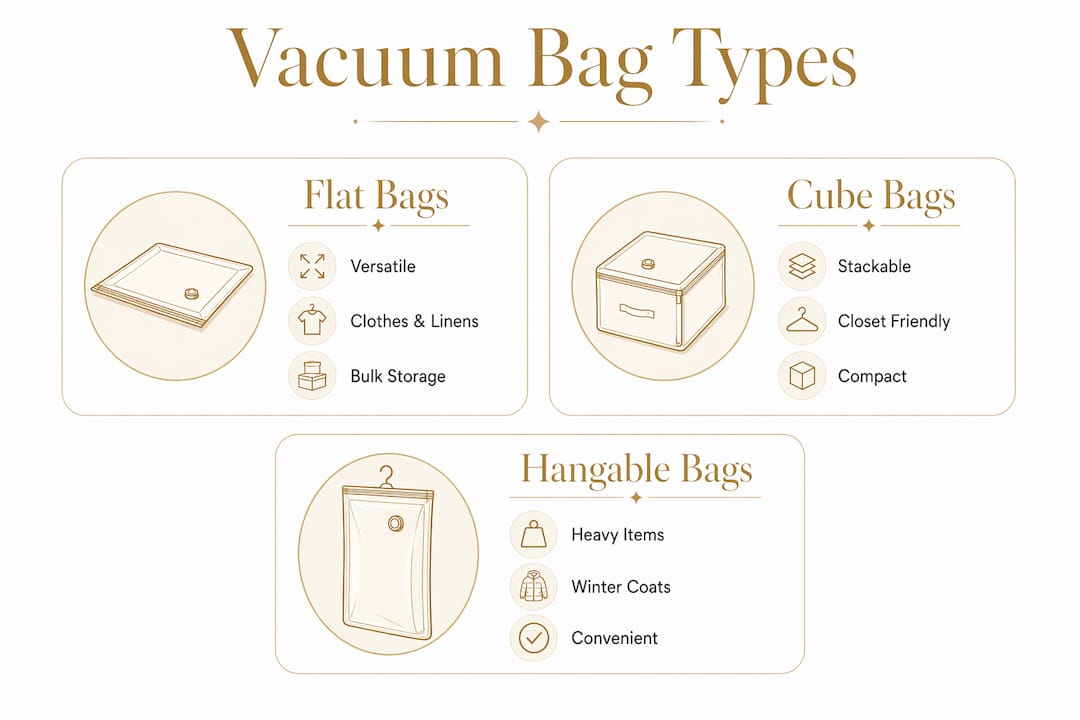
Choosing the right size matters more than most people realize. Smaller bags for categories allow easier retrieval without resealing the entire bag, a tip from professional organizer Michele Vig that saves real time when you need one item from a packed closet. Mixing sizes also keeps your storage area organized rather than creating one giant, unmanageable block.
What you need to get started:
On the material side, puncture-resistant plastic bags with double-zip seals and reliable one-way valves are the standard to look for. Thin, bargain bags may compress fine at first but fail within weeks. Quality bags maintain an airtight seal for six months when properly maintained, which is the benchmark worth holding any purchase to.
Follow this process and you will get a clean, tight compression every time. Skipping steps, especially the folding and sealing stages, is where most people run into trouble.
Declutter first. Pull out everything you plan to store and edit it down. Professional organizer Jill Moore is direct on this point: declutter before vacuum storage to avoid simply hiding clutter in a compressed form you will forget about for months.
Wash and fully dry all items. Storing damp fabric creates mildew inside the sealed bag. This step is non-negotiable for anything going into long-term storage.
Fold items flat and stack neatly. Smooth, flat folds reduce air pockets and allow more even compression. For comforters, fold in thirds lengthwise, then fold again to match the bag dimensions.
Fill the bag without overstuffing. Leave at least two inches of space at the top. Overstuffing raises leak risk by putting excess pressure on the zipper seal, which is the most common failure point.
Seal the double-zip closure completely. Run your fingers along the entire zipper track twice. Wipe the seal area with a damp cloth first to remove any lint or fabric fibers that could break the airtight connection.
Attach your vacuum hose to the valve. Press the hose firmly over the valve cap and switch the vacuum on. Watch the bag flatten steadily. Keep the hose in place until no more air is being drawn out.
Close the valve cap immediately. Snap it shut the moment you remove the hose. Any delay lets air back in before the valve seals itself.
Check the seal. Press gently on the compressed bag. If it stays flat and firm, the seal is good. If it slowly puffs back up, open it, re-check the zipper, and repeat.
Pro Tip: For clothes and sweaters, roll items into tight cylinders before placing them in the bag rather than flat-folding. Rolling pushes out more air during the packing stage, so the vacuum has less work to do and the final compression is tighter.
For bedding specifically, lay the bag flat on the floor rather than a bed during compression. A firm surface lets the bag flatten more evenly and prevents the valve from being blocked by a soft mattress surface.
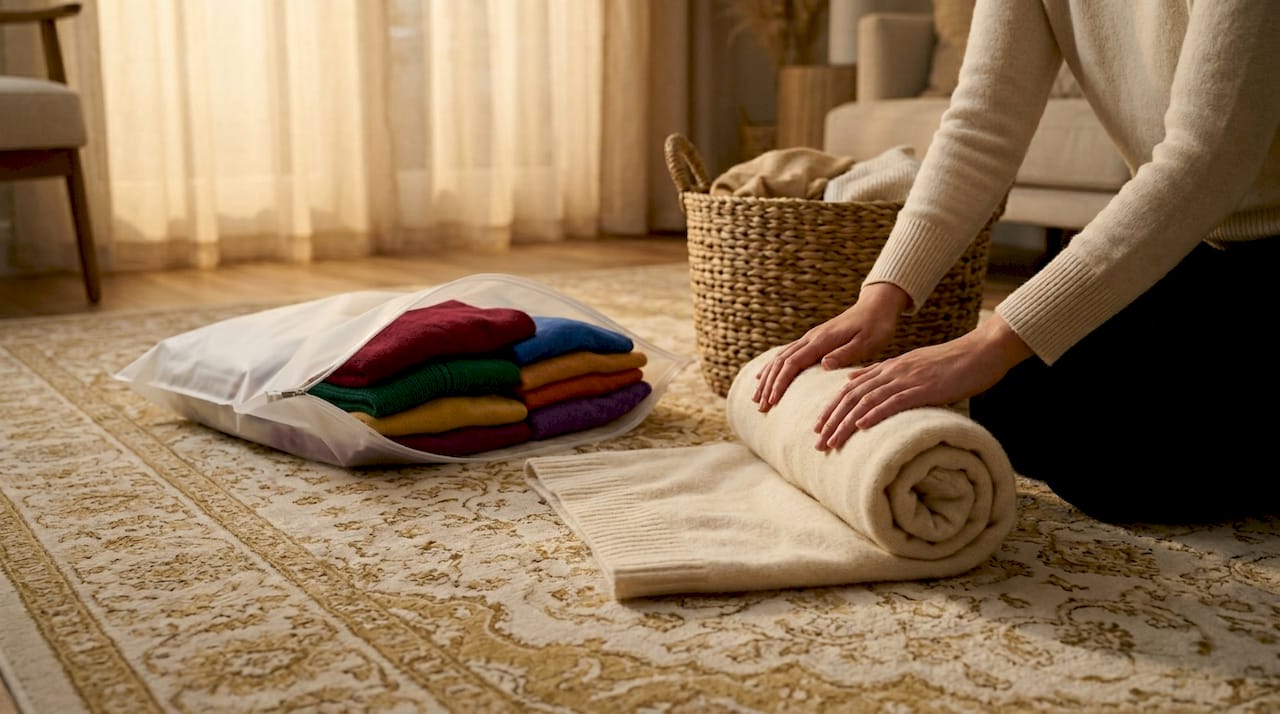
Using a household vacuum is faster than hand pumps for home use, and the difference is noticeable on large bags. A jumbo comforter bag that takes four minutes with a hand pump takes under a minute with a vacuum cleaner hose. Save the electric handheld pump for travel bags or situations where dragging out the vacuum is impractical.
Even good bags develop problems over time. Knowing where to look and what to do keeps your storage system working without replacing bags every season.
Common problems and fixes:
Vacuum storage bags provide water resistance against spills but are not waterproof if submerged. Flooding or a leaking pipe can introduce moisture and cause mildew if bags are stored at floor level in a basement or garage. Elevate stored bags on shelving whenever possible.
Warranty length is a reliable signal of quality. Some brands offer 90-day coverage while others extend to one year. A one-year warranty indicates the manufacturer trusts the valve and seal construction enough to back it. When comparing options, treat anything under 90 days as a red flag.
For long-term care, store empty bags folded flat in a drawer or bin rather than crumpled. Creasing the plastic repeatedly weakens it at the fold lines. Loaded bags should be stacked horizontally on a shelf or hung if using hangable styles, rather than piled vertically where the weight can deform the compressed contents.
Not every bag works equally well for every item. Matching the bag design to what you are storing saves frustration and protects your belongings.
Standard flat bags are the most versatile. They work for clothing, linens, pillows, and seasonal textiles. Large flat bags handle comforters and duvets well, though the resulting compressed bundle can be heavy and awkward to reposition frequently. These bags are better suited for seasonal storage than for items you access regularly, since resealing takes time and the compressed shape is not always easy to stack neatly.
Cube-shaped bags solve the stacking problem. Their uniform shape fits neatly on closet shelves and inside storage bins, making them a good choice for folded clothing sets, towels, or anything you want to keep in tidy rows. They tend to hold less volume than a jumbo flat bag, so they work best for medium-sized loads.
Hangable vacuum bags are the standout option for heavy blankets and winter coats. Hangable bags with internal hooks prevent damage to bulky textiles and support the weight of compressed items better than flat storage, which can deform fabric over time. If you have a closet rod with spare space, this style keeps bulky items accessible and protects their loft far better than floor stacking.
Pro Tip: Use a mix of bag sizes rather than buying one size in bulk. Smaller bags for categorized groups of items, such as one bag per person’s off-season clothes, make retrieval faster and keep your storage area organized. You can find clever clothes storage ideas that pair well with vacuum bags for a complete closet system.
For size guidance: small bags handle up to four sweaters or six T-shirts, medium bags fit a twin comforter or six to eight pairs of jeans, and jumbo bags accommodate a king-size comforter or a full winter coat collection.
Storage vacuum bags work best when you match bag type to item, seal carefully, and declutter before packing rather than using compression to hide things you should have sorted out first.
| Point | Details |
|---|---|
| Declutter before packing | Vacuum bags compress clutter, not just belongings. Edit items first for a truly organized result. |
| Match bag size to item category | Smaller categorized bags allow faster retrieval without resealing an entire large bag. |
| Use a household vacuum for speed | A vacuum cleaner compresses bags faster and more thoroughly than a hand pump for home use. |
| Check valve and zipper every use | These are the two primary failure points. A clean, fully closed seal prevents slow air leaks. |
| Hangable bags protect bulky textiles | Internal hooks preserve fabric loft in heavy blankets and coats better than flat floor storage. |
I will be honest with you: the first time I used vacuum seal storage bags, I made every mistake in the book. I stuffed a jumbo bag so full the zipper barely closed, skipped the damp-cloth wipe on the seal, and wondered why the bag was half-inflated again by morning. The fix was not a better bag. It was a better process.
The advice I give now is to treat the sealing step as the most important part of the whole system, not an afterthought. A bag that compresses beautifully but leaks overnight is worse than no bag at all because you think the job is done when it is not. Wipe the zipper track, close it twice, and check the valve cap before you walk away.
The other thing worth saying plainly: vacuum bags are not a substitute for organized closet storage. They are a tool within a larger system. If you pull out your winter wardrobe in October and have no idea what is in half the bags because you sealed them in a rush last April, the bags have not helped you. Label everything. Use one bag per category. And rotate your seasonal items on a schedule so nothing gets forgotten for two years under a bed.
The bags I trust most are the ones with a one-year warranty and a double-zip seal you can feel click shut. Thin plastic and flimsy valves are a false economy. Buy fewer, better bags and they will serve you through multiple seasons without drama.
— Cozee

If this guide has you ready to tackle that overstuffed closet or chaotic storage room, Cozee-bay has the tools to help you finish the job. Our storage bag collection is built for real homes, with durable materials, multiple sizes, and designs that work alongside the organization systems you already have. Whether you are compressing off-season bedding, clearing out a spare room, or finally sorting the kids’ closets, you will find options that fit. Visit Cozee-bay’s storage solutions to browse the full range, and check out our blog for more practical guides on home organization best practices that go beyond just the bags.
Storage vacuum bags are used to compress bulky household items like comforters, winter clothing, pillows, and blankets by removing air, reducing their volume significantly so they take up less closet or under-bed space.
High-quality vacuum seal storage bags with double-zip seals and reliable valves can maintain an airtight seal for up to six months when properly stored and the zipper and valve are kept clean and undamaged.
Yes. A standard household vacuum cleaner with a hose attachment is the fastest and most effective tool for compressing space saver vacuum bags at home, outperforming hand pumps significantly on large bags.
Reusable vacuum storage bags are worth the investment when made from puncture-resistant plastic with a solid warranty. Look for brands offering at least a 90-day to one-year warranty as a sign of durable construction.
Store empty reusable vacuum storage bags folded flat in a drawer or bin to prevent crease damage to the plastic. Loaded bags should be placed on shelving rather than stacked vertically to avoid deforming compressed contents.
Comments will be approved before showing up.