Your Cart is Empty


TL;DR:
- Bamboo wall decor includes panels, slats, and art pieces that add natural warmth and texture to interiors.
- It is suitable for various rooms and options like peel-and-stick murals make it renter-friendly, easy to install, and removable.
- Limiting bamboo decor to one feature wall, proper sealing, and pairing with natural materials create balanced, eco-friendly spaces.
Bamboo wall decor is defined as any wall treatment or art piece made from bamboo materials, including solid panels, slat systems, murals, and sculptural hangings, used to add natural texture and warmth to interior spaces. Whether you own your home or rent an apartment, bamboo gives you a lightweight, sustainable design option that works in living rooms, bedrooms, bathrooms, and even covered patios. Architectural experts confirm bamboo’s lightweight versatility makes it a preferred material for warm, textured interiors without heaviness. This guide covers every major bamboo wall decor format, room-by-room styling ideas, installation tips, and renter-friendly solutions so you can get started with confidence.
Bamboo wall decor falls into three primary formats: full panels, slat wall systems, and sculptural or framed art pieces. Each format serves a different purpose, fits different budgets, and suits different skill levels. Knowing which one fits your space saves you time, money, and the frustration of a project that does not look the way you imagined.
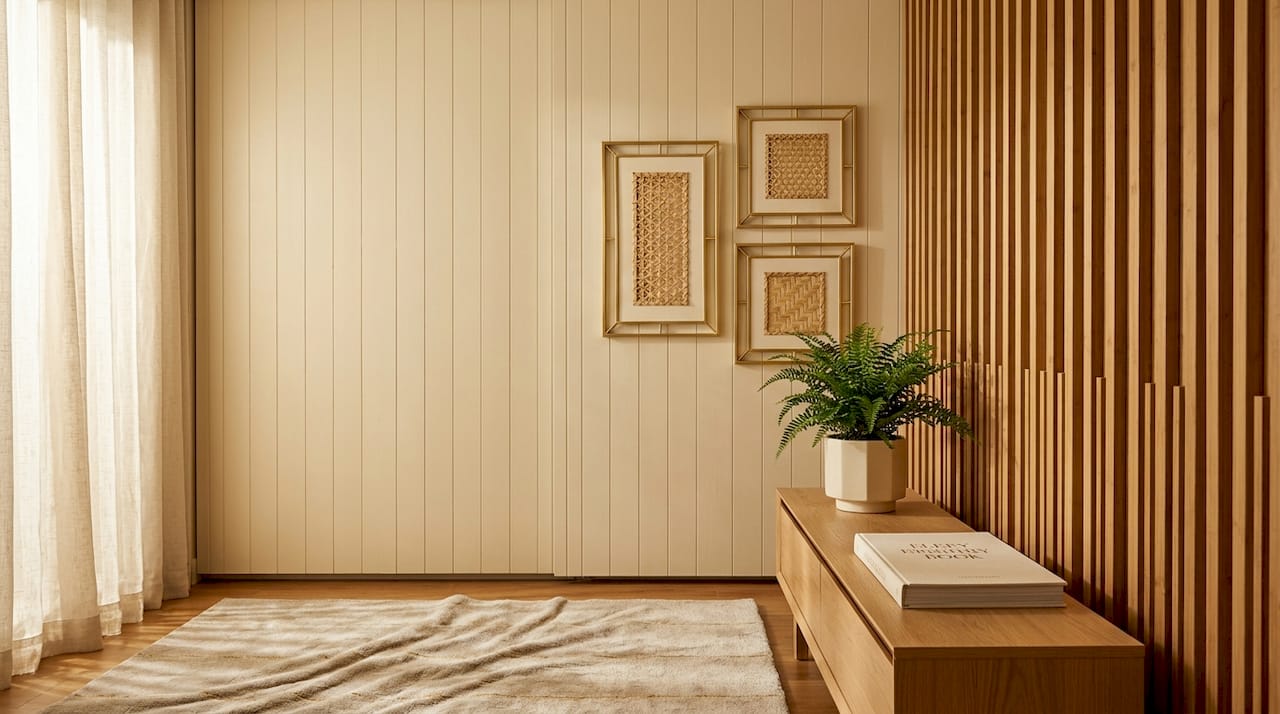
Full bamboo panels come in standard 4x8-foot sheets with horizontal, vertical, or woven strand grain patterns. They install much like beadboard, using adhesive and finish nails, and they require acclimation to your home’s humidity before installation to prevent buckling. This step alone separates a clean, lasting result from a warped wall six months later.
Slat wall systems use individual bamboo poles or strips mounted with deliberate spacing to create depth and shadow. Slat spacing typically ranges from 1/2 inch to 2 inches, and that gap is where the magic happens. Wider gaps let you hide LED strip lights behind the slats for a warm, atmospheric glow that transforms a plain wall into a focal point.
Sculptural and framed bamboo art covers everything from woven bamboo wall hangings to geometric bamboo frames and carved panels. These pieces work at a smaller scale, require no major installation, and are the easiest entry point for anyone new to bamboo interior design.
| Format | Best use | DIY level | Moisture resistance |
|---|---|---|---|
| Full panels | Feature walls, large rooms | Moderate | Moderate (seal required) |
| Slat wall systems | Living rooms, entryways | Moderate | Low (seal required) |
| Sculptural art | Accents, renters, small spaces | Easy | High (no wall contact) |
| Peel-and-stick murals | Renters, temporary installs | Very easy | Low |
Pro Tip: Designers recommend limiting bamboo wall decor to one feature wall per room. Using bamboo on every wall overwhelms the space and cancels out the natural warmth you are trying to create.
Renters do not have to sit out the bamboo trend. Peel-and-stick bamboo murals from brands like FancyWalls and Society6 give you a full-wall bamboo forest effect without a single nail hole or lease violation. FancyWalls produces PVC-free, GreenGuard-certified self-adhesive murals that reposition cleanly when walls are properly primed. Society6 wallpaper leaves no residue and wipes down with mild soap, which is exactly what a landlord wants to hear.
The key to a clean removal is wall preparation. Smooth, primed walls let peel-and-stick panels release without tearing paint or leaving adhesive behind. If your walls are textured, apply a thin skim coat of joint compound first, let it dry fully, then prime before applying any mural.
Here are the most practical renter-friendly bamboo wall decor options:
Pro Tip: Before applying any peel-and-stick mural, prep your wall with a coat of primer and let it cure for at least 72 hours. This single step is what separates a mural that peels off cleanly from one that takes your paint with it.
Combining a bamboo mural with a few real bamboo hangings layered in front of it adds dimension that a flat mural alone cannot achieve. Vogue’s design editors note that layering one wall covering as the lead element while others support it creates a balanced, sophisticated interior. That principle applies perfectly to bamboo decor inspiration in rental spaces.
Different rooms call for different bamboo treatments. A slat wall that looks stunning in a living room would be impractical in a steam-filled bathroom without the right preparation. Here is how to approach each space.
Place a bamboo slat wall or full panel directly behind your sofa to create a feature wall that anchors the seating area. Vertical bamboo slats draw the eye upward and make narrow living rooms feel taller, which is a simple trick that costs nothing extra. Pair the bamboo wall with rattan furniture, linen cushions, and a jute rug for a layered, cohesive look. You can find bamboo living room ideas that blend panels with plants and natural textiles for a complete design picture.
A bamboo panel or slat wall behind the bed replaces a traditional headboard and adds a spa-like calm to the room. Boho-style bedrooms benefit from combining bamboo wall hangings with macrame accents and woven throw blankets. Keep the rest of the walls neutral so the bamboo feature stays the clear focal point.
Bamboo in a bathroom is absolutely possible, but it requires sealing. Bamboo in bathrooms must be treated with water-based polyurethane or tung oil to resist moisture and mold. Pair bamboo accents with an exhaust fan running during every shower, and you extend the life of your installation significantly. Small bamboo art pieces or a single framed bamboo panel work better here than a full slat wall.
Vertical bamboo panels in an entryway create an immediate impression the moment someone walks through your door. Add LED strip lighting behind slats to make the entryway feel warm and welcoming even at night. Keep the floor clear and let the bamboo wall do the visual heavy lifting.
Bamboo works on covered patios where it is protected from direct rain. Use marine-grade sealant rather than standard polyurethane for outdoor applications, and plan to reapply every one to two years depending on your climate. Combining bamboo wall panels with string lights and outdoor rattan seating creates a backyard retreat that feels intentional and designed.
Getting bamboo wall decor right comes down to preparation, the right tools, and consistent maintenance. Rushing any of these steps is what leads to panels that warp, slats that look uneven, or a mural that peels at the corners.
Wall preparation is the foundation of every successful bamboo installation. Sand rough spots, fill holes with spackle, and prime the surface before attaching any bamboo material. For peel-and-stick options, a smooth, primed wall is non-negotiable.
Acclimation matters for solid bamboo panels. Leave panels in the room where they will be installed for at least 48 to 72 hours before cutting or mounting. This allows the bamboo to adjust to the room’s temperature and humidity, which prevents buckling after installation.
Tools you will need for a slat wall or panel installation:
Sealing bamboo correctly makes the difference between a wall that lasts years and one that deteriorates within months. Apply 2 to 3 coats of water-based polyurethane, sanding lightly between each coat with 220-grit sandpaper. Tung oil is a good natural alternative that penetrates the bamboo fibers rather than sitting on the surface.
Pro Tip: For slat walls with backlighting, run your LED strip along the back of each slat before mounting. Testing the lighting layout before final installation saves you from having to unmount slats to fix wiring later.
Styling bamboo walls works best when you treat bamboo as the lead material and let everything else support it. Neutral furniture in white, cream, or warm gray lets the bamboo texture stand out. Woven textiles and rattan complement bamboo without competing with it, creating the kind of natural, layered ambiance that defines modern eco-friendly design. Avoid pairing bamboo with cold, industrial materials like polished chrome or concrete, since those combinations tend to fight each other visually.
For ongoing maintenance, dust bamboo walls monthly with a dry microfiber cloth. Wipe sealed surfaces with a lightly damp cloth as needed. Reapply sealant every two to three years in high-humidity rooms like bathrooms and kitchens. You can explore more creative bamboo home decor ideas that pair well with these maintenance-friendly approaches.
Bamboo wall decor works best as a single feature wall, properly sealed and paired with natural textures like rattan and woven textiles for a balanced, eco-friendly interior.
| Point | Details |
|---|---|
| One feature wall rule | Limit bamboo to one wall per room to maintain visual balance and avoid overwhelming the space. |
| Seal for moisture protection | Apply 2 to 3 coats of water-based polyurethane or tung oil in bathrooms, kitchens, and outdoor spaces. |
| Renters have real options | Peel-and-stick murals from FancyWalls and Society6 install and remove cleanly on primed walls. |
| Spacing drives the look | Slat gaps between 1/2 inch and 2 inches control visual density and allow for LED backlighting. |
| Pair with natural materials | Rattan, woven textiles, and linen complement bamboo without competing with its texture. |
Working closely with bamboo products has taught me one thing that most design guides skip: bamboo rewards patience. The homeowners and renters who get the best results are the ones who let panels acclimate, prep their walls properly, and resist the urge to cover every surface. The ones who rush end up with warped panels and peeling murals, and then they blame the material when the real issue was the process.
I have also noticed that bamboo looks its absolute best when it is not trying to do everything. One well-placed slat wall with warm LED backlighting behind a sofa creates more impact than bamboo on three walls ever could. That restraint is what separates a thoughtfully designed room from one that just looks busy.
The renter-friendly options available today genuinely impress me. A few years ago, renters were stuck with framed prints and removable decals. Now, GreenGuard-certified peel-and-stick murals from brands like FancyWalls give renters a full bamboo forest wall that comes down cleanly when the lease ends. That is a real shift, and it opens bamboo interior design to a much wider audience.
My honest advice: start with one bamboo wall hanging or a small framed bamboo art piece before committing to a full panel installation. Get a feel for how bamboo interacts with your light, your furniture, and your color palette. Then scale up from there. You will make better decisions and end up with a space you genuinely love.
— Cozee
If these ideas have you ready to transform a wall in your home, Cozee-bay is a great place to start. Cozee-bay curates eco-friendly, handcrafted bamboo products built for both style and durability, designed for homeowners and renters who want sustainable design without sacrificing quality.

From bamboo home accents to functional pieces that complement your wall decor, every product at Cozee-bay reflects a commitment to sustainable materials and thoughtful craftsmanship. Free shipping within the contiguous U.S. and a money-back guarantee mean you can shop with confidence. Browse the full collection and find the bamboo pieces that fit your space, your style, and your values.
Peel-and-stick bamboo murals from FancyWalls and Society6 are the top choice for renters because they install without permanent damage and remove cleanly from primed walls. Bamboo wall hangings attached with Command strips are another zero-damage option that can be swapped seasonally.
Bamboo slat walls are installed using adhesive and finish nails on a prepared, level wall surface, with spacer blocks maintaining consistent gaps between slats. Tools like a miter saw or Japanese pull saw make clean cuts, and LED strips can be hidden in the gaps for backlighting.
Yes, but bamboo used in bathrooms must be sealed with water-based polyurethane or tung oil to resist moisture and prevent mold. Running an exhaust fan during every shower and reapplying sealant every two to three years extends the life of the installation significantly.
Designers recommend limiting bamboo wall decor to one feature wall per room to avoid visual overload and maintain a balanced interior. One well-executed bamboo wall creates more impact than multiple competing surfaces.
Rattan furniture, woven textiles, linen, and jute rugs all complement bamboo wall decor without competing with its natural texture. Neutral wall colors in white, cream, or warm gray let the bamboo surface remain the visual focal point of the room.
Comments will be approved before showing up.