Your Cart is Empty


TL;DR:
- Bamboo plants enhance office spaces by providing aesthetic appeal and supporting mental well-being through biophilic design. They offer limited air quality improvements when used individually but can contribute to a healthier environment when combined with proper ventilation systems. Choosing sustainable bamboo and easy-care species like lucky bamboo aligns with eco-conscious office practices, while strategic placement fosters calm and natural connection.
The benefits of bamboo plant in office environments are defined by three measurable outcomes: improved visual appeal, reduced employee stress, and localized air quality support. Most office workers spend over 40 hours a week indoors, and the plants sharing that space matter more than most managers realize. What’s less understood is that the “lucky bamboo” sitting on most office desks is technically Dracaena sanderiana, not a true bamboo species at all. That distinction shapes everything from care routines to realistic expectations. This article breaks down what the science actually says in 2026, what bamboo plants genuinely deliver, and how to make the most of them in your workspace.
Bamboo plants bring a clean, minimalist aesthetic that fits naturally into modern office styles, from open-plan coworking spaces to executive suites. Their upright, sculptural form adds visual interest without overwhelming a desk or shelf. That matters because cluttered, visually noisy workspaces are consistently linked to higher reported stress levels among office workers.
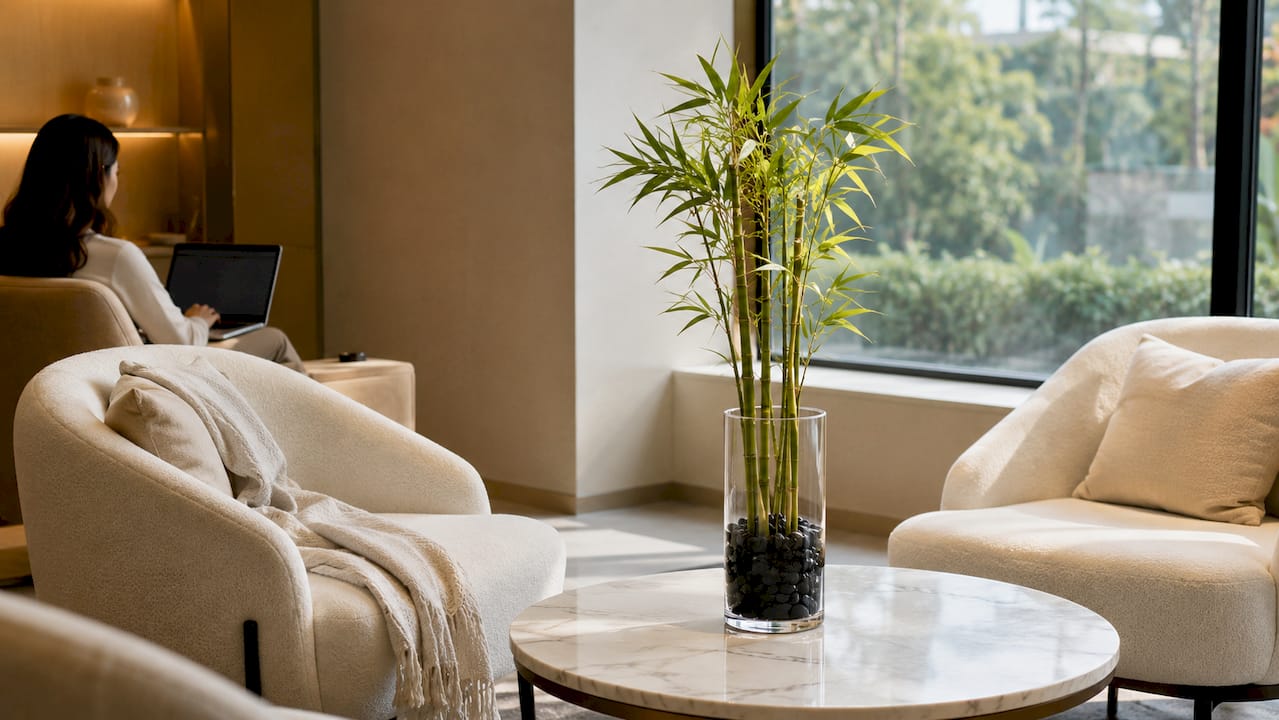
Biophilic design is the formal term for incorporating natural elements into built environments to support human well-being. Architects and interior designers at firms like Gensler and HOK have applied biophilic principles in major corporate offices, citing measurable improvements in employee satisfaction and perceived comfort. Bamboo plants, with their vertical lines and natural texture, are one of the most space-efficient ways to introduce this effect.
The bamboo plant office advantages go beyond looks. Consider these practical placement options:
Pro Tip: Place lucky bamboo near a window with indirect light rather than directly in a sunny spot. Direct sun scorches the leaves and turns them yellow, which defeats the visual purpose entirely.
Using bamboo in office decor also signals something to employees and visitors alike: that the organization values natural, sustainable choices. That signal carries weight with environmentally conscious staff and clients, especially as workplace sustainability becomes a hiring and retention factor.
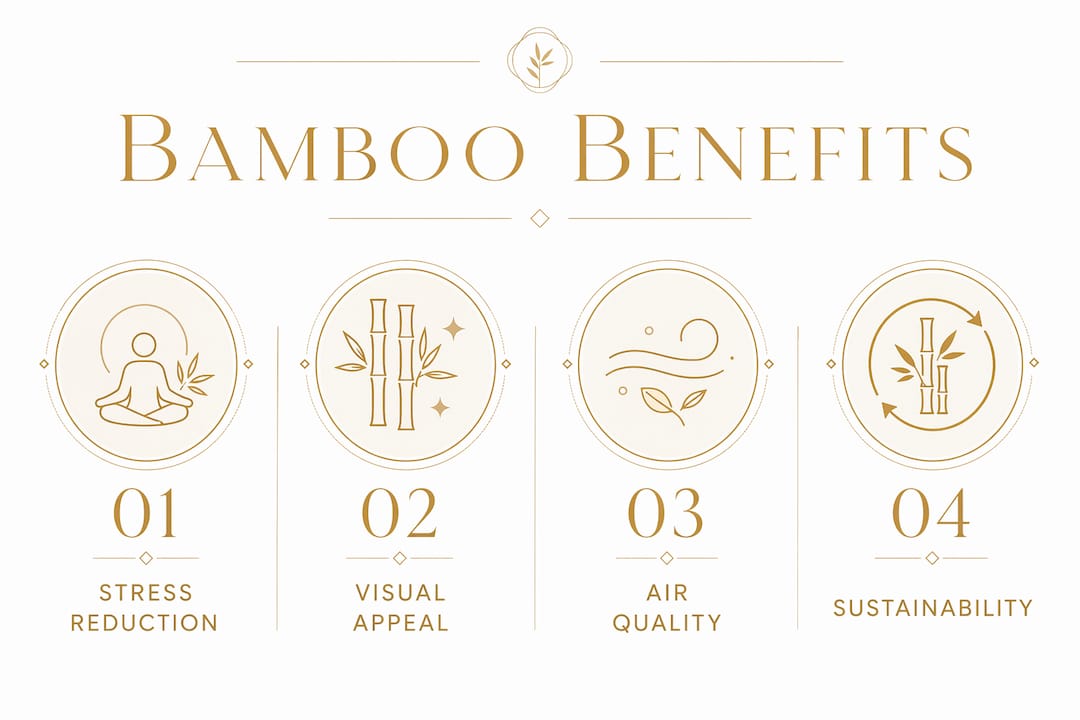
Bamboo for workplace wellness is not a marketing claim. A systematic review on nature in offices published in 2026 confirms that exposure to natural elements in the workspace improves worker stress response and reported well-being. The strongest effects come from outdoor access, but plants provide meaningful support when windows and green spaces are not available. That finding is significant for the millions of office workers in urban high-rises with no direct outdoor access during the workday.
The psychological mechanism is straightforward. Visual exposure to natural forms, including bamboo’s soft green color and organic shape, activates the parasympathetic nervous system, the part of your body that slows your heart rate and lowers cortisol. You do not need a forest. A plant on your desk can shift your physiological state during a stressful afternoon.
Research on green exercise and mental well-being found a standardized mean difference of 0.46 for well-being improvement when people are exposed to natural environments. That is a moderate but meaningful effect size, comparable to the benefit of a short mindfulness session. For office managers, this translates directly: adding plants to break rooms and high-traffic areas is a low-cost intervention with documented psychological returns.
“Biophilic design including plants is a cost-effective approach to reduce workplace stress and support employee mental health when outdoor nature access isn’t possible.” — Nature in the Office, 2026 systematic review
A few practical notes on realistic expectations:
The indoor bamboo benefits for mental health are real, but they work best as part of a deliberate workspace design, not as an afterthought.
The honest answer is: yes, but modestly. NASA’s 1989 Clean Air Study demonstrated that plants can remove pollutants in controlled, sealed chamber conditions. The problem is that a real office is not a sealed chamber. Real-world air quality benefits from desk plants are limited by room size, ventilation rates, and the sheer number of plants required to make a measurable difference. One lucky bamboo on your desk will not filter the air in a 2,000-square-foot open office.
More recent research offers a clearer picture of what actually works at scale. Active green walls with multiple plant species removed 96 to 98% of indoor pollutants after 24 hours in controlled conditions. Single desk plants have much lower efficacy. The difference is engineering: green walls combine dense plant mass with airflow systems that pull air through the root zone, where most biological filtration happens.
Here is a realistic comparison of bamboo plant air quality options for offices:
| Setup | Pollutant Removal | Best For |
|---|---|---|
| Single lucky bamboo on desk | Marginal, localized | Aesthetics and wellness |
| Multiple plants across office | Low to moderate | Supplemental air support |
| Active green wall system | 96 to 98% in controlled tests | Serious IAQ improvement |
| HVAC with HEPA filtration | Consistent, measurable | Primary air quality management |
The takeaway is clear. Desk bamboo plants should be combined with proper ventilation systems for effective indoor air quality management, not treated as a substitute. Plants are an add-on measure, not a replacement for filtration or ventilation. If your office has air quality concerns, start with your HVAC system and treat bamboo plants as a complementary layer.
Pro Tip: If you want plants to contribute meaningfully to air quality, aim for at least one medium-sized plant per 100 square feet of office space. That density starts to produce noticeable localized benefits, especially in rooms with limited ventilation.
Bamboo is one of the most rapidly renewable plant materials on earth, capable of growing several feet per day under ideal conditions and reaching harvest maturity in three to five years, compared to decades for hardwood trees. That growth rate translates directly into a lower environmental footprint for bamboo-based products and plants. Bamboo-based product prototypes demonstrate a 56% lifecycle emissions reduction compared to similar plastic products. That figure puts bamboo in a different category from most office décor materials.
For office managers building a greener workplace, bamboo plants are a visible, low-cost signal of eco-conscious values. They complement broader sustainable office design initiatives, from recycled furniture to energy-efficient lighting. The plant itself produces oxygen, requires no manufacturing energy, and at end of life, composts naturally.
The sustainability story extends beyond the plant itself. Consider these bamboo office applications:
Choosing bamboo interior decoration for your office is one of the clearest ways to align your physical workspace with your organization’s environmental commitments.
Selecting the right plant and keeping it alive are two skills most office workers never get taught. Here is a practical, step-by-step guide.
The simplicity of lucky bamboo care is genuinely one of its strongest office advantages. You do not need a dedicated plant person on staff. A quick weekly check during the Monday morning routine keeps the plant thriving for years.
Bamboo plants deliver their greatest office value through psychological and aesthetic benefits, not air purification alone, making them a smart, low-maintenance addition to any workspace wellness strategy.
| Point | Details |
|---|---|
| Aesthetic and biophilic value | Bamboo’s minimalist form supports biophilic design and reduces perceived workplace stress. |
| Mental health support | A 2026 systematic review confirms natural elements in offices improve stress response and well-being. |
| Realistic air quality role | Single desk plants offer localized, marginal air benefits; combine with HVAC for real IAQ results. |
| Sustainability credentials | Bamboo-based products show a 56% lifecycle emissions reduction compared to plastic alternatives. |
| Species selection matters | Lucky bamboo (Dracaena sanderiana) is the practical office choice due to low light tolerance and minimal care needs. |
I used to think office plants were purely decorative, a nice-to-have for companies with extra budget and a design-conscious HR team. After spending years working with bamboo products and watching how people interact with natural elements in commercial spaces, I changed my mind completely.
What struck me first was not the air quality research. It was watching people slow down near bamboo arrangements in lobbies and break rooms. They would pause, adjust the stalks, or just glance at the plant for a few seconds before moving on. That small moment of connection with something living and natural is genuinely restorative in a way that a motivational poster or a new coffee machine is not.
The air quality conversation is where I think most articles get it wrong. They either oversell plants as air purifiers or dismiss them entirely. The truth sits in the middle. A desk plant will not save you from poor ventilation, but it does something that a HEPA filter cannot: it makes the space feel calmer and more human. For managers building a workplace where people actually want to spend time, that matters.
My honest advice is to start with one or two lucky bamboo arrangements in high-visibility spots, your reception area, the main conference room, or the break room. See how your team responds. Then layer in other sustainable choices, bamboo desk accessories, better ventilation, natural light where possible. The plant is a starting point, not the whole answer.
— Cozee
If the idea of a greener, calmer office has you ready to make some changes, Cozee-bay is a practical place to start. Cozee-bay specializes in eco-friendly, handcrafted bamboo products designed for both home and commercial use, from bamboo paper towel dispensers used in restaurants, schools, and senior living centers to desk organizers and kitchen accessories that replace plastic with something far more sustainable. Every product is built with the same philosophy behind a good office bamboo plant: natural materials, clean design, and long-lasting function. Browse the full range of bamboo office solutions at Cozee-bay and find pieces that work as hard as your team does. Free shipping within the contiguous U.S. and a money-back guarantee make it easy to try something new.
The primary benefit is psychological. Bamboo plants support stress reduction and improved well-being through biophilic design, as confirmed by a 2026 systematic review of nature in office environments.
No. Most office bamboo is Dracaena sanderiana, a tropical plant unrelated to true bamboo. It tolerates low light and water-based growing conditions, making it far more practical for office desks than true bamboo species.
A single desk plant provides only marginal, localized air quality improvement. Active green wall systems with multiple species remove significantly more pollutants, and any plant-based approach should be paired with proper HVAC ventilation.
Check the water level weekly and do a full water change every two weeks. Use filtered or distilled water to prevent fluoride buildup, which causes leaf tip browning over time.
For visible wellness and aesthetic impact, even one or two well-placed arrangements make a difference. For any meaningful air quality contribution, aim for at least one medium-sized plant per 100 square feet of office space.
Comments will be approved before showing up.