Your Cart is Empty


TL;DR:
- Bamboo wall designs add natural warmth, texture, and sustainable style to various interior spaces. Popular formats include slat walls, panels, and gallery baskets, adaptable to many decor styles. Proper installation and material choice are essential for durability, especially in humid areas, with one accent wall per room recommended for balanced aesthetics.
Bamboo wall design ideas are the most practical way to add natural warmth, texture, and sustainable style to any interior without the heavy installation demands of stone or reclaimed wood cladding. Whether you are a homeowner refreshing a single accent wall or an interior designer specifying materials for a full renovation, bamboo delivers results that look expensive and feel grounded. The material works across minimalist, Japandi, boho, and tropical styles, making it one of the most flexible choices in bamboo interior design today. This guide covers every major application, from slat walls to ceiling treatments, with real installation advice you can act on.
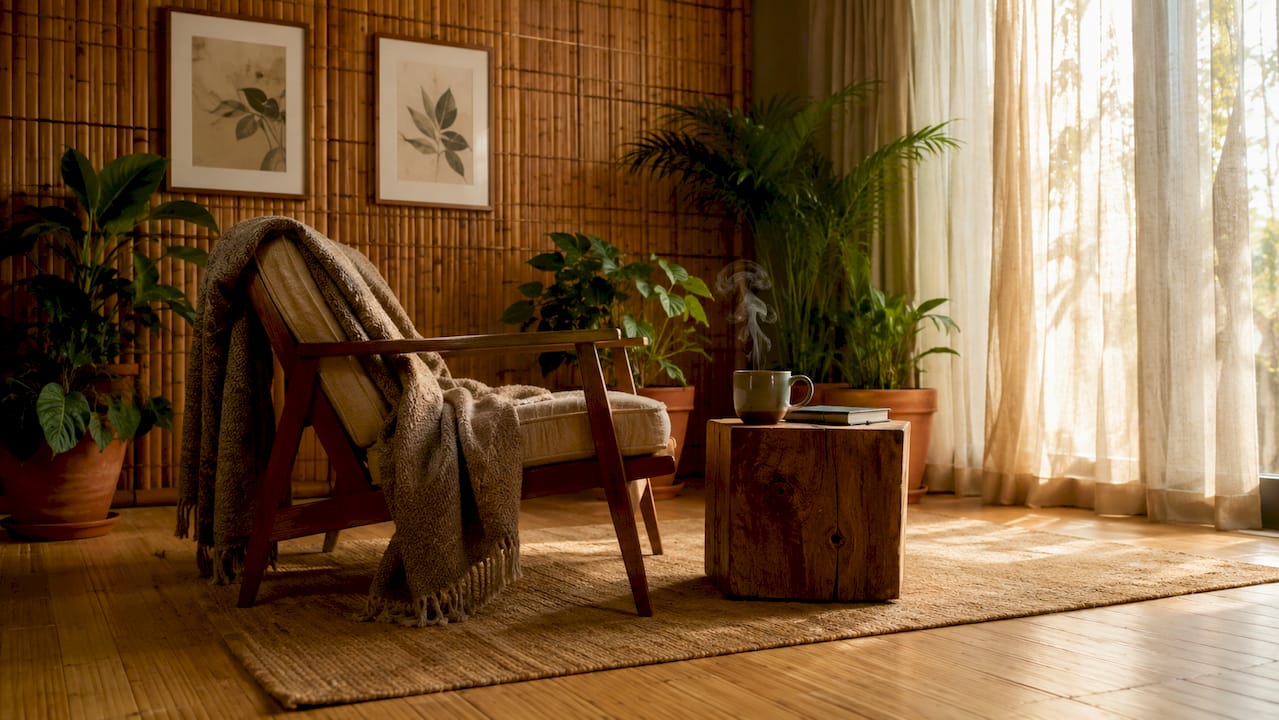
The three most recognized formats for bamboo walls are slat walls, decorative panels, and gallery-style basket clusters. Each one serves a different design goal, and knowing which fits your space saves you time and money before you buy a single pole.
Pro Tip: When choosing between slat walls and flat panels, consider the room’s existing texture. Slat walls add strong shadow lines and depth; flat panels read as quieter and more refined. Match the energy of the treatment to the room’s overall mood.
Installation is where most bamboo wall projects either succeed or fail. The material itself is forgiving, but the mounting method determines whether your wall looks great for a decade or starts sagging within a year.
Pro Tip: Seal the cut ends of natural bamboo poles with a clear wood sealant before mounting. The ends are the most porous part of the stalk and the first place moisture damage appears.
Placement matters as much as the material itself. Bamboo works in almost every room, but certain locations produce dramatically better results than others.
| Room or Area | Best Bamboo Application | Primary Benefit |
|---|---|---|
| Living room accent wall | Full slat wall or woven panel behind sofa | Adds warmth and focal depth |
| Bedroom headboard wall | Backlit bamboo panel or slat system | Creates spa-like ambiance |
| Entryway | Vertical slat screen or basket gallery | Strong first impression |
| Open-plan divider | Partial-height bamboo screen | Zones space without blocking light |
| Ceiling treatment | Flat bamboo panels or woven mats | Architectural interest, visual height |
| Outdoor entertaining area | Bamboo screening or facade panels | Privacy and tropical aesthetic |
A few placement principles are worth knowing before you commit:
Bamboo’s natural grain complements minimalist, Japandi, and boho interior styles by adding warmth and layered texture without adding visual clutter. That flexibility is what separates bamboo from most other natural wall materials.
Here is how bamboo reads across the most popular current styles:
Bamboo also wins on sustainability. It provides organic texture and warmth without the heavy installation challenges common in stone or reclaimed wood cladding. Moso Bamboo, one of the most widely used species in wall paneling, grows to harvest maturity in three to five years compared to decades for hardwood trees. That growth rate makes it one of the most genuinely renewable building materials available.
| Material | Installation Difficulty | Sustainability | Cost Range |
|---|---|---|---|
| Bamboo panels | Low to moderate | Very high | $ to $$ |
| Reclaimed wood | Moderate to high | High | $$ to $$$ |
| Stone cladding | High | Low to moderate | $$$ to $$$$ |
| Ceramic tile | Moderate | Moderate | $$ to $$$ |
One rule applies across every style: limit bamboo accent walls to one per room. More than one bamboo wall in the same space tips the aesthetic from intentional to overwhelming, and not in a good way.
The most memorable bamboo interiors go beyond standard panels. These approaches give you a genuinely original result without requiring professional installation.
Pro Tip: For wall-mounted bamboo planters, use a waterproof liner inside the bamboo frame to protect the wall surface. Even moisture-resistant bamboo can transfer condensation to drywall over time.
You can find more ideas for pulling these looks together in Cozee-bay’s bamboo wall decor guide, which covers styling tips specific to living rooms and open-plan spaces.
Bamboo wall design works best when you match the treatment format to the room’s scale, style, and moisture level before you buy or install anything.
| Point | Details |
|---|---|
| Match format to room scale | Use slat walls in larger rooms; basket clusters and hangings work better in smaller spaces. |
| Install into studs, not drywall | Heavy slat systems require a backing board screwed into studs for lasting structural support. |
| Use treated bamboo in wet areas | Synthetic or treated bamboo prevents warping and mold in bathrooms and kitchens. |
| Limit to one accent wall | One bamboo wall per room maintains sophistication; more than one overwhelms the space. |
| Layer with other natural materials | Combining bamboo with metals, textiles, and plants creates depth without overloading the room. |
I have watched bamboo go from a niche material to a genuine design staple over the past several years, and the shift is not just about sustainability trends. Bamboo earns its place because it solves real problems. It is lightweight, which means most homeowners can install a basic panel wall in a weekend without hiring a contractor. It is warm, which means it fixes the cold, sterile feeling that plagues so many modern interiors without requiring a full redesign.
The part most people get wrong is restraint. I see rooms where bamboo covers three walls, the ceiling, and half the furniture, and the result feels like a prop set rather than a home. One well-chosen bamboo accent wall, paired with clean plaster or painted drywall on the other three sides, makes the bamboo look intentional and expensive. Spread it everywhere and it loses that quality entirely.
Maintenance is also simpler than people expect. A light wipe with a damp cloth handles dust. A coat of natural oil once a year keeps the material from drying out. The only real vulnerability is sustained moisture, which is why treated or synthetic bamboo is non-negotiable in bathrooms. Get that detail right and a bamboo wall will look good for ten years without significant upkeep.
If you are budgeting for a bamboo wall project, plan for the backing board and proper fasteners to cost as much as the bamboo itself. Skimping on the structural side is the most common mistake, and it is the one that turns a beautiful wall into a repair job.
— Cozee
If your bamboo wall project has you thinking about the rest of your space, Cozee-bay has you covered. The brand’s collection of handcrafted, sustainably sourced bamboo products extends well beyond wall decor, giving you a cohesive eco-friendly look from floor to countertop. The Cozee-bay bamboo paper towel dispenser is a practical example: it brings the same natural bamboo warmth you are putting on your walls directly to your kitchen or bathroom counter. Every product ships free within the contiguous U.S. and comes backed by a money-back guarantee, so you can shop with confidence.

Browse the full Cozee-bay catalog to find bamboo accents that tie your wall design together with the rest of your home.
A gallery-style bamboo basket cluster is the easiest starting point. You simply mount woven bamboo baskets or trays in groups of 3 or 5 using standard picture hooks, with no cutting or adhesive required.
Yes, but only if you choose synthetic or treated bamboo. Untreated natural bamboo warps and develops mold in humid environments, so material selection is critical for wet areas.
Vertical bamboo slats draw the eye upward, making narrow or low-ceilinged rooms feel taller and more open. This makes them a practical choice for small apartments and compact bedrooms.
One bamboo accent wall per room is the correct limit. More than one can overwhelm the space and reduce the sophistication of the overall design.
Bamboo complements minimalist, Japandi, boho, and tropical interiors most naturally. Its organic texture adds warmth to clean-lined spaces and layers well with rattan, linen, and natural stone in eclectic rooms.
Comments will be approved before showing up.