Your Cart is Empty


TL;DR:
- Bamboo flower vases are eco-friendly and stylish, crafted from natural materials with artisan techniques. They suit various interior styles and can be homemade using proper curing, sealing, and liners. Owning one enhances home decor with sustainable elegance and thoughtful craftsmanship.
Bamboo flower vase design is the art of crafting eco-friendly, stylish vessels that blend natural materials with skilled craftsmanship to accentuate floral arrangements and home decor. Bamboo’s natural grain, warm tones, and structural strength make it one of the most versatile materials for decorative vessels. Whether you want a sculptural floor piece or a compact desk accent, the right bamboo vase can anchor an entire room’s aesthetic. This guide walks you through the best styles, craftsmanship techniques, DIY ideas, and styling tips to help you choose and use bamboo vases with confidence.
The world of bamboo vase design spans everything from spare, modern forms to richly layered artisan pieces. Knowing the main styles helps you pick what fits your space without second-guessing.
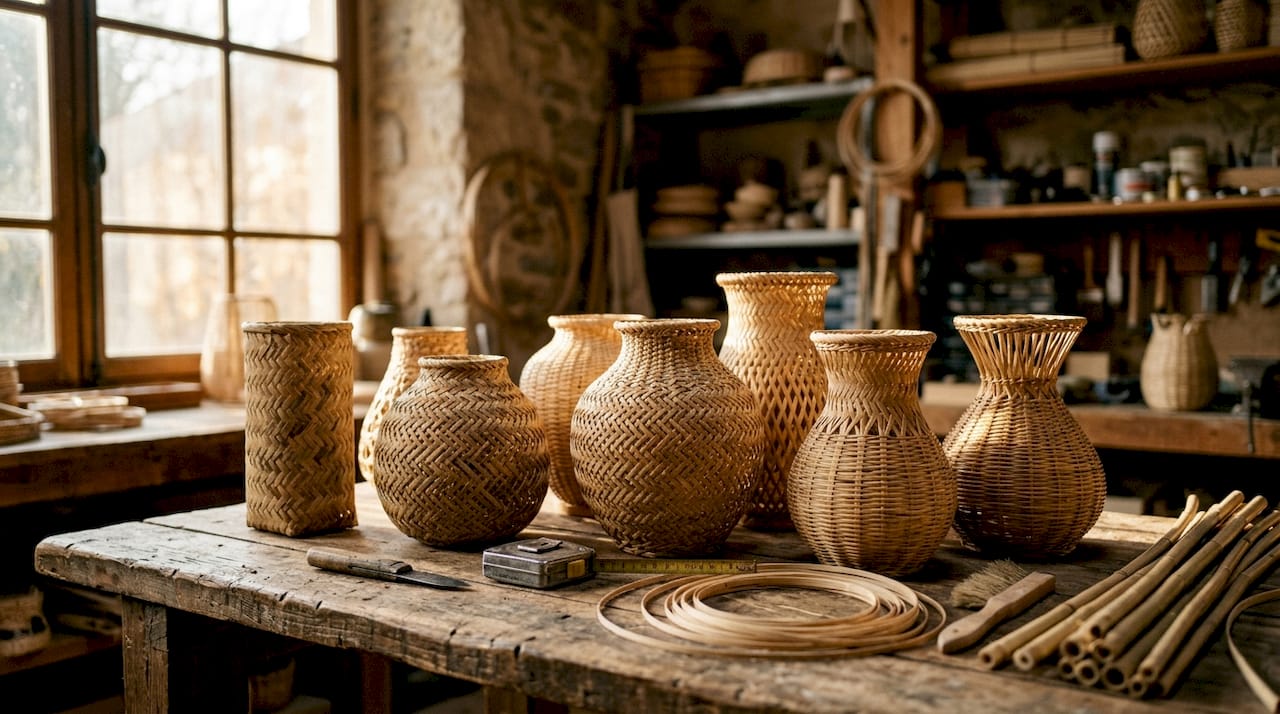
Minimalist and modern bamboo vases are the most popular starting point for homeowners. These pieces use clean lines, natural hues, and compact balanced proportions that work equally well on a shelf, desk, or dining table. They double as sculpture when empty and as a fresh focal point when filled with a single stem or small bouquet.
Artisan-woven Japanese basketry vases carry centuries of craft tradition. The Japanese ikebana tradition treats the vase as integral to the floral art itself, shaping the room’s Zen tone and the entire philosophy of the arrangement. These pieces often feature intricate weave patterns and a lacquered finish that deepens with age.
Large sculptural floor vases make the boldest statement. Premium bamboo floor vases commonly stand around 70cm tall and 23cm wide, giving them the visual weight of furniture. Place one in a corner with dried pampas grass or tall branches, and it becomes the room’s anchor.
Organic and rustic bamboo vessels suit bohemian and farmhouse interiors perfectly. These designs lean into imperfection: uneven culm sections, rough-hewn edges, and visible nodes. They pair naturally with linen textiles, rattan furniture, and earthy ceramics.
Small tabletop bamboo vases fill the gap between art object and practical container. A set of three in varying heights creates visual rhythm on a bookshelf or windowsill without overwhelming the space.
Pro Tip: Mix one large bamboo floor vase with two smaller tabletop pieces in the same room. The scale contrast creates depth without requiring any additional decor.
For more bamboo vase ideas that suit eco-friendly homes, Cozee-bay’s blog covers a wide range of styles and placement strategies.
Quality in a bamboo vase starts long before the shaping begins. The material selection and treatment process determine whether a vase lasts two seasons or two decades.
Select mature, seasoned bamboo. Artisans harvest bamboo at full maturity, typically after three to five years of growth, when the culm walls are dense and resistant to splitting. Young bamboo is too soft and prone to warping.
Cure and kiln-dry the bamboo. Lacquer-dipping or kiln-drying treatments prevent splitting and insect infestation. Untreated bamboo warps over time and becomes vulnerable to pests, which is why this step separates durable pieces from disposable ones.
Apply traditional weaving or basketry techniques. Authentic artisan bamboo vases require over 10 steps from bamboo harvesting to finishing with lacquer for a protective patina. Each weave pattern is structural as much as decorative.
Lacquer-dip for protection and beauty. Multiple lacquer coats seal the bamboo against moisture and give the surface a rich, even sheen. Light natural finishes suit bright rooms; darker carbonized tones create dramatic depth in formal interiors.
Install an internal liner. Japanese Ikebana bamboo vases use hidden porcelain liners for water containment and increased durability. Glass or treated metal liners work equally well. Without a liner, water contact will rot the bamboo from the inside out.
Hand-finish the grain. The final step involves sanding and treating the outer surface to highlight the natural grain pattern. This is what gives handmade bamboo vases their warmth and individuality.
Pro Tip: When buying a bamboo vase for fresh flowers, always ask whether it includes an internal liner. A vase without one is suitable only for dried arrangements.
Bamboo works across more interior styles than most homeowners realize. The key is pairing the right vase form and finish with the room’s existing palette and mood.
Japandi and Scandinavian interiors call for minimalist bamboo vases with clean silhouettes and light natural finishes. Keep the floral arrangement spare: one or two stems of cherry blossom, eucalyptus, or dried grasses. The restraint is the point.
Bohemian spaces welcome organic, irregular bamboo shapes. Pair a rustic bamboo vessel with dried pampas grass, protea, or wildflowers. The texture contrast between rough bamboo and soft dried blooms is what makes the combination work.
Eco-luxury interiors benefit from sculptural bamboo centerpieces that read as art objects. A tall lacquered floor vase beside a linen sofa signals intentional, considered design.
Modern and contemporary rooms suit carbonized or dark-finish bamboo vases. The deeper tones add visual weight without competing with neutral walls or concrete surfaces.
Interior design guidance consistently stresses one key bamboo element per room to maintain sophistication and balance. A single sculptural vase does more for a space than three mismatched bamboo pieces competing for attention.
When choosing flower arrangements, dried options like pampas grass, cotton stems, or seed pods require no water and no liner. Fresh flowers need a lined vase and a water change every two to three days. Both approaches work beautifully; the choice depends on how much maintenance you want.
For ideas on pairing bamboo vases with other natural decor, this guide on styling natural decor pieces in modern interiors offers useful placement principles that translate directly to bamboo.
Making your own bamboo vase is more achievable than it looks. The process rewards patience and produces a piece with genuine character.
What you need to get started:
Step-by-step process:
Cut the culm to your desired height. Cut just above a node at the base so the bottom is naturally sealed. This gives you a stable, watertight base section without any additional plugging.
Sand all cut edges thoroughly. Start with 120-grit sandpaper to remove splinters, then finish with 220-grit for a smooth surface. Rough edges crack over time and look unfinished.
Apply a natural sealant. Beeswax or linseed oil penetrates the bamboo fiber and protects against moisture without introducing synthetic chemicals. Apply two coats, letting each dry fully.
Insert your liner. Drop a small glass jar or metal cup inside the culm. This holds water for fresh flowers and protects the bamboo from rot.
Decorate the exterior. Wrap the lower section with jute twine, carve simple patterns into the surface, or leave the natural grain exposed. The grain itself is often decoration enough.
Sustainability note: Use recycled or reclaimed bamboo wherever possible. Bamboo grows back quickly after harvesting, making it one of the most renewable craft materials available. Avoid synthetic lacquers and opt for plant-based finishes to keep the piece genuinely eco-friendly.
Not every bamboo vase suits every situation. This comparison covers the key features that matter most when you are choosing between options.
| Feature | Floor vases (large) | Tabletop vases (small to medium) |
|---|---|---|
| Typical height | 60–80cm | 15–35cm |
| Best use | Corner statement pieces, entryways | Shelves, desks, dining tables |
| Flower type | Dried branches, pampas grass, tall stems | Fresh cut flowers, small dried bunches |
| Liner needed? | Rarely (usually dried only) | Yes, for fresh flowers |
| Durability | High with lacquer finish | High if properly sealed |
| Maintenance | Dust regularly, avoid direct sunlight | Wipe clean, replace liner water every 2–3 days |
| Interior styles | Japandi, eco-luxury, bohemian | All styles |
A constricted vase neck below the rim holds stems upright without floral foam, which is a valued feature for anyone arranging flowers without professional training. This design detail is worth looking for in tabletop bamboo vases specifically.
Natural bamboo grain is preferable to painted finishes for authentic styling. Light natural bamboo suits bright, airy decor, while carbonized darker tones create dramatic depth in formal or moody interiors. Avoid vases with uniform painted surfaces if you want the material to do the visual work.
For more ideas on integrating these pieces into your home, Cozee-bay’s guide on bamboo interior design ideas covers placement strategies for every room type.
The most durable and visually effective bamboo flower vases combine proper curing, an internal liner for fresh flowers, and a finish that complements your room’s existing color palette.
| Point | Details |
|---|---|
| Choose cured bamboo | Kiln-dried or lacquer-treated bamboo resists splitting, warping, and insect damage. |
| Always use an internal liner | Porcelain, glass, or metal liners protect bamboo from water rot when using fresh flowers. |
| One focal piece per room | A single sculptural bamboo vase creates more impact than multiple competing pieces. |
| Match finish to room tone | Light natural bamboo suits bright spaces; carbonized finishes work in darker, formal rooms. |
| DIY is achievable | A sealed bamboo culm with a glass liner makes a functional, eco-friendly vase at home. |
The most common mistake I see homeowners make with bamboo vases is buying too many at once. They fall in love with the material, pick up three or four pieces, and end up with a room that feels like a craft fair booth rather than a considered home. One well-chosen bamboo vase, placed with intention, does more than a collection of mediocre ones.
The second thing I’ve noticed is that people underestimate the liner question. A beautiful handwoven Japanese basketry vase will rot from the inside within a season if you pour water directly into it. The hidden porcelain liner is not an optional accessory. It is what makes the piece functional for the long term.
What genuinely excites me about the current direction of bamboo decor is the convergence of traditional craft and modern minimalism. Artisans who trained in Japanese ikebana basketry are now producing pieces that fit perfectly in a Japandi living room or a Scandinavian kitchen. That cross-cultural exchange produces some of the most interesting objects available in home decor right now.
My honest advice: buy handmade over mass-produced whenever your budget allows. The difference in grain character, finish quality, and structural integrity is visible from across the room. And if you are going the DIY route, invest in a proper natural sealant. It is the one step most beginners skip, and it is the one that determines whether your vase lasts one year or ten.
— Cozee
If you have been inspired to add a bamboo vase to your home, Cozee-bay offers a curated selection of handcrafted bamboo products built for both style and everyday use. Every piece reflects the same eco-conscious sourcing and quality craftsmanship this article has outlined.

Cozee-bay specializes in bamboo wood products designed for real homes and real spaces, from compact tabletop vases to statement-worthy floor pieces. The site offers free shipping within the contiguous U.S. and backs every purchase with a money-back guarantee. Browse the full collection of eco-friendly bamboo decor and find the piece that fits your space, your style, and your values.
Bamboo flower vase design is the craft of shaping and finishing bamboo culms or woven bamboo into decorative vessels for floral arrangements. It combines sustainable materials with artisan techniques such as lacquering, weaving, and grain finishing.
Yes, but only if the vase includes an internal liner made from porcelain, glass, or treated metal. Direct water contact will rot untreated bamboo quickly.
A compact bamboo vase with clean lines, a light natural finish, and a narrow neck suits minimalist interiors best. Pair it with a single stem or small dried arrangement to keep the look uncluttered.
Dust the exterior regularly and keep it out of direct sunlight to prevent fading and cracking. If the vase holds fresh flowers, change the liner water every two to three days and wipe the interior dry between uses.
Handmade bamboo vases use seasoned bamboo, traditional finishing techniques, and visible grain character that mass-produced pieces rarely replicate. The structural integrity and aesthetic quality are consistently higher in artisan-crafted pieces.
Comments will be approved before showing up.