Your Cart is Empty


TL;DR:
- Bamboo plants are popular in eco-friendly decor because of their natural beauty, low maintenance, and calming energy. Proper care, container choice, and thoughtful arrangement are essential, especially distinguishing lucky bamboo from true bamboo. Incorporating layered groupings, stylish containers, and accessories elevates bamboo displays into sophisticated, intentional interior decor.
Bamboo plants have become one of the most requested elements in eco-friendly home decor, and it’s easy to see why. They’re striking, low-maintenance, and carry a calm, natural energy that genuinely changes the feel of a room. But the challenge most people hit isn’t finding a bamboo plant. It’s figuring out what to actually do with it. Which type? Which container? Which corner of your living room? The good news is that great bamboo plant decoration ideas don’t require a design degree. They just require a little know-how, which is exactly what you’ll find here.
| Point | Details |
|---|---|
| Know your bamboo type first | Lucky bamboo and true bamboo need completely different care and container setups. |
| Container size drives plant health | Use at least 20 gallons for true bamboo to reduce watering and support stable growth. |
| Drainage beats outer aesthetics | A liner pot inside a decorative container prevents root rot and makes maintenance easier. |
| Grouping creates visual impact | Triangle plant groupings with bamboo as the tallest element raise humidity and look stunning. |
| Accessories complete the look | Bamboo trays, pebbles, and sculptures tie the whole plant display together cohesively. |
Before you pick a pot or a placement, you need to answer one question: what kind of bamboo do you actually have? Lucky bamboo is actually a Dracaena, not a true bamboo at all. It thrives in water culture or potting mix indoors and stays compact. True bamboo species are grassy, often aggressive, and need significantly more space and soil volume. Getting this wrong means watching your plant struggle no matter how beautiful the pot is.
Once you know your bamboo type, work through these criteria before committing to any decor setup:
Pro Tip: If you’re working with lucky bamboo in water, change the water every two weeks and use filtered or distilled water. Tap water with fluoride causes brown tips that ruin the whole look.
This is the lucky bamboo decoration idea that shows up in hotel lobbies and spas because it works in almost any style of room. Fill a clear glass cylinder vase about one-third with polished river rocks or smooth pebbles, then nestle your lucky bamboo stalks upright among the stones. Add water just below the tops of the rocks, and you’re done.
The beauty of this setup is its transparency. You can actually see the roots growing, which adds a quiet, organic interest that most plant displays don’t offer. It also lets you monitor water levels and root health without disturbing the plant.
For a modern living room, go with white or pale gray pebbles and a straight-edged glass vase. For a more earthy, Zen-inspired space, choose dark river stones and a slightly textured or frosted glass container. The bamboo does the work. You just give it a good backdrop.
If your space leans contemporary or Scandinavian, a single tall lucky bamboo stalk in a slim, clear glass vase with white pebbles is genuinely striking. It is clean, quiet, and intentional, three things a well-decorated room should feel.
Keep it to one or three stalks. Odd numbers always read better visually than even groupings. Place it on a white marble tray or a light wood surface for maximum contrast. This is the kind of bamboo plant decor that looks expensive without costing much.
Pro Tip: Avoid placing this setup near a heating vent or air conditioning unit. Lucky bamboo hates temperature swings and will brown at the tips within weeks if positioned near a direct air source.
Spiral-shaped lucky bamboo stalks are grown by rotating the plant toward a light source over time, creating a coiled, sculptural stem that looks almost architectural. Group three to five spiral stalks in a low, wide ceramic bowl with black pebbles and a shallow water layer for an arrangement that works beautifully on a dining table or coffee table.
Lucky bamboo carries deep cultural meaning in Chinese tradition, associated with good fortune and feng shui, which makes it a thoughtful gift and a meaningful decor choice, not just a pretty plant. Pairing it with a red ribbon tied around the stalks is a nod to that tradition and adds a small pop of color to an otherwise neutral display.
True bamboo in large containers can function as a living wall inside your home or on a covered patio. Spacing container bamboos 3 to 4 feet apart creates a connected privacy screen within two to three years, and the effect is genuinely beautiful. Think of a row of sleek black planters along one side of a sunroom, filled with clumping bamboo reaching 6 to 8 feet tall.
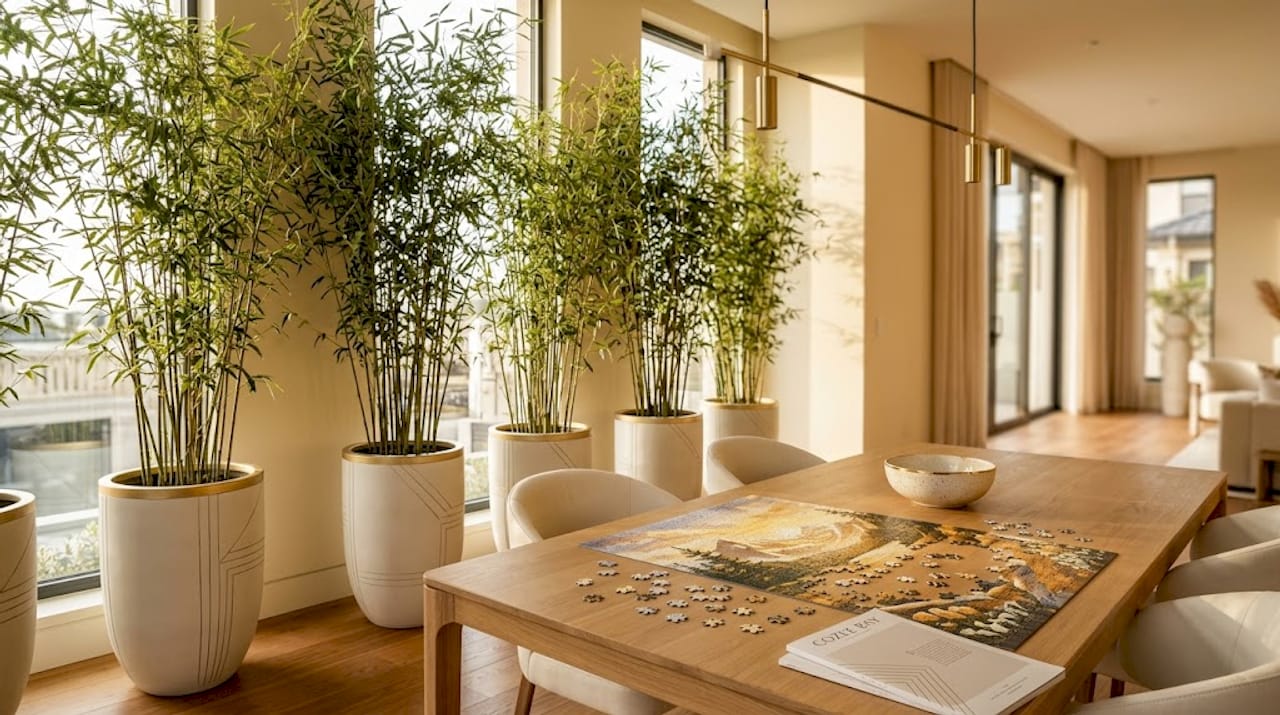
Clumping varieties are the responsible choice here. They grow outward in a controlled clump rather than sending runners across your floor or yard. Varieties like Bambusa multiplex work well in large containers and stay manageable indoors with good light.
Pro Tip: Use heavyweight ceramic or concrete planters for floor-level privacy screens. They resist tipping when the bamboo gets tall and top-heavy, which matters more than most people expect.
A single, well-chosen bamboo plant in a striking container on a raised plant stand makes a statement in any corner of a room. The stand adds height, which draws the eye upward and makes a space feel taller. Choose a matte black or terracotta pot with a textured surface, and pair it with a simple iron or wood plant stand.
This approach works especially well as bamboo plant decoration in a living room corner that needs visual weight without furniture. The plant fills the space without blocking it, and the stand keeps the arrangement from looking like you just set a pot on the floor.
For the container itself, always use a nursery liner inside the decorative pot with a small riser underneath it for drainage. This keeps roots healthy and makes it easy to water and maintain the plant without hauling a heavy pot to a sink.
Balconies and outdoor decks call for a different approach. You want containers that look substantial but won’t stress the structure of your balcony floor. The solution is a lightweight liner inside a stylish outer shell, whether that’s a woven seagrass basket, a faux concrete pot, or a painted wood planter box.
The liner handles drainage and root health. The outer container handles the visual design. This pot-in-pot approach prevents root rot and lets you swap out the outer container whenever you want a fresh look without repotting the plant.
Anchor taller bamboo containers to a wall or railing with discreet plant brackets if you’re in a windy area. A toppled bamboo plant in a cracked pot is a quick way to lose both the plant and the display.
One of the most underrated bamboo plant decor ideas is using bamboo as the anchor in a grouped plant display rather than as a solo piece. Grouping bamboo with medium and trailing plants raises humidity around all the plants and creates a layered focal point that looks intentional rather than random.
The triangle method works like this: place your tallest bamboo plant at the back, a medium plant like a pothos or peace lily in the middle, and a low trailing plant like a string of pearls at the front edge. This creates depth, height variation, and texture all at once.
The effect works beautifully in living rooms, office lobbies, and bedrooms where you want a “plant corner” that feels curated rather than collected.
What sits on top of the soil matters more than most people realize. Bare potting mix looks unfinished and dries out faster. Top dressing with river rocks, moss, or lava rock does two things simultaneously: it makes the planter look polished and complete, and it slows moisture evaporation so you water less often.
For a modern interior, go with smooth gray or white river stones. For a more natural or woodland look, sheet moss works beautifully. For a tropical display, lava rock adds texture and a dark, earthy contrast to green bamboo stalks.
This is one of those small changes that makes your bamboo interior decor look like it was styled by someone who genuinely knows what they’re doing, even if you just learned about it five minutes ago.
When your bamboo starts looking a little tired but you don’t want to do a full repot, slip potting refreshes soil nutrition around the roots without disturbing the plant. You slide the root ball out of the current container, add fresh soil around the sides and bottom, and slide it back in. No drama, no mess.
This approach keeps your bamboo looking vibrant without the shock of a full repot. Pair it with a new top dressing and a clean wipe of the container exterior, and the whole setup looks refreshed and ready. It’s the kind of practical DIY bamboo decor maintenance that saves you money and extends the life of a display you’ve invested in.
The final layer of a well-designed bamboo display is the accessories around it. A bamboo wood tray under the pot ties the display to the rest of the room. A small bamboo sculpture nearby adds a cohesive design story. Woven bamboo placemats under a tabletop lucky bamboo arrangement bring warmth and texture that a bare surface just can’t.
Bamboo-themed accessories like trays and sculptures reinforce the eco-friendly feel of the whole display while adding sophistication. The goal is not to stuff every surface with bamboo objects. It’s to select two or three well-chosen pieces that support the plant without competing with it.
Here’s a quick comparison to help you choose the right bamboo decor style for your space:
| Decoration style | Complexity | Maintenance | Visual impact | Best for |
|---|---|---|---|---|
| Glass vase with pebbles | Low | Low | High | Desks, shelves, side tables |
| Container privacy screen | High | Medium | Very high | Patios, sunrooms |
| Triangle plant grouping | Medium | Medium | High | Living rooms, lobbies |
| Centerpiece spiral bamboo | Low | Low | High | Dining tables, coffee tables |
| Pot with top dressing | Low | Low | Medium | Any indoor planter |
| Accessories-led display | Low | Very low | Medium | Shelves, entryways |
I’ve learned more from bamboo displays that failed than from the ones that looked great from day one. My biggest mistake for years was treating lucky bamboo and true bamboo as interchangeable. They are not, and the difference in care requirements between the two is significant enough to completely change how you approach the display.
The other thing I got wrong consistently was prioritizing the outer pot over the inner drainage setup. A gorgeous ceramic planter means nothing if the roots are sitting in standing water. Once I committed to drainage control over aesthetics, every bamboo plant I worked with lasted longer and looked better.
My honest advice: start with lucky bamboo if you’re new to this. It’s forgiving, compact, and responds well to simple setups. Get the light right, change the water regularly, and let the container do the aesthetic heavy lifting. Then, once you’re confident, scale up to container true bamboo for bigger, bolder displays. Small wins build the confidence to try the more complex ideas, and the results are worth it.
— Cozee

At Cozee-bay, we know that a great plant display is only as good as what surrounds it. Our collection of handcrafted bamboo wood products gives you the finishing pieces that pull a bamboo plant display together without the searching. Think natural bamboo trays to anchor a tabletop arrangement, organizers that keep your space tidy around a plant corner, and accessories built from sustainably sourced bamboo that genuinely complement your eco-friendly decor goals. Every product ships free within the contiguous U.S. and comes backed by our satisfaction guarantee. Browse our full range of bamboo home accessories and find the pieces that make your bamboo plant decoration ideas feel complete, not just planted.
A lucky bamboo stalk in a clear glass vase with smooth pebbles and water is the most forgiving starting point. It requires minimal setup, looks polished, and only needs a water change every two weeks.
Yes, but it needs a large container (at least 20 gallons), strong indirect light, and reliable drainage. Clumping varieties work best indoors because they stay contained and do not spread aggressively.
Place it in bright, indirect light away from direct sun and drafts, use filtered or distilled water, and refresh the water every two weeks to prevent algae and root issues.
Matte ceramic, clear glass, and lightweight concrete-look pots all work well for bamboo plant decoration in a living room. Always use a liner pot inside the decorative container for proper drainage.
Use the triangle grouping method with three different plant heights, add a top dressing of moss or river rocks, and place the arrangement on a bamboo wood tray. These three steps alone take a display from casual to curated.
Comments will be approved before showing up.