Your Cart is Empty


TL;DR:
- Bamboo centerpieces create natural, calming focal points suitable for various settings and styles. They remain visually balanced by using odd-numbered groups and pairing with natural accents like candles and stones. DIY options offer affordable, flexible ways to craft low, conversation-friendly arrangements that complement any interior.
Bamboo centerpieces are defined as tabletop or surface arrangements built around bamboo stalks, poles, or plants to create a natural, calming focal point in any room. They work equally well on a dining table, a coffee table, or a wedding reception setup. The best bamboo centerpiece ideas combine natural materials with thoughtful proportions, keeping arrangements low enough for conversation and layered enough to hold visual interest. Whether you want a quick weekend project or a polished event display, bamboo gives you a flexible, eco-friendly starting point that suits almost any style.
Medium-height bamboo plants are the most practical starting point for dining and coffee tables. They provide a calming natural presence without crowding the surface or blocking sightlines across the table. A compact lucky bamboo arrangement in a low ceramic pot, for example, fits a four-person dining table without anyone having to lean sideways to hold a conversation.
The key is keeping the plant proportional to the table. A coffee table works well with a single bamboo plant in a shallow tray, while a longer dining table can handle a trio of small bamboo pots spaced evenly down the center. Pair the plant with smooth river stones at the base for added texture and weight.
Pro Tip: Choose a pot color that matches your existing tableware. A white ceramic pot reads as modern; a terracotta pot leans rustic. The pot does as much visual work as the plant itself.
Pairing bamboo with natural accents like candles, stones, and wooden trays creates a layered centerpiece that feels intentional rather than improvised. Place a shallow bamboo tray at the center, add two or three pillar candles of varying heights, and tuck a small bamboo plant or a few bamboo stalks alongside them. The result is a display that works for everyday living and looks polished enough for a dinner party.
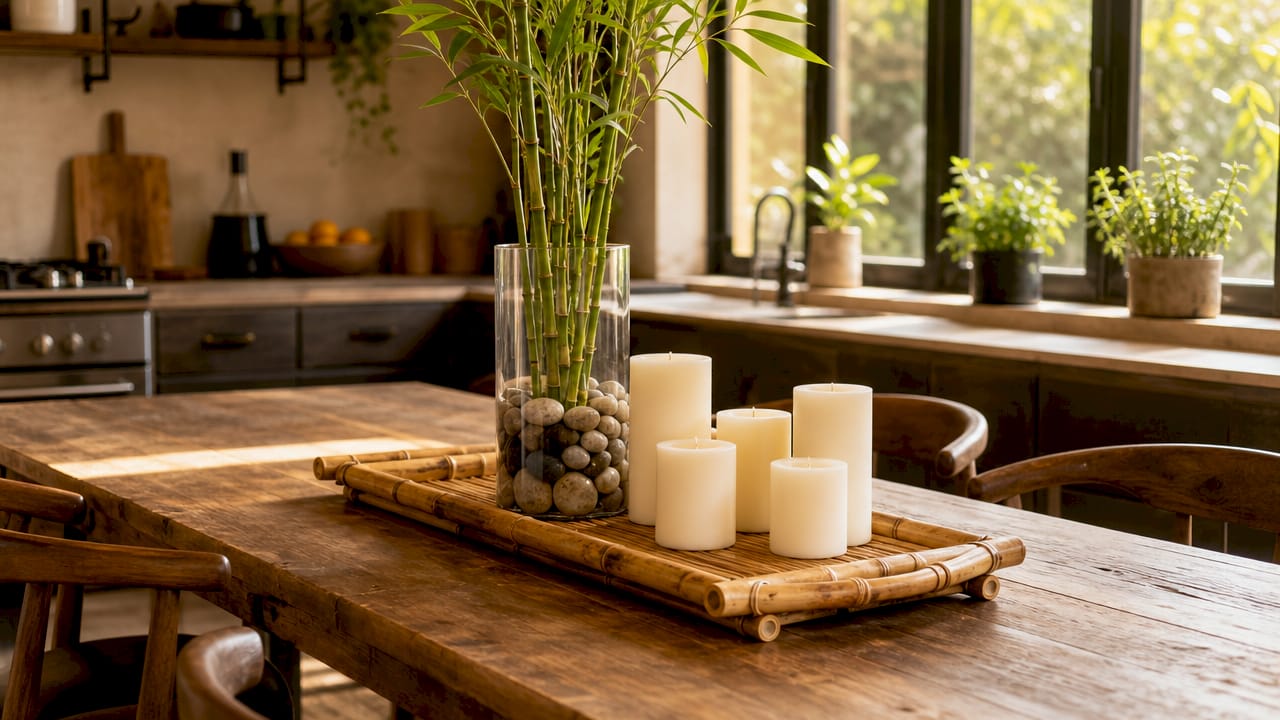
Stones and pebbles serve a practical purpose here. They anchor lightweight bamboo stalks in vases and add a grounding visual element that balances the vertical lines of the bamboo. Dark river stones against pale bamboo create strong contrast; white pebbles against darker bamboo feel softer and more spa-like.
Candle height matters too. Taller candles behind shorter bamboo stalks create depth. Shorter tea lights scattered around the base add warmth without competing with the bamboo for attention.
DIY bamboo candle holders are one of the most satisfying weekend projects you can tackle. Cut a bamboo pole into sections roughly 4 to 6 inches tall, sand the cut edges smooth, and place a tea light inside each section. Group three or five holders together on a tray for a finished look. DIY bamboo table centerpieces typically cost between $15 and $35 for all materials, making this one of the most budget-friendly décor projects available.
The grouping number matters more than most people realize. Odd-numbered groupings of three or five elements create visual balance and aesthetic harmony in a way that even numbers simply do not. Three candle holders of slightly different heights, arranged in a loose triangle, will always look more natural than two or four in a straight line.
Pro Tip: Seal the inside of each bamboo section with a small amount of heat-resistant silicone before placing tea lights. This protects the bamboo from heat and extends the life of your candle holders.
Bamboo floral arrangements combine bamboo stalks with faux flowers, dried sage, eucalyptus, or preserved greenery for a centerpiece that requires zero maintenance. Faux botanicals have improved dramatically in quality, and a well-chosen stem of dried pampas grass or preserved eucalyptus alongside fresh bamboo is nearly indistinguishable from a fully fresh arrangement at normal viewing distance.
Use a tall, narrow vase for this style. Insert three to five bamboo stalks as the structural backbone, then fill in with greenery and a few focal flowers. White or cream faux blooms against green bamboo read as clean and modern. Warm-toned dried flowers like wheat or dried lavender alongside bamboo create a rustic, harvest-season feel.
This approach works especially well for eco-friendly centerpiece ideas because it eliminates the waste of fresh-cut flowers while keeping the arrangement looking full and intentional.
Bamboo adapts to nearly every interior design style, but the accents you pair it with determine which direction it reads.
Choosing the right bamboo tone matters as much as the style. Light, golden bamboo reads as warm and natural. Darker, carbonized bamboo reads as more formal and contemporary.
A tabletop centerpiece gains more visual power when the wall behind it supports the theme. Bamboo wall panels and sculptural bamboo art add organic texture that ties the room together and makes your table arrangement feel like part of a larger design intention rather than a standalone object.
Bamboo poles sized 1–3 inches in diameter, mounted vertically or in a staggered pattern, create a striking backdrop for a dining area. This works particularly well in open-plan spaces where the dining table needs visual separation from the living area. The wall treatment does the work of a room divider without blocking light or flow.
You do not need to cover an entire wall. A panel of bamboo poles spanning 3 to 4 feet wide directly behind the table creates enough visual anchor to frame the centerpiece below it.
Bamboo wedding centerpieces work best when they match the event’s color palette and keep the arrangement low enough for guests to see each other across the table. Keeping centerpiece height low allows guests to maintain comfortable eye contact and hold conversation without leaning or craning. This is the single most common mistake at event tables, and bamboo makes it easy to avoid because the material naturally suits low, horizontal arrangements.
For event styling, consider these approaches:
Budget for event bamboo centerpieces the same way you would for DIY home projects. Materials in the $15–$35 range per table are realistic for simple arrangements, with costs rising when you add fresh flowers or specialty vessels.
Bamboo baskets and trays make excellent centerpiece bases, especially for casual home settings. A woven bamboo tray placed at the center of a coffee table can hold a small plant, a candle, and a decorative object without looking cluttered. The tray creates a defined zone that signals “this is the centerpiece” without requiring a vase or formal arrangement.
For a living room bamboo decoration, layer a bamboo tray with a small succulent, a smooth stone, and a single pillar candle. Swap the objects seasonally to keep the display fresh without buying an entirely new arrangement. This approach is particularly practical for everyday spaces where the centerpiece needs to coexist with remote controls, books, and coffee cups.
Bamboo basket decorating ideas extend this concept further. A tall woven bamboo basket placed on the floor beside a dining table, filled with dried pampas grass or tall branches, acts as a vertical centerpiece that anchors the room without taking up table space at all.
The most effective bamboo centerpieces combine low, conversation-friendly height with odd-numbered groupings and natural accent materials to create arrangements that look intentional and work in real daily life.
| Point | Details |
|---|---|
| Keep height low | Arrangements below eye level allow guests to maintain eye contact and conversation across the table. |
| Use odd-numbered groupings | Groups of three or five elements create natural visual balance that even numbers cannot replicate. |
| Layer with natural accents | Candles, stones, and trays add texture and depth that make bamboo arrangements feel complete. |
| Match style to your interior | Rustic, modern, minimalist, and bohemian spaces each call for different bamboo tones and accent pairings. |
| Budget stays manageable | DIY bamboo centerpiece materials typically run $15–$35, making this one of the most affordable décor projects. |
I have styled a lot of tables over the years, and bamboo is the material I return to most often. Not because it is trendy, but because it is genuinely forgiving. If an arrangement feels off, you can pull one element, shift a candle, or swap a stone, and the whole thing rebalances in seconds. Most other centerpiece materials do not give you that kind of flexibility.
The advice I give most often is this: stop trying to make your centerpiece the star of the table. The table is for people. The centerpiece is just there to make the space feel considered. Bamboo does that job quietly and well, especially when you keep it low and pair it with one or two natural accents rather than piling on every idea at once.
The odd-number rule is real, and it is worth taking seriously. Three bamboo candle holders will always look better than four. Five stalks in a vase will always look more natural than six. This is not a design opinion. It is how the human eye processes groupings, and bamboo’s vertical, linear quality makes the difference especially visible.
One more thing: do not overlook the base. A beautiful bamboo arrangement sitting directly on a bare table looks unfinished. A tray, a piece of linen, or even a few flat stones underneath the arrangement grounds it and tells the eye where to look. That small addition is often what separates a centerpiece that looks styled from one that just looks placed.
— Cozee
Ready to put these ideas into practice? Cozee-bay carries a curated selection of handcrafted bamboo products built for exactly these kinds of home projects.
From bamboo home décor pieces to practical organizers that keep your styled spaces tidy, every product is made with sustainable materials and designed to look good in real homes. Cozee-bay ships free within the contiguous U.S. and backs every purchase with a money-back guarantee. If you want to build a centerpiece that lasts and looks intentional, starting with quality bamboo materials makes the whole project easier. Browse the full collection and find the pieces that fit your space.
A good bamboo centerpiece stays low enough to preserve sightlines, uses odd-numbered groupings for visual balance, and pairs bamboo with one or two natural accents like candles or stones. Simplicity and proportion matter more than complexity.
DIY bamboo centerpiece materials typically cost between $15 and $35, covering bamboo sections, a tray or vase, and basic accents. Costs rise when you add fresh flowers or specialty vessels.
Bamboo wedding centerpieces work well when kept at a low height to support guest conversation and paired with crystals, seasonal flowers, or LED lighting for an elegant effect. Consistent height across all tables creates a cohesive room look.
Bamboo centerpieces fit rustic, bohemian, minimalist, and modern interiors. The accents and bamboo tone you choose, such as raw versus polished or light versus carbonized, determine which style the arrangement reads as.
Swap out accent objects seasonally rather than replacing the entire arrangement. A bamboo tray base with a small plant, candle, and stone can be refreshed by changing just one element, keeping the display current without added cost.
Comments will be approved before showing up.