Your Cart is Empty


TL;DR:
- Bamboo charcoal is a porous, natural material made by carbonizing bamboo to trap odors and moisture. Activated bamboo charcoal, processed at higher temperatures, provides greater filtration benefits for water and skincare. It is a sustainable, renewable product suitable for odor control and mild water or skin treatments when used correctly.
Bamboo charcoal is a porous carbon material made by carbonizing fast-growing bamboo at high temperatures, producing a structure that traps odors, moisture, and impurities through adsorption. Moso bamboo is the primary species used commercially, prized for its dense culm walls and high silica content, which create uniform pore structures after carbonization. The result is a natural, renewable product with a wide range of practical applications, from freshening your car to improving tap water taste. Whether you’re new to eco-friendly living or looking to make smarter choices at home, understanding what this material actually does, and what it doesn’t, will save you money and frustration.
Bamboo charcoal works through adsorption, a surface chemistry process where odors, moisture, and certain compounds bind to the material’s porous walls. This is different from absorption. The target substance sticks to the outside of the pores rather than soaking into the material. That distinction matters a lot when you’re setting realistic expectations.
Here are the most practical, evidence-backed uses:
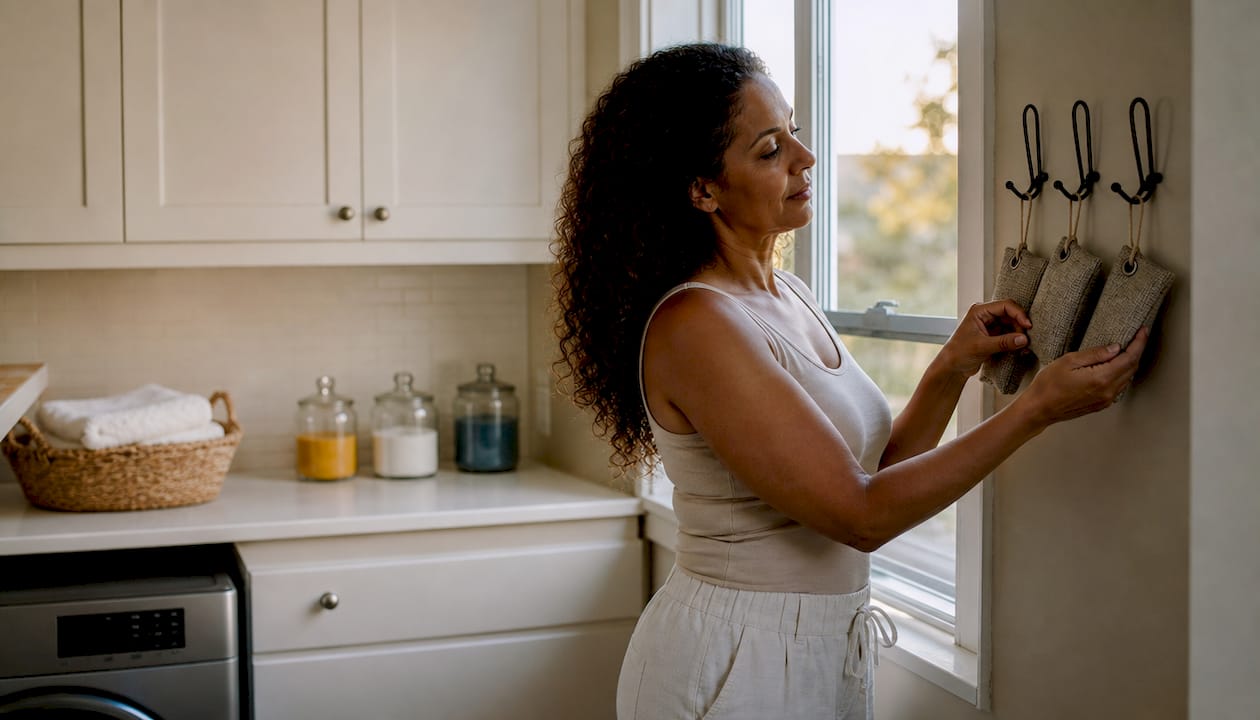
Pro Tip: Place odor-absorbing bags within 3 feet of the odor source and inside an enclosed or semi-enclosed space. Open rooms with high airflow reduce effectiveness significantly.
Two limitations are worth calling out directly. Bamboo charcoal does not remove toxins from the body or deep skin layers. It also cannot remove pathogens, allergens, or fine particulates in large or contaminated spaces. Products marketed for “full-room air purification” or “internal detox” are overstating what the material can do. Consumers who treat it as a mild, natural solution report far greater satisfaction than those expecting industrial-level results.
The difference between standard and activated bamboo charcoal comes down to temperature and processing. Standard bamboo charcoal is carbonized at 400–600°C, which creates a porous structure suited for odor and moisture control. Activated bamboo charcoal goes through a second stage at 800–1,200°C using steam or chemical activation, which dramatically expands the internal pore network.
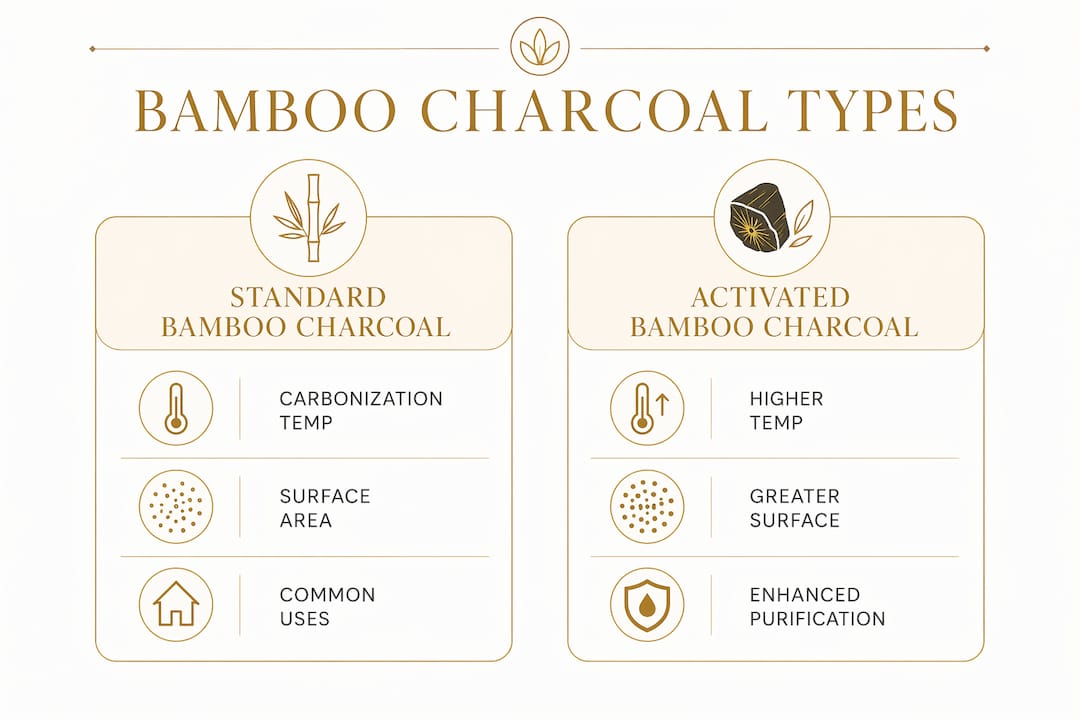
| Feature | Standard bamboo charcoal | Activated bamboo charcoal |
|---|---|---|
| Carbonization temp | 400–600°C | 800–1,200°C |
| Surface area | 300–500 m²/g | 1,000–1,500 m²/g |
| Best use | Odor and moisture control | Water filtration, skincare, supplements |
| Filtration effectiveness | Low | High |
| Typical price | Lower | Higher |
Activated charcoal’s surface area is 3–5 times greater than standard bamboo charcoal. That larger surface area means more contact points for trapping compounds, which is why activated forms are used in water filters, medical-grade applications, and higher-end skincare.
The marketplace confusion here is real. Mislabeling between standard and activated charcoal causes consumers to overpay or expect filtration performance from a product that was never designed for it. When you shop, look for explicit labeling that states “activated” and lists the carbonization method or surface area. If a product just says “bamboo charcoal” without further detail, assume it is the standard form.
Pro Tip: Search for products that list surface area in m²/g on the packaging or product page. A surface area above 800 m²/g confirms you are buying a genuinely activated product.
Bamboo charcoal is one of the more defensible eco-friendly materials available to consumers. The reasons come down to how bamboo grows and how little goes to waste.
Bamboo’s renewability does not automatically make every bamboo charcoal product sustainable. Processing methods, shipping distances, and packaging all affect the total environmental footprint. Choosing products with transparent supply chains is the most reliable way to verify the eco-friendly claim. Cozee-bay’s guide on ethically sourced bamboo walks through exactly what to look for.
Getting the most from bamboo charcoal products requires correct placement, realistic timelines, and regular maintenance. Here is a practical sequence for the most common applications.
Pro Tip: For water sticks, boil the charcoal for 10 minutes before first use. This opens the pores and removes any surface dust from manufacturing, giving you cleaner results from the start.
Bamboo charcoal soil amendments also improve drainage and microbial habitat, which benefits most vegetable gardens and container plants. Just keep the pH monitoring habit, and you’ll avoid the one common mistake that turns a helpful amendment into a problem.
Bamboo charcoal is a natural adsorption material that works best in enclosed spaces for odor control, mild water improvement, and surface-level skincare, with activated forms required for any serious filtration application.
| Point | Details |
|---|---|
| Standard vs. activated | Activated charcoal has 3–5x more surface area and suits filtration; standard suits odor and moisture control. |
| Odor bag placement | Place within 3 feet of the odor source in an enclosed space for reliable results. |
| Water treatment timing | One stick per 500ml–1L, steeped 3–5 hours, replaced every two weeks with daily use. |
| Soil pH caution | Bamboo charcoal is alkaline (pH 7.5–9.5); test soil before applying near acid-loving plants. |
| Sustainability advantage | Bamboo’s 3–5 year harvest cycle makes it significantly more renewable than wood or coconut shell sources. |
Most people buy a bamboo charcoal bag, toss it in a room, and wonder why it doesn’t work. The product isn’t failing. The placement is. Bamboo charcoal is a contact material. It needs proximity to the source and a confined space to do its job. That’s a detail most product pages bury in fine print, if they mention it at all.
The other thing I’ve noticed is how aggressively some brands market negative ion emission and infrared radiation benefits. These claims lack verified scientific support and should be treated with real skepticism. The material’s actual strengths, adsorption of odors, surface oils, chlorine, and moisture, are genuinely useful. They just don’t sound as exciting as “infrared wellness.”
Where bamboo charcoal genuinely shines is in the small, consistent applications: a bag in your gym locker, a water stick in your pitcher, a charcoal mask once a week. Paired with other sustainable bamboo choices for your home, it becomes part of a practical, low-effort eco-friendly routine rather than a miracle product. That framing, modest tool used correctly, is what actually delivers satisfaction. If you’re building a more sustainable home and want to pair bamboo charcoal with other eco-conscious habits, an eco-friendly subscription checklist is a good place to find complementary ideas.
— Cozee
If you’ve been thinking about adding bamboo charcoal to your home routine, Cozee-bay makes it easy to start with products built around quality sourcing and real-world function.

Cozee-bay’s catalog includes eco-friendly bamboo products designed for everyday home use, from kitchen organization to sustainable living essentials. Every product reflects the same commitment to ethically sourced bamboo, clean craftsmanship, and practical design. Free shipping within the contiguous U.S. and a money-back guarantee mean you can try without risk. Browse the full bamboo product collection and find the right fit for your home today.
Bamboo charcoal is made by carbonizing bamboo, most commonly Moso bamboo, at high temperatures between 400°C and 1,200°C depending on the type. The process creates a highly porous carbon material used for adsorption applications.
Bamboo charcoal for skin is safe for most people when used in rinse-off products like face washes and masks. It adsorbs surface oils and impurities but does not penetrate deep skin layers or remove toxins from within the body.
Most bamboo charcoal bags last 1–2 years with monthly recharging in direct sunlight for 1–2 hours. Without recharging, the pores saturate and the bag loses effectiveness within a few months.
Bamboo charcoal is not a medical-grade air purifier and cannot remove pathogens, allergens, or fine particulates the way a HEPA filter does. It works only for odor and moisture control in small, enclosed spaces within close range of the source.
Activated bamboo charcoal adsorbs chlorine and volatile organic compounds that affect water taste and smell. It does not remove heavy metals or disinfect water, so it works best as a taste-improvement tool rather than a full purification system.
Comments will be approved before showing up.