Your Cart is Empty


More than 40 percent of American homeowners now prioritize eco-friendly materials when upgrading their spaces. With growing concerns about sustainability and style, bamboo has emerged as a top choice for those who want their kitchens and homes to reflect smart, environmentally responsible decisions. If you aim to blend chic design with lasting quality and minimal impact, understanding bamboo’s unique qualities and potential can help you make choices that truly align with your values.
| Point | Details |
|---|---|
| Sustainable Resource | Bamboo matures quickly in 3-5 years, making it an exceptional renewable resource compared to traditional timber. |
| Durability and Hygiene | Bamboo products possess natural antibacterial properties and strength, making them ideal for kitchen and home accessories. |
| Environmental Impact | Choosing bamboo supports carbon sequestration and environmentally friendly agricultural practices, contributing to ecosystem restoration. |
| Regulatory Considerations | Consumers should prioritize bamboo products from reputable suppliers that provide certification for sustainable practices and safety compliance. |
Bamboo products represent a revolutionary sustainable alternative in modern manufacturing, offering exceptional environmental and functional qualities that set them apart from traditional materials. Bamboo’s remarkable biological characteristics make it a standout resource for eco-conscious consumers seeking innovative home solutions. Unlike slow-growing timber, bamboo is an extraordinarily fast-regenerating grass that can reach maturity in just 3-5 years, making it one of the most rapidly renewable resources available.
The unique anatomical structure of bamboo provides incredible strength and versatility, enabling manufacturers to create everything from kitchen accessories to furniture with remarkable durability. Its natural fibers contain inherent antibacterial properties, which means bamboo products resist bacterial growth more effectively than traditional materials like plastic or wood. This characteristic makes bamboo particularly attractive for home products that require hygienic surfaces, such as kitchen tools, cutting boards, and organizational systems.
Bamboo’s environmental credentials are equally impressive. The plant requires minimal water, grows without pesticides, and actively contributes to carbon sequestration during its growth cycle. When harvested responsibly, bamboo can be transformed into products that are not just sustainable, but also aesthetically pleasing and functionally superior. Its lightweight nature combined with natural strength makes it ideal for everything from paper towel dispensers to drawer organizers, providing consumers with eco-friendly alternatives that don’t compromise on performance.
Pro tip: When selecting bamboo products, look for certifications that verify sustainable harvesting practices to ensure you’re supporting responsible environmental stewardship.
Bamboo’s incredible versatility translates into an impressive array of products designed for both residential and commercial environments. Commercial spaces increasingly adopt bamboo solutions that combine functionality with sustainable design. Home and business owners can explore bamboo products across multiple categories, including kitchen accessories, organizational systems, decorative items, and practical utility tools.
In home settings, bamboo excels in creating sophisticated yet practical solutions. Kitchen environments benefit from bamboo cutting boards, utensil holders, dish racks, and paper towel dispensers that resist bacterial growth and provide elegant aesthetics. Organizational products like drawer dividers, storage boxes, and wrap dispensers leverage bamboo’s natural strength and lightweight characteristics. Bathroom accessories such as toothbrush holders, soap dishes, and vanity trays demonstrate how this material seamlessly integrates style and sustainability.

Commercial spaces offer even broader applications for bamboo products. Restaurants, offices, schools, and hospitality environments utilize bamboo for trash bag organizers, food storage solutions, professional presentation tools, and durable signage. The material’s natural durability makes it perfect for high-traffic areas requiring both aesthetic appeal and practical performance. From reception desk accessories to conference room decor, bamboo products provide an eco-friendly alternative that communicates environmental responsibility while maintaining professional standards.
Pro tip: When selecting bamboo products for your space, prioritize items that serve multiple functions to maximize both sustainability and practical utility.
Comparative sustainability research reveals bamboo as a standout ecological material that outperforms traditional alternatives across multiple dimensions. Unlike hardwood, which can take decades to mature, bamboo grows rapidly and regenerates within 3-5 years, making it an exceptionally renewable resource. Its carbon sequestration capabilities and minimal environmental footprint position bamboo as a superior sustainable material for conscientious consumers and businesses seeking eco-friendly solutions.
When compared to materials like plastic, steel, and traditional timber, bamboo demonstrates remarkable advantages. Its natural strength-to-weight ratio rivals aluminum and steel, while requiring significantly less energy to process. Bamboo’s biodegradability sets it apart from synthetic materials that persist in landfills for centuries. Wood products typically involve logging mature forests, whereas bamboo can be harvested without destroying the entire plant, allowing for continuous regeneration and minimal ecological disruption.
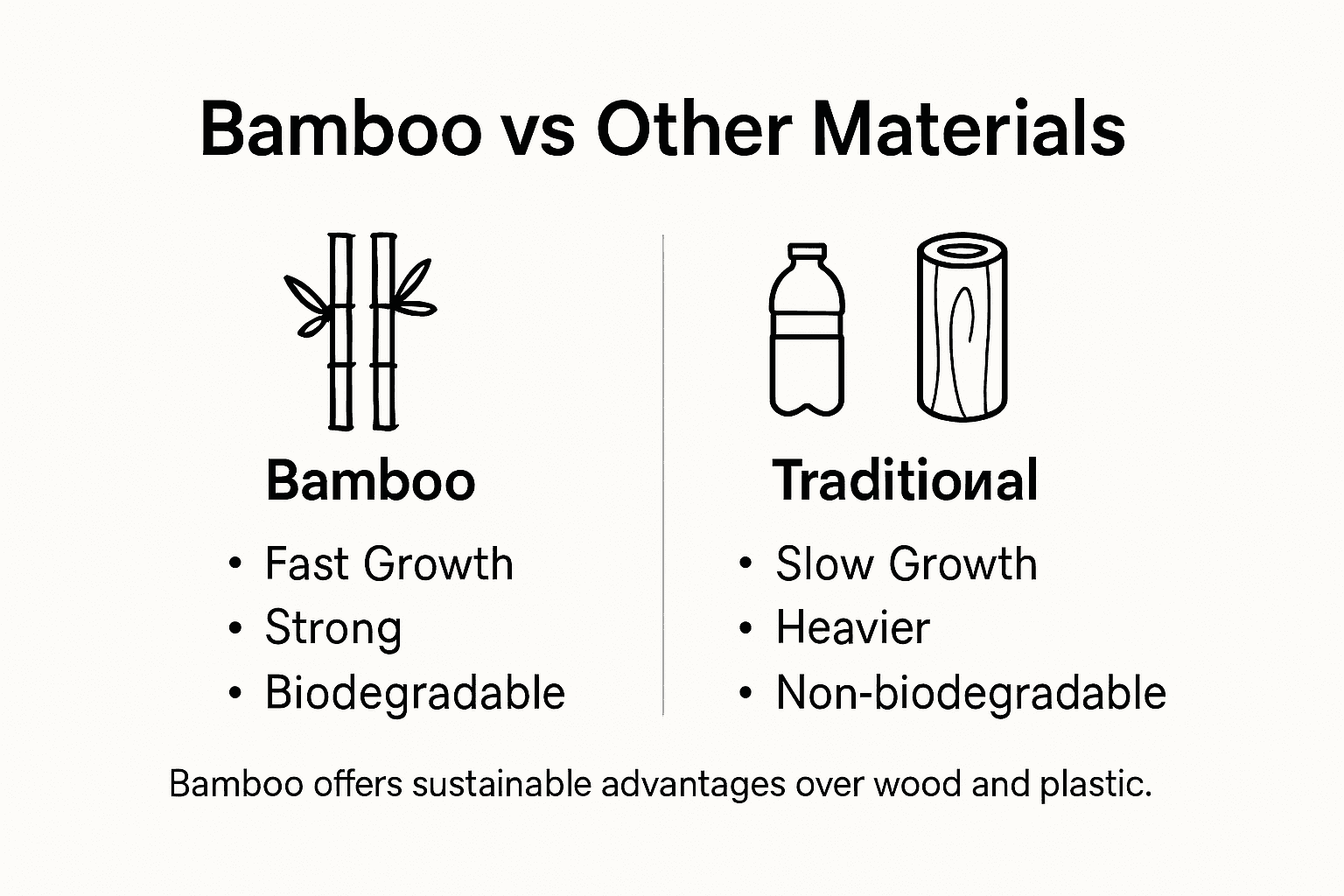
Economically, bamboo presents compelling advantages for manufacturers and consumers. Its lower production costs, combined with impressive durability and versatility, make it an attractive alternative to more expensive sustainable materials. While some sustainable materials struggle with scalability, bamboo’s global availability and rapid growth cycle enable consistent production. From construction materials to home accessories, bamboo offers a comprehensive solution that balances environmental responsibility with practical performance, making it an ideal choice for those committed to reducing their ecological impact.
Here’s a comparison of bamboo with other popular sustainable materials to help guide material selection decisions:
| Property | Bamboo | Recycled Plastic | Conventional Wood |
|---|---|---|---|
| Renewal Rate | 3-5 years | Dependent on recycling | 20-50 years |
| Biodegradability | Fully biodegradable | Not biodegradable | Biodegradable |
| Carbon Sequestration | High during growth | Neutral | Moderate |
| Processing Energy Use | Low | Medium-high | Medium |
| Common Applications | Home goods, furniture | Bottles, storage bins | Furniture, flooring |
Pro tip: When evaluating sustainable materials, consider not just their immediate environmental impact, but also their long-term regenerative potential and production efficiency.
Comprehensive international research highlights bamboo’s extraordinary potential as a sustainable material that transforms everyday living through environmental and practical advantages. Beyond its ecological credentials, bamboo products offer homeowners and consumers a unique combination of durability, aesthetic appeal, and responsible consumption. Its natural properties make it an ideal replacement for traditional materials that often come with significant environmental drawbacks.
Bamboo’s inherent characteristics provide multiple practical benefits for daily use. Its exceptional strength allows for creating long-lasting kitchen tools, organizational systems, and home accessories that withstand frequent use. The material’s natural antibacterial properties make it particularly suitable for food preparation areas, reducing the risk of bacterial contamination. Additionally, bamboo’s lightweight nature combined with its remarkable durability means consumers can enjoy products that are easy to handle, transport, and maintain without compromising on quality or performance.
The environmental impact of choosing bamboo extends far beyond individual product usage. By supporting bamboo production, consumers contribute to ecosystem restoration, soil stabilization, and rural economic development. Bamboo’s rapid growth cycle and ability to regenerate without replanting make it a powerful tool for carbon sequestration and biodiversity preservation. From reducing waste to supporting sustainable agricultural practices, every bamboo product represents a small but meaningful step towards more responsible consumption and global environmental healing.
Pro tip: When integrating bamboo products into your home, start with high-use items like kitchen accessories or organizational tools to maximize both sustainability and practical benefits.
U.S. regulations surrounding bamboo product imports and manufacturing present a complex landscape of legal requirements that consumers and businesses must carefully navigate. The Lacey Act, USDA guidelines, and Animal and Plant Health Inspection Service (APHIS) declarations create a robust framework designed to ensure product safety, environmental responsibility, and transparent supply chain practices. These regulations aim to prevent illegal sourcing, protect domestic ecosystems, and maintain high standards for imported bamboo products.
The supply chain integrity of bamboo products remains a significant concern for conscientious consumers. International sourcing introduces potential risks of misrepresentation, with some manufacturers potentially circumventing sustainable harvesting standards. Regulatory bodies require detailed documentation verifying the origin, processing, and environmental impact of bamboo products. Consumers should prioritize items from manufacturers that provide clear traceability, third-party certifications, and comprehensive documentation demonstrating compliance with U.S. safety and environmental regulations.
Chemical safety represents another critical consideration for bamboo product users. U.S. regulations mandate strict testing for potential contaminants, particularly for products used in food preparation or children’s environments. Manufacturers must comply with chemical safety standards, ensuring that bamboo products are free from harmful treatments, pesticides, and processing chemicals. Consumers can protect themselves by requesting detailed material safety data sheets, verifying certification marks, and purchasing from reputable manufacturers committed to transparent production practices.
Pro tip: Always request detailed certification documentation and origin information when purchasing bamboo products to ensure compliance with U.S. safety and environmental standards.
Health and safety assessments of bamboo composite materials reveal critical considerations that consumers must understand before purchasing bamboo products. Not all bamboo items are created equal, and potential risks can emerge from manufacturing processes, material composition, and improper usage. Understanding these limitations helps consumers make informed decisions and select high-quality, safe bamboo products that truly deliver on their environmental and functional promises.
One of the most significant risks involves bamboo-plastic composite materials, which can potentially release harmful chemicals under certain conditions. Formaldehyde and melamine migration represent serious concerns, particularly for food contact items and products exposed to heat. Consumers should carefully examine product specifications, avoid low-quality composites, and prioritize pure bamboo or certified safe manufacturing processes. Checking for third-party testing, understanding material composition, and verifying compliance with safety standards are essential steps in mitigating potential health risks.
Common mistakes consumers make include assuming all bamboo products are inherently safe, failing to research manufacturing processes, and overlooking proper maintenance requirements. Bamboo’s natural properties can be compromised by improper cleaning, exposure to extreme temperatures, or prolonged moisture. Some bamboo products require specific care to maintain their structural integrity and hygienic qualities. Consumers should invest time in understanding product-specific care instructions, avoid dishwasher use for delicate items, and regularly inspect bamboo products for signs of wear or degradation that could compromise their safety and performance.
The following table outlines common risks with bamboo products and how to avoid them:
| Risk | Potential Consequence | Prevention Strategy |
|---|---|---|
| Chemical migration | Health hazard | Choose certified products |
| Manufacturing shortcuts | Product failure | Seek reputable suppliers |
| Poor maintenance | Reduced durability | Follow care instructions |
| Sourcing misrepresentation | Environmental harm | Request traceable origins |
Pro tip: Always request detailed material safety documentation and verify manufacturing standards before purchasing bamboo products, especially those intended for food preparation or children’s use.
Choosing eco-friendly products can feel overwhelming with so many options and concerns about quality and safety. This article highlights the power of bamboo as a renewable, antibacterial, and durable material that meets the modern demands for sustainability without sacrificing style or function. At Cozee Bay, we understand your goal to bring responsible, long-lasting bamboo products into your space that support environmental stewardship and enhance everyday living.
Experience the perfect blend of elegance and eco-conscious design with our Bamboo Paper Towel Dispenser- A Sleek Look Home or Office.

Explore our handcrafted bamboo solutions that resist bacteria naturally and promote safe, sustainable use in kitchens, offices, restaurants, and more. From durable organizers to innovative wraps and foil dispensers like the Plastic Wrap Dispenser With Cutter | Cozee Bay®, our products deliver convenience with a commitment to the planet. Take action now and transform your space by choosing premium bamboo at https://cozee-bay.com with free shipping and a money-back guarantee. Browse our full lineup and enjoy quality craftsmanship that aligns with your environmental values.
Bamboo products are known for their fast regeneration, strength, antibacterial properties, and minimal environmental footprint. They mature in just 3-5 years and require little water, making them a sustainable choice for consumers.
Bamboo has a much shorter renewal rate than traditional wood, is fully biodegradable, and requires less energy to process compared to plastic. It offers superior strength and durability while minimizing environmental impact.
Bamboo products are ideal for kitchen tools like cutting boards, utensil holders, dish racks, and paper towel dispensers. They resist bacterial growth and combine practicality with aesthetic appeal, making them perfect for food preparation areas.
When buying bamboo products, it’s essential to check for certifications that ensure sustainable harvesting and compliance with safety standards. Request detailed material safety data sheets and verify that products are free from harmful chemicals, especially for those used in food preparation.
Comments will be approved before showing up.