Your Cart is Empty


TL;DR:
- Totally Bamboo creates durable, eco-friendly kitchen products from engineered bamboo that outperforms traditional options. Bamboo’s rapid growth, natural strength, and antimicrobial properties make it a sustainable choice for both home and commercial use. The brand’s innovations and sourcing practices significantly reduce environmental impact while providing long-lasting, stylish alternatives to plastic and hardwood.
Totally Bamboo is a brand that crafts durable, stylish home and kitchen products from engineered bamboo, a renewable material that outperforms many conventional options. Founded by Tom and Joanne Sullivan, the company pioneered the first engineered bamboo cutting board and has since built a reputation for sustainable bamboo items that hold up in real kitchens and commercial spaces. Bamboo’s natural tensile strength, fast growth rate, and antimicrobial properties make it one of the most practical eco-friendly materials available today. If you’re shopping for bamboo home decor or bamboo kitchenware that actually lasts, this guide covers everything you need to know.
Engineered bamboo is made by laminating strips of raw bamboo under heat and pressure to create a dense, stable board or panel. This process eliminates the warping and cracking that can affect solid bamboo, giving you a product that performs more like a premium hardwood than a grass. The result is a material that is both lighter and tougher than most people expect from a plant-based source.
The performance numbers are hard to ignore. Engineered bamboo has higher tensile strength than steel and is harder than traditional hardwoods like maple. That matters in a kitchen, where cutting boards and utensils take a beating every single day.
Here is why Totally Bamboo specifically relies on engineered bamboo for its product line:
Pro Tip: Hand wash your engineered bamboo cutting board with warm soapy water and dry it immediately. Soaking or dishwasher use breaks down the laminate bond over time, shortening the product’s life significantly.
Tom and Joanne Sullivan’s original innovation was recognizing that bamboo’s natural properties, combined with modern lamination, could produce a cutting board that outperformed wood without the environmental cost of deforestation. That insight still drives the brand’s product development today.
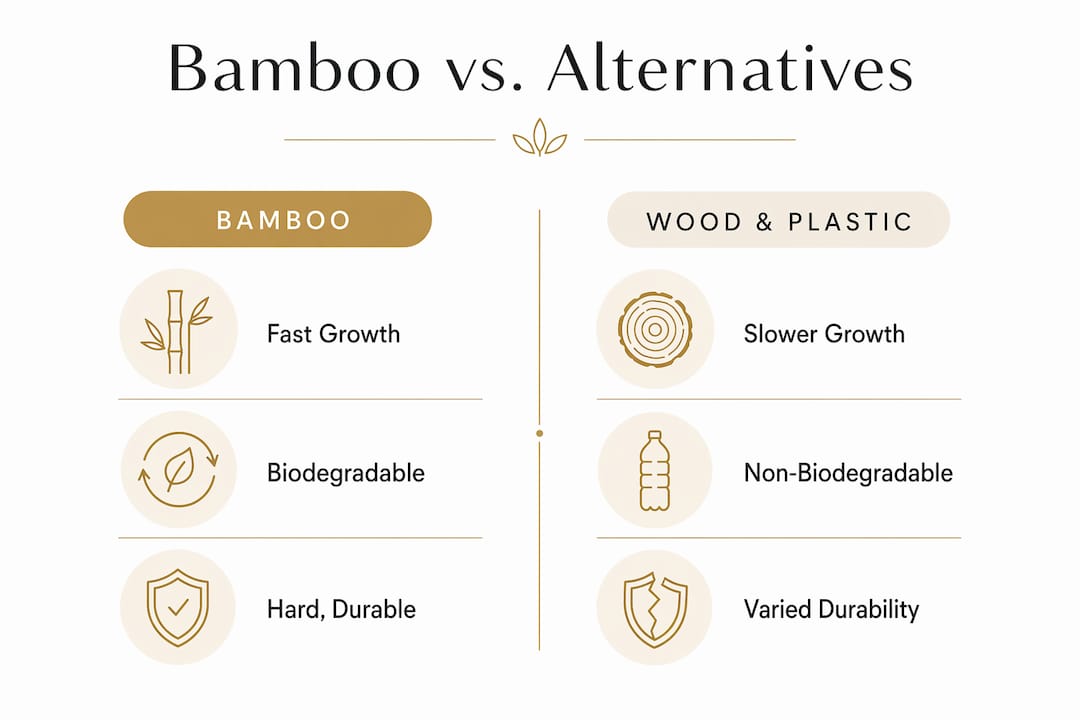
Bamboo is one of the fastest-growing plants on earth, and that speed translates directly into environmental benefits. Bamboo absorbs 35% more CO2 per hectare than comparable plants and can grow up to 39 inches in a single day. That growth rate means bamboo forests recover from harvesting far faster than any timber operation can replicate.

The production side is just as compelling. Bamboo manufacturing emits 30% fewer greenhouse gases than hardwood production. Choosing a bamboo cutting board or drawer organizer over a wood equivalent is a small decision with a measurable environmental payoff.
Beyond carbon, bamboo offers several other sustainability advantages worth knowing:
So is bamboo biodegradable? Yes. Bamboo products break down naturally at the end of their life cycle without releasing synthetic toxins, unlike plastic kitchen items that persist in landfills for centuries. That full lifecycle advantage is what separates bamboo from most conventional materials in a meaningful way.
Choosing between bamboo, traditional wood, and plastic comes down to three factors: durability, environmental impact, and care requirements. Bamboo wins on all three when you look at the full picture.
| Feature | Bamboo | Hardwood (Maple) | Plastic |
|---|---|---|---|
| Hardness | Harder than maple | High, but softer than bamboo | Varies; often scratches easily |
| Knife impact | Gentle on blades | Moderate wear on blades | Can dull blades quickly |
| Environmental impact | Low; fast-growing, renewable | High; slow-growing, deforestation risk | Very high; petroleum-based, non-biodegradable |
| Antimicrobial | Natural antimicrobial properties | None inherent | None inherent |
| Maintenance | Hand wash, occasional oiling | Regular oiling required | Dishwasher safe but degrades faster |
| Biodegradable | Yes | Yes | No |
| Lifespan | Long with basic care | Long with intensive care | Shorter; prone to warping and staining |
Plastic kitchen products carry a hidden cost that most people overlook. They shed microplastics during use, especially when cut or heated, and those particles end up in food. Bamboo does not have that problem. For a deeper look at how these materials stack up in everyday home use, the bamboo vs. traditional wood comparison from Cozee-bay breaks it down by product category.
Pro Tip: If you are switching from plastic to bamboo kitchenware, start with your cutting board and utensils. These are the two items that create the most direct food contact, so the switch delivers the biggest safety and sustainability benefit right away.
Hardwood boards like maple are excellent, but they require regular conditioning with food-safe oils to prevent cracking. Bamboo is more forgiving. Its natural density means less frequent maintenance while still delivering a surface that protects your knives and looks great on a counter.
Totally Bamboo’s product range covers the most common kitchen and home organization needs, and each item is designed to replace a plastic or low-quality wood equivalent with something that lasts longer and looks better.
Cutting Boards and Kitchen Surfaces
Cutting boards made from Moso bamboo are the brand’s signature product. Moso is one of the densest bamboo species, combining lightness with the kind of surface hardness that holds up to daily chopping, slicing, and carving. These boards work equally well in a home kitchen and a commercial restaurant setting, where surfaces take far more abuse.
Drawer Dividers and Home Organization
Bamboo drawer dividers made from 100% natural Moso bamboo offer strength, flexibility, and a clean look that plastic organizers simply cannot match. They fit various drawer sizes, resist warping in humid environments, and add a warm, natural aesthetic to any kitchen or bathroom drawer. If your junk drawer has been driving you up the wall, swapping in a bamboo divider system is one of the easiest upgrades you can make.
Kitchen Utensils and Serving Tools
Bamboo spatulas, spoons, and serving boards are lighter than their wood counterparts and naturally resistant to bacteria. They do not conduct heat, so they are safe to use with hot pans without the risk of burning your hand or melting the tool. For anyone trying to reduce plastic in their kitchen, bamboo utensils are the most practical first step.
Beyond the Kitchen
Totally Bamboo products also work well as sustainable gifts, promotional items for eco-conscious businesses, and decor pieces for commercial spaces like coffee shops, restaurants, and senior living centers. A bamboo serving board on a restaurant table communicates sustainability to guests in a way that a plastic tray never could. For a full breakdown of how these products perform across categories, the top bamboo products for home guide from Cozee-bay is worth bookmarking.
The antimicrobial bamboo guide from Cozee-bay also explains why bamboo’s natural fiber structure makes it a safer choice for food prep surfaces compared to materials that require chemical sanitizing treatments.
Totally Bamboo products deliver genuine performance and sustainability advantages because engineered bamboo is harder than maple, naturally antimicrobial, and grows back in years rather than decades.
| Point | Details |
|---|---|
| Engineered bamboo outperforms solid wood | Lamination prevents warping and creates a surface harder than maple with less maintenance. |
| Bamboo has measurable eco advantages | It absorbs 35% more CO2 per hectare and emits 30% fewer greenhouse gases than hardwood production. |
| Bamboo beats plastic on safety | Natural antimicrobial fibers eliminate the need for chemical treatments and prevent microplastic contamination. |
| Product range covers home and commercial use | Cutting boards, drawer dividers, and utensils all replace plastic or low-quality wood with durable, stylish alternatives. |
| FSC certification matters | Sourcing unbleached, FSC-certified bamboo protects ecosystems and avoids harsh chemicals in the final product. |
I used to think sustainable products meant making a trade-off. You picked the eco-friendly option, and you accepted that it would look a little plain or wear out faster than the conventional version. Totally Bamboo changed that assumption for me.
The first time I used an engineered bamboo cutting board, I noticed two things immediately. It felt solid in a way that cheap plastic boards never do, and my knives stayed sharper longer. That second point surprised me. I had expected bamboo to be a compromise. Instead, it was a genuine upgrade.
What I find most compelling about the brand is that the sustainability story is built into the material itself, not bolted on as marketing. Bamboo grows back without replanting. It cleans up without chemicals. It handles daily use without the kind of warping or staining that eventually ruins a wood board. You do not have to choose between a product that works and a product that is good for the planet.
My honest advice: do not start by replacing everything at once. Pick one item, your cutting board or your drawer organizer, and live with it for a month. You will notice the difference in durability and aesthetics, and that experience will make the next swap feel obvious rather than obligatory. Mindful product selection is not about perfection. It is about making better choices one item at a time, and bamboo homeware makes that genuinely easy to do.
— Cozee
If Totally Bamboo’s approach to eco-friendly home products resonates with you, Cozee-bay offers a curated selection of handcrafted bamboo products built for the same values: durability, style, and real sustainability. From bamboo paper towel dispensers used in restaurants, schools, and coffee shops to drawer organizers and kitchen storage solutions, every product is designed to replace plastic and low-quality materials with something you will actually want to keep.

Cozee-bay ships free within the contiguous U.S. and backs every purchase with a money-back guarantee, so there is no risk in making the switch. Whether you are outfitting a home kitchen or sourcing for a commercial space, explore the full range of eco-friendly bamboo products at Cozee-bay and find the pieces that fit your space and your values.
Totally Bamboo uses engineered bamboo, which is laminated under pressure for superior hardness and warp resistance. This process produces a product that outperforms solid bamboo and many traditional hardwoods in durability and longevity.
Yes, bamboo is fully biodegradable and breaks down naturally without releasing synthetic toxins. This makes it a far better end-of-life option than plastic kitchen and home products.
Bamboo cutting boards are naturally antimicrobial and antifungal, making them safer for food contact than many synthetic surfaces. They do not require chemical treatments to maintain hygiene with regular hand washing.
Hand wash with warm soapy water and dry immediately after use. Avoid soaking or dishwasher use, as prolonged moisture exposure breaks down the laminate bond and shortens the product’s life.
Yes. Totally Bamboo cutting boards and serving tools are used in restaurants, coffee shops, and senior living centers because they combine durability, food safety, and a clean aesthetic that works in professional environments.
Comments will be approved before showing up.