Your Cart is Empty


TL;DR:
- Space storage bags are airtight, reusable solutions that compress bulky household items to save up to 80% of storage space. They function through a valve-and-seal system, with different types suited for large, travel, or stackable needs, but require proper drying and ventilation to prevent mold. When used correctly, they protect contents from dust, pests, and odors, making them ideal for organizing seasonal or bulky items in small living spaces.
Space storage bags are airtight, reusable bags designed to compress bulky household items and save up to 80% of your storage space by removing trapped air. Whether you’re a renter working with a cramped closet or a homeowner drowning in seasonal bedding, these bags turn the piles of stuff you can’t seem to fit anywhere into neat, flat packages you can actually store. The industry term you’ll see most often is “vacuum compression bags,” though space-saving bags and compressible storage bags are used interchangeably. They work through a simple valve-and-seal system, and quality versions use double zipper seals and PA/PE multi-layer plastic to keep air out for months at a time.
Space storage bags remove air through a one-way valve built into the bag’s surface, which collapses the contents down to a fraction of their original size. You load the bag, zip it shut with the double-seal closure, then attach a vacuum cleaner hose or hand pump to the valve. The vacuum pulls air out, and the bag shrinks around whatever is inside. Compression rates reach 70 to 80%, which means a stack of winter comforters that once filled an entire shelf can fit under your bed.
There are three main types worth knowing:
| Type | Best for | Valve style | Reusable |
|---|---|---|---|
| Vacuum storage bags | Bedding, bulky coats | Universal vacuum valve | Yes |
| Hand-pump bags | Travel, small spaces | Manual pump | Yes |
| Cube-shaped bags | Shelf stacking, clothes | Vacuum or roll-seal | Yes |
Valve designs on most bags fit standard household vacuum hose attachments, though hand pumps are included with many sets for added flexibility. When choosing a size, match the bag to the item category. Large storage bags work for king-size comforters and bulky sweaters, while medium bags handle folded clothes and linens more efficiently.
Pro Tip: Buy a set that includes multiple sizes rather than one large bag. Mixing sizes lets you separate categories like bedding, off-season clothes, and kids’ items without cramming everything together.
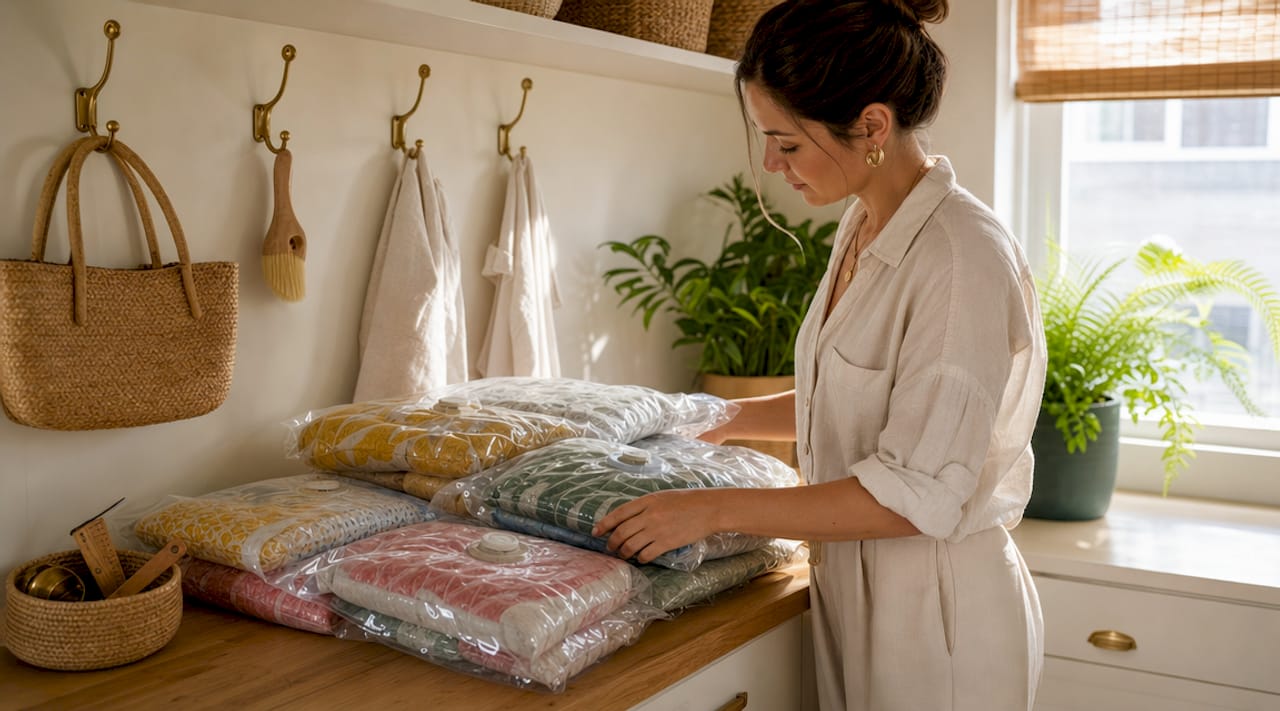
The most common failure with vacuum storage bags is not a broken zipper. It’s moisture trapped inside. Sealing moisture in airtight containers causes condensation when temperatures drop, and that condensation creates the exact conditions mold needs to grow. Follow these practices to protect your stored items:
Pro Tip: Before storing seasonal items for three months or longer, lay the sealed bag flat for 10 minutes after vacuuming. If it puffs back up noticeably, the valve or zipper has a small leak. Reseal and test again before putting it away.
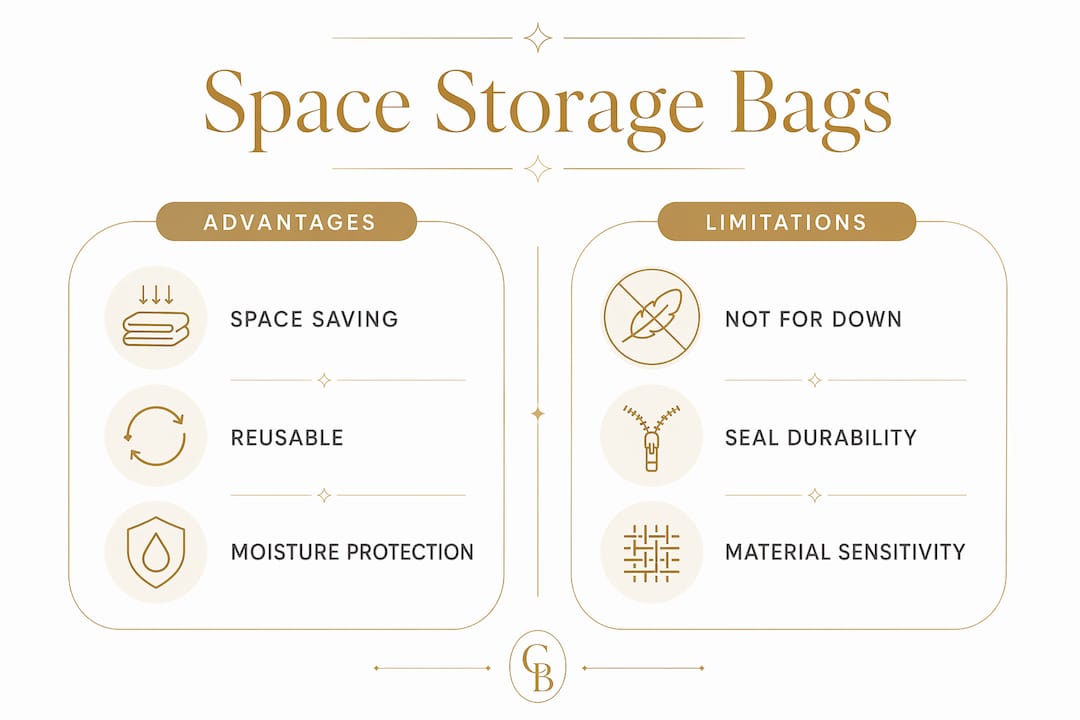
Space storage bags solve a real problem for anyone living in a home without enough closet space, but they are not the right solution for every item or every situation. Understanding both sides helps you use them where they genuinely work.
The advantages are substantial. Reusable vacuum bags double storage capacity without requiring you to buy new furniture or shelving, which makes them one of the most cost-effective organization tools available. Beyond space, they protect contents from dust, dirt, pests, and odors. A well-sealed bag keeps moths away from wool sweaters and keeps musty basement smells out of your bedding. They’re also portable, which makes them useful for moving, travel, or rotating seasonal wardrobes between storage units and living spaces. For clothes storage ideas in tight apartments, they’re often the most practical first step.
The limitations are real too. High-quality bags made with PA and PE multi-layer plastic last longer and hold seals better than thin alternatives, but even good bags eventually wear out. Cheaper bags may lose their seal within weeks. And as noted, natural down, silk, and fur should never go into compression bags.
| Advantage | Limitation |
|---|---|
| Saves up to 80% of storage space | Not suitable for down, silk, or fur items |
| Protects against dust, pests, and odors | Risk of mold if items are not fully dry |
| Reusable and cost-effective | Cheaper bags lose seals quickly |
| Portable for travel or moving | Requires vacuum or hand pump to use |
| Works for seasonal rotation | Compression can wrinkle delicate fabrics |
The bottom line is that space storage bags work best for durable, dry, bulky items like cotton bedding, fleece blankets, synthetic-fill coats, and folded knitwear. They are a poor fit for anything fragile, structured, or made from natural fibers that need to breathe.
Getting the most out of your space-saving bags comes down to a simple, repeatable process. Whether you’re tackling a single closet or reorganizing your whole home, this sequence works.
Combining bags with other storage tools multiplies the effect. Use drawer organizers for everyday items and reserve your compression bags for the bulky seasonal things that eat up shelf space year-round. For more ideas on working with limited space, kitchen organization tips from Kitchen Devotion apply the same principles of category-based sorting to other areas of the home.
Space storage bags work best when items are completely dry, bags are filled to 80% capacity, and storage locations are ventilated and low in humidity.
| Point | Details |
|---|---|
| Compression saves real space | Vacuum bags compress bulky items by up to 80%, freeing shelves and closets. |
| Moisture is the main risk | Always dry items fully before sealing to prevent mold and condensation damage. |
| Match bag type to item | Use large vacuum bags for bedding, hand-pump bags for travel, cube bags for stacking. |
| Avoid compressing delicate fabrics | Silk, fur, and natural down lose structure under compression. Use breathable alternatives. |
| Reuse saves money and space | Quality reusable bags eliminate the need for extra storage furniture over time. |
I’ve used both vacuum storage bags and manual compression bags across apartments and houses, and the single biggest mistake I see people make is skipping the drying step. They wash their winter blankets, toss them in the bag while still slightly warm, seal it up, and wonder why there’s a musty smell six months later. Moisture doesn’t disappear inside a sealed bag. It condenses.
The second thing I’d push back on is the idea that you need to spend a lot on bags. What you actually need is to avoid the cheapest option. Mid-range bags made with thicker PA/PE plastic hold their seals reliably through a full year of use. Bargain bags often fail within a season, and that false economy costs you time and frustration.
What I find genuinely underrated is the mental shift that comes with getting this right. When you open a closet and see labeled, flat-stacked bags instead of a pile of stuff you haven’t touched in two years, it changes how you feel about your space. Organization is not just about fitting more in. It’s about knowing where everything is and being able to get to it without pulling your hair out. Space storage bags, used correctly, make that possible without buying a single new piece of furniture.
— Cozee
If you’re ready to reclaim your closets, spare room, or that chaotic space under the bed, Cozee-bay has the storage solutions to get you there. From durable vacuum storage bags with airtight double-zip seals to value packs that cover every size you need, the selection is built for real homes with real clutter.

Cozee-bay’s home storage solutions include options for seasonal clothing, bulky bedding, and everything in between, with free shipping across the contiguous U.S. and a money-back guarantee. Whether you’re starting with one closet or tackling the whole house, you’ll find bags that fit your space and your budget. Check out the full range at cozee-bay.com and see what a difference the right bag makes.
Space storage bags are used to compress bulky household items like bedding, seasonal clothes, and coats, reducing their volume by up to 80% to free up closet and shelf space.
Yes. Many sets include a hand pump that removes air manually, making them usable anywhere without a vacuum cleaner nearby.
Items can stay sealed for several months to over a year, provided they were completely dry before sealing and stored in a cool, ventilated space away from humidity.
Avoid storing silk, fur, natural down, and structured garments in compression bags. Compression crushes natural fibers and destroys the loft in down-filled items permanently.
The most likely cause is either overstuffing beyond 80% capacity or a small gap in the zipper seal. Check the zipper track carefully, refold contents to reduce bulk, and reseal before vacuuming again.
Comments will be approved before showing up.