Your Cart is Empty


TL;DR:
- Using the correct storage bags can optimize space, protect contents, and align with eco-friendly practices. Vacuum seal bags save space and safeguard seasonal or bulky items, while reusable silicone and compostable bags offer sustainability options for daily use. Choosing the right type depends on specific storage goals, convenience needs, and local infrastructure.
Not all storage bags are created equal, and treating them like they are will cost you space, money, and peace of mind. Whether you are stuffing winter blankets under the bed, packing snacks for the kids, or trying to cut down on single-use plastic in the kitchen, there is a specific type of storage bag designed for exactly that job. The problem is most people grab whatever is closest without realizing how much better the right choice could serve them. This guide breaks down vacuum seal bags, reusable silicone options, compostable alternatives, and practical tips to help you organize smarter.
| Point | Details |
|---|---|
| Vacuum bags save serious space | Vacuum seal bags can shrink items to a quarter of their original size, making them ideal for bulky bedding and off-season clothing. |
| Machine compatibility matters | Whether a vacuum bag works depends on your sealer type. Embossed bags work with suction sealers, while smooth bags suit chamber machines. |
| Silicone bags go beyond sandwiches | Food-grade silicone bags handle freezing, microwaving, and general organization without releasing harmful chemicals. |
| Compostable bags need local infrastructure | Compostable bag certification only delivers on its promise if your local composting facility accepts them. |
| Match bag type to your storage goal | Large vacuum bags work best for bulky items and under bed storage, while ziplock storage bags handle daily food and travel needs. |
If you have ever opened a closet packed with bulky comforters and wondered where the space went, vacuum seal bags might be the single best fix you have not tried yet. These are airtight bags with a one-way valve that lets you remove air with a vacuum or hand pump, compressing everything inside into a flat, dense package. Vacuum bags can shrink items to a quarter or less of their original size while also protecting contents from mold, mildew, moisture, and pests.
That last part deserves more attention than it usually gets. Most people think of vacuum bags purely as space savers, but they are also protective. A good set of thick, durable compressed storage bags will keep off-season clothing smelling fresh and pest-free through an entire summer or winter, not just squished down to fit on a shelf.
Here is what to look for when choosing vacuum seal bags:
Space saver bags also shine for travel. Packing a week’s worth of clothes into a carry-on becomes far less painful when you compress them first, and the bags also protect against spills and odors in luggage.
Pro Tip: Check your vacuum-sealed bags 24 to 48 hours after sealing. If they have re-inflated, the valve or zipper seal has a leak. Reseal immediately before contents are exposed to air and moisture for an extended period.
For food use, FoodSaver quart vacuum seal bags keep food fresh up to five times longer than ordinary storage methods. They are BPA-free, microwave and sous vide safe, and designed to prevent freezer burn. If you are sealing produce, fully dry the fruits and vegetables before bagging to avoid moisture buildup that can break down the seal from the inside.
There is a certain kind of kitchen drawer that becomes a graveyard for single-use ziplock storage bags you intend to wash but never do. Reusable silicone bags solve that problem cleanly. They are designed to be used indefinitely, and the better ones handle everything from freezer storage to microwaving to marinating meat.
Stasher bags are a well-known example. They are made from food-grade silicone that is free from BPA, BPS, lead, and latex, and they are safe up to 425°F. The Pinch-Loc seal creates a genuinely leak-free closure, and they go straight into the dishwasher for easy cleanup. You can also use a marker to label them, which is helpful when you are meal prepping and have several bags of similar-looking ingredients in the freezer.
What makes reusable storage bags worth the upfront cost:
For eco-conscious shoppers looking to go further, the top food bag storage solutions include silicone bags alongside other alternatives worth exploring.
Pro Tip: After washing silicone bags, turn them inside out and let them air dry completely before storing. Moisture trapped inside leads to odor buildup, which defeats the whole purpose of a clean, reusable bag.
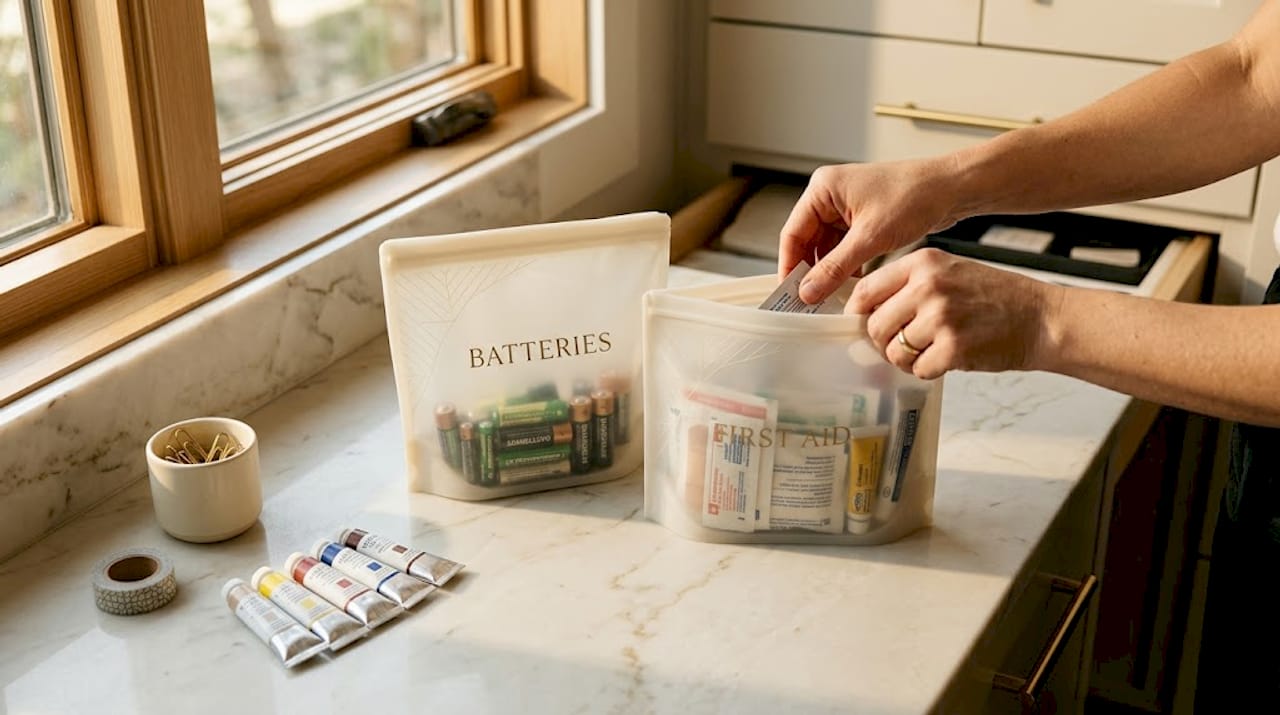
One underrated use is organizing non-food items around the house. Small silicone bags keep first aid supplies sorted, hold extra buttons and thread in a sewing kit, or keep your gym bag tidy. They are genuinely one of the more practical swaps you can make across multiple areas of your home at once.
Compostable storage bags have become more visible on store shelves, and the idea behind them is genuinely appealing. Instead of contributing to plastic waste, the bag breaks down into organic material after use. No microplastics, no toxic residue. That is the pitch, and it is mostly accurate with a few important conditions.
HoldOn compostable bags are a good example of what to look for. They carry both TUV Certified Home Compostable and BPI Certified Industrial Compostable designations, are made from food-safe materials, and come in gallon size at roughly 10.75 by 10.56 inches. That is large enough for snack packing, food prep storage, and general household use.
What to know before you buy compostable bags:
The honest takeaway is that compostable bags are a meaningful step forward for households that have composting access, and a more limited upgrade for those who do not. Before stocking up, confirm what your local waste management system actually accepts. Pairing compostable bags with a broader commitment to eco-friendly home storage makes the most sense as part of a larger system rather than a standalone swap.
The best storage bag is the one that matches what you are actually trying to accomplish. Buying a pack of jumbo vacuum bags when you mostly need to organize daily snacks is like buying a truck to run errands across town. It works, but it is not the right tool. Here is how to think through your real storage goals.
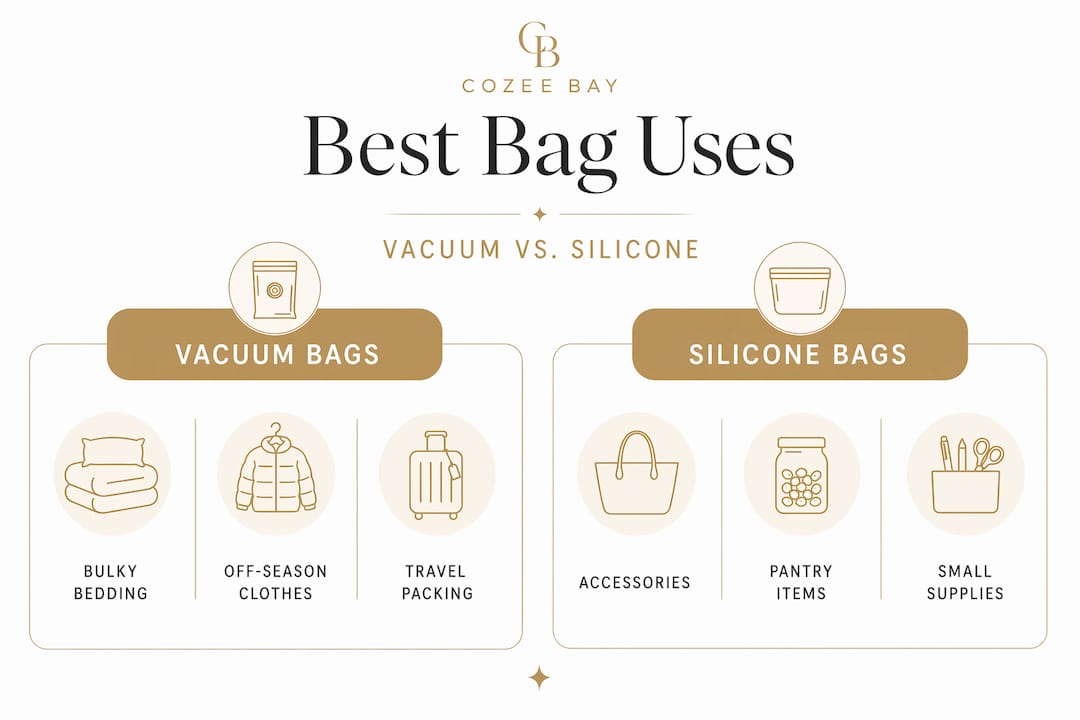
For bulky off-season items. Large vacuum seal bags or space saver bags are your best option here. Comforters, winter coats, extra pillows, and chunky sweaters compress dramatically and store flat under the bed or on a high shelf. Under bed storage with vacuum bags is one of the most space-efficient systems you can set up in a bedroom.
For everyday food storage. Reusable silicone bags or ziplock storage bags cover most daily needs. Silicone is the better choice if you want to reduce waste and cook or freeze in the same bag. Ziplock bags work for quick packing, kids’ lunches, or short-term storage when convenience matters most.
For travel. Compressed storage bags sized for a suitcase let you pack more without checking a bag. Vacuum seal bags for travel also protect against spills and odors, which is a real bonus on longer trips. Choose hand-pump style bags for travel since you will not have a vacuum nearby.
For clothing protection. Garment storage bags handle delicate items like suits, dresses, and formalwear when you want to protect against dust without compression. Combine them with cedar sachets or lavender pouches to guard against moths. For seasonal clothing you do not mind compressing, vacuum bags are more space-efficient.
For eco-conscious kitchens. Compostable bags and silicone reusable bags split this territory well. Use compostable bags for produce and dry snacks, and silicone for anything you reheat or freeze regularly.
Pro Tip: Always store vacuum-sealed items in a cool, dry location. Hot or humid environments weaken seal integrity and can allow moisture inside, which defeats the purpose of sealing in the first place. A climate-controlled closet or under a bed in an air-conditioned room is ideal.
For clothes storage in particular, a mix of vacuum bags for bulk items and labeled silicone bags for accessories can transform a chaotic closet into something genuinely functional. More clever clothes storage ideas are worth a look if you want to take the system further.
I have tried most of what is on the market, and the truth is that the category most people overlook is seal quality. Everyone focuses on brand name or bag thickness, but a poorly sealed bag fails in days regardless of how thick it is. I have seen this happen with expensive vacuum bags and cheap ones alike.
What I have learned is that the biggest mistake people make is storing items that are not completely dry. Damp clothes in a vacuum bag will develop a musty smell and potentially mold, no matter how well the seal holds. The same principle applies to food vacuum bags. Clean and dry everything first. It sounds obvious, but it is the step most people skip when they are in a hurry.
My other honest observation: compostable bags are genuinely exciting but often overpromised. They do less good than their marketing suggests if you do not have composting infrastructure to back them up. That does not mean they are not worth buying. It means they work best as part of a thought-out approach rather than a guilt-free swap.
If I had to give one piece of advice, it would be to invest in fewer, better bags rather than stockpiling the cheapest option. Two or three high-quality vacuum bags for seasonal storage and a set of durable silicone bags for daily use will serve you far longer and more reliably than a drawer full of mismatched, half-functional bags.
— Cozee
If this article has you ready to finally get your storage situation sorted, Cozee-bay has options that make the process a lot easier. From food bag organizers that keep your kitchen tidy to bamboo drawer organizers that bring real order to cluttered spaces, the product range is built around the idea that good organization should also look good.

Cozee-bay’s eco-conscious products are designed for the same everyday goals covered in this article: protecting your belongings, reducing waste, and making the most of the space you have. Whether you are building a smarter kitchen setup or tackling the chaos under your bed, the Cozee-bay home storage collection offers practical, sustainable solutions worth exploring. And if you are also drawn to carrying your eco-friendly habits beyond the home, a well-made reusable tote bag is a small but meaningful addition to your daily routine.
Vacuum seal bags and space saver bags are the most effective option for closet space. They can compress bulky items like bedding and coats to a quarter of their original size.
Yes. Vacuum seal bags designed for food use, like FoodSaver-compatible bags, keep food fresh up to five times longer and prevent freezer burn. Make sure any food bag is labeled BPA-free and microwave or freezer safe.
Compostable bags reduce plastic waste, but their environmental benefit depends on local composting infrastructure. Home compostable bags break down in backyard bins, while industrially compostable ones require commercial facilities.
Check bags 24 to 48 hours after sealing. If they inflate back up, the valve or zipper seal has a leak. Also, store sealed bags away from heat and humidity, which weaken seal integrity over time.
Silicone bags are durable, dishwasher-safe, and designed for repeated use including cooking and freezing. Ziplock storage bags are disposable, more convenient for quick tasks, and less expensive upfront but generate more waste over time.
Comments will be approved before showing up.