Your Cart is Empty


In this guide, “red toilet paper” refers to bamboo paper-towel dispensers and the compatible refills that fit them, not colored tissue paper. The recommended approach: choose a sealed, correctly sized bamboo dispenser, ideally strand-woven or factory-treated, matched to your roll or folded-towel format. The sections below walk through fit, materials, and upkeep so you can shop with confidence.
TL;DR:
- Measure your current roll or towel stack carefully to ensure the dispenser matches the core diameter, outer roll diameter, and sheet width, especially for high-traffic facilities.
- Strand-woven bamboo offers superior resistance to warping and moisture damage, making it more durable in humid bathroom environments than solid bamboo.
- Proper sealing and maintenance, including resealing every one to two years and regular cleaning, are essential for bamboo dispensers to withstand heavy humidity and use.
- Commercial-grade bamboo dispensers cost more upfront but typically save money over time through reduced replacement needs and maintenance.
- Compatibility with your refill format and appropriate capacity based on traffic levels are critical to avoid costly returns and supply shortages.
Before you buy anything, you need to know which refill format your bathroom or facility actually uses. Dispensers generally fall into three categories: roll dispensers (standard toilet-paper-style rolls), center-pull dispensers (towels pull from the middle of a coreless roll), and folded-towel dispensers (stacked C-fold or Z-fold sheets). Each requires different internal dimensions, and mixing them up is the single most common return reason facility managers report.
Before ordering refills or a new dispenser, record these measurements:
Homes typically use compact roll or center-pull units built for occasional use, while offices, restaurants, and schools lean toward higher-capacity roll or folded systems that tolerate constant traffic without daily refilling.
Bamboo earns its reputation honestly. It’s a rapidly renewable grass, not a tree, and it biodegrades far faster than plastic housings at the end of its life. That’s a meaningful upgrade for any facility manager trying to cut single-use plastic from restrooms and break rooms.
But sustainability only matters if the product survives a humid bathroom, and that’s where construction quality separates the good bamboo products from the disappointing ones.
Material Fact: Strand-woven bamboo shows roughly 0.4% thickness expansion after 24-hour water exposure, compared with 2 to 4% for solid bamboo. That difference is why strand-woven construction resists warping in steamy bathrooms far longer than basic solid-cut bamboo.
Strand-woven bamboo is manufactured by compressing bamboo fibers under high pressure, which creates a denser, harder material than a single solid plank cut straight from the stalk. Solid or laminated bamboo remains a fine choice for drier spaces, but it needs more frequent sealing to hold up.
Bamboo also carries natural antimicrobial and moisture-resistant properties when properly treated, which makes it suitable for use in restaurants, churches, schools, coffee shops, and senior living centers, all environments where hygiene and daily wear matter more than in a quiet home hallway bathroom.
Bamboo’s practical advantages for bathroom use:
Getting the fit right the first time saves you a return shipment and a frustrated maintenance team. Work through this order:
Pro Tip: Keep at least two to three spare rolls on hand for every high-traffic dispenser you operate. Facilities with steady foot traffic that skip this step tend to run out mid-shift, and an empty dispenser reads as neglect to customers even when the rest of the space is spotless.
For a deeper dive into matching measurements to specific models, our roll dimensions fit guide walks through the process room by room.
How you mount a bamboo dispenser matters almost as much as what it’s made of. Mechanical mounting (screws into wall studs or anchors) is the most durable option and the right call for any permanent commercial installation. Adhesive mounts work well for renters or temporary setups but shouldn’t carry a fully loaded high-capacity unit. Tension-rod and countertop styles skip drilling altogether and suit spaces where you can’t modify the wall.
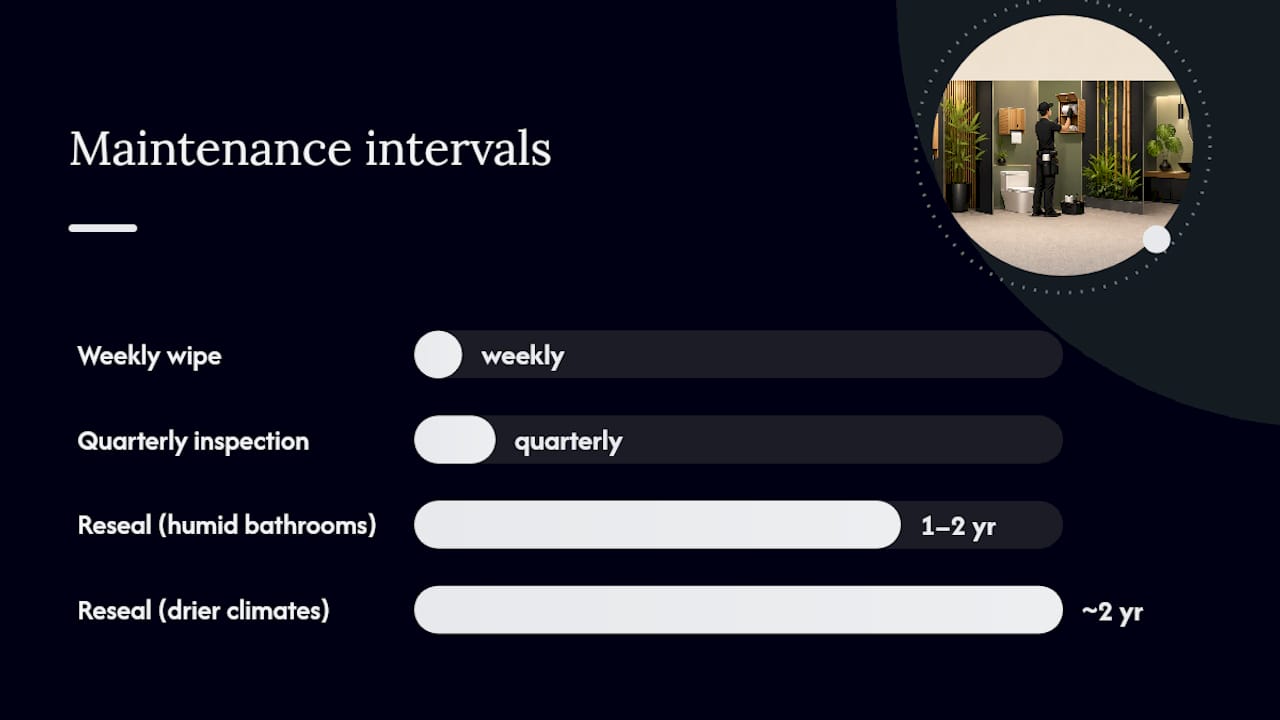
Factory sealing is what keeps bamboo from swelling in the first place, and it doesn’t last forever. Plan to reseal with a food-safe lacquer or natural oil every one to two years in bathrooms with heavy shower steam or high humidity, and closer to the two-year mark in drier climates.
A simple maintenance routine:
Pro Tip: If a bamboo surface starts feeling slightly “fuzzy” to the touch, that’s the wood grain lifting from moisture exposure. Catch it at that stage and a fresh coat of sealant fixes it. Wait too long and you’re looking at a full replacement.
A dispenser earns its spot on the wall in two ways: it looks like it belongs there, and it holds up to real use. Bamboo’s warm tone pairs naturally with stone, matte black fixtures, and neutral tile, which is part of why it reads as an upgrade over the beige plastic units most facilities default to.
For commercial placement, keep these guidelines in mind:
Coordinating finishes across a bathroom, from cabinet doors to dispenser tone, is worth a second look if you’re renovating; our partners at One Day Doors & Closets cover finish pairing in more detail.
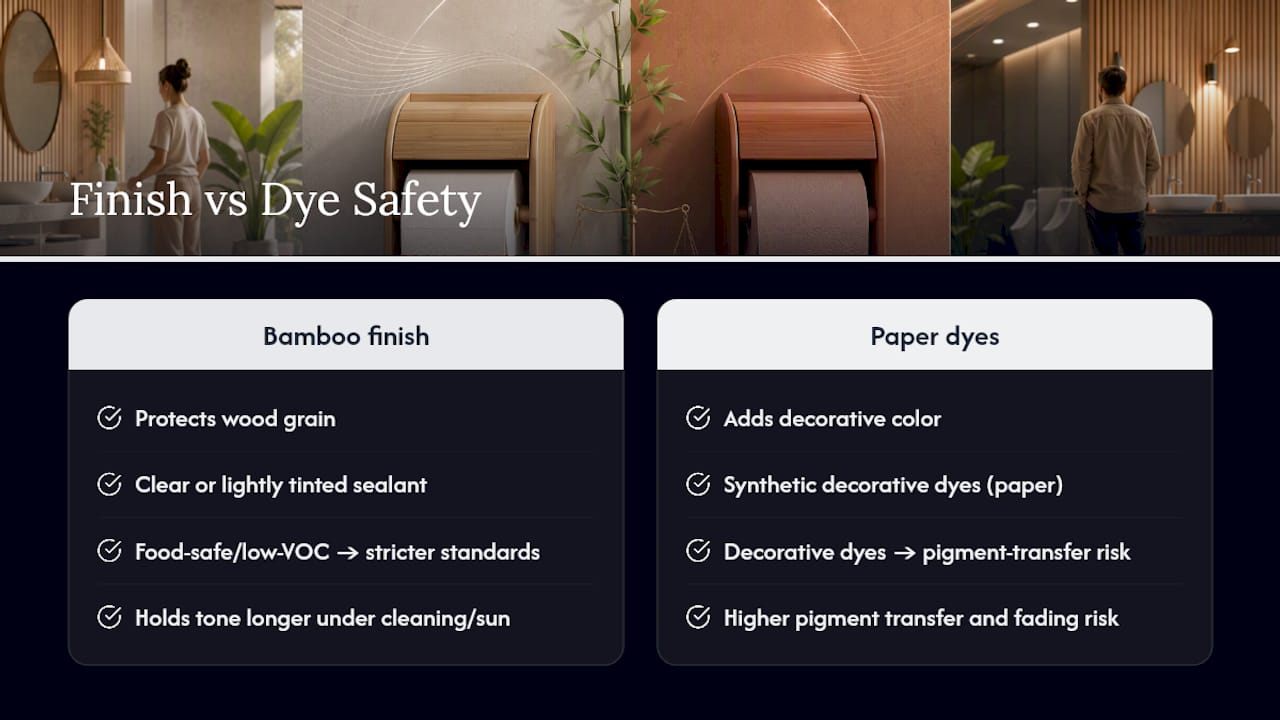
Bamboo dispensers don’t rely on synthetic dye the way novelty paper products do, and that’s a genuine advantage for anyone concerned about chemical exposure in a bathroom. The finish you see is typically a clear or lightly tinted sealant, a lacquer, natural oil, or an acrylic topcoat, applied to protect the wood grain rather than to color it artificially.
That distinction matters for regulatory reasons too. Finishes marketed as food-safe or low-VOC generally meet stricter chemical-exposure standards than decorative dyes used in some paper products, since sealants are formulated for surface durability rather than pigment transfer. If a listing doesn’t specify the finish type, that’s worth asking about before you buy, especially for installs in schools or senior living centers where hand contact is constant.
Color consistency also comes down to construction. Strand-woven bamboo takes stain and sealant more evenly than solid-cut pieces because its compressed fiber structure absorbs treatment uniformly, which is part of why it holds its tone longer under repeated cleaning and sun exposure near windows.
Sticker price tells only part of the story. A basic plastic dispenser costs less upfront, but it also tends to yellow, crack, or loosen at the hinges well before a well-sealed bamboo unit shows comparable wear. Facility managers replacing plastic units every few years often find the total cost over time favors the sturdier bamboo option, even with a higher initial purchase price.
Refill costs follow a similar pattern to standard paper products, since bamboo dispensers accept the same roll and folded-towel formats most suppliers already stock. You’re not paying a premium on the ongoing paper supply, only on the housing itself. That makes the dispenser a one-time upgrade rather than a recurring cost increase.
The real savings show up in reduced replacement frequency and fewer service calls. A cracked plastic bracket or a jammed spring-loaded cover means a maintenance ticket and downtime for that restroom. A sealed bamboo unit with mechanical mounting rarely needs that kind of intervention, which quietly adds up across a multi-unit property or a busy commercial kitchen.
The dispenser housing itself never touches your plumbing, but the question comes up often enough to answer directly: it’s the paper you feed through the dispenser, not the bamboo casing, that interacts with your pipes and septic tank. Standard roll and folded-towel refills break down the same way regardless of which dispenser holds them.
If you’re running a septic system, the safest approach is sticking with septic-safe paper products rated for rapid breakdown, and checking that rating on the refill packaging rather than assuming. This applies whether the dispenser is bamboo, steel, or plastic. The dispenser choice and the plumbing question are separate decisions, and treating them as one is a common point of confusion for new homeowners setting up a bathroom.
Sourcing for a single home bathroom is straightforward: order a compact dispenser and a case of compatible refills, and you’re set for months. Bulk sourcing for a facility with multiple restrooms takes more planning.
Look for suppliers who list exact internal dimensions, not just outer product size, since that’s the detail that determines whether your existing refill contracts will still work with a new bamboo unit. Ask about lead times for bulk orders, especially if you’re outfitting a new build or renovating several restrooms at once. Suppliers that stock both the dispensers and compatible refill formats in one catalog save you the headache of cross-checking measurements between two vendors. For detailed sizing across roll types, our roll sizes and formats guide breaks down what to expect from different suppliers.
Customers rarely comment on a restroom dispenser unless something’s wrong with it, but the wood-tone finish of a bamboo unit tends to register as a quiet upgrade even when guests can’t name why. It reads as intentional design rather than an afterthought bolted to the wall.
In restaurants and coffee shops especially, bathroom fixtures get photographed and shared more than owners expect. A dispenser that matches the rest of the decor, rather than clashing with it in stark white plastic, avoids becoming the one unflattering detail in an otherwise polished space. Senior living centers and churches report a similar effect: residents and visitors respond well to finishes that feel more like furniture than institutional hardware. For ideas on repurposing extra rolls and tying dispensers into broader decor choices, see creative roll reuse ideas.
Most buying guides treat dispenser shopping as a style decision first and a fit decision second. That’s backwards, and it’s why so many returns happen. Style matters, but a beautifully finished bamboo dispenser that doesn’t match your refill’s core diameter is just an expensive shelf ornament.
The overlooked variable isn’t the wood tone or the finish, it’s the sealing quality and construction type underneath it. A solid bamboo unit and a strand-woven one can look nearly identical on a product page, yet perform very differently after a year of steam exposure. If you take one thing from this guide, measure your refill format first, then shop finishes. Traffic level should drive capacity decisions, not guesswork about how often someone will notice an empty dispenser. Get those two calls right, and the aesthetic upgrade takes care of itself.
— Cozee
Bamboo dispensers with the fit problems above already solved: clear internal measurements, strand-woven and sealed construction options, and mounting styles for renters and permanent installs alike. Such units are suited for use in restaurants, churches, schools, coffee shops, and senior living centers, so the traffic and durability questions above aren’t theoretical.

Before you order, check the product page for internal dimensions, mounting hardware included, and finish type so you know exactly what you’re installing before it arrives. If sustainability and long-term cost savings matter to your purchase, our buying guide on quality and value is worth a read alongside the product catalog. Ready to browse? Head to Cozee-bay’s full catalog and match a dispenser to your space today.
Material-performance claims on strand-woven versus solid bamboo draw from Alibaba’s bamboo bathroom storage guide, which compares moisture absorption across construction types. Capacity and refill-frequency guidance for commercial spaces comes from CDWKCN’s commercial dispenser selection guide. Sustainability and antimicrobial property claims reference Jibamboo’s bamboo product solutions overview.
Comments will be approved before showing up.