Your Cart is Empty


TL;DR:
- A well-chosen, adjustable bamboo drawer organizer can dramatically improve kitchen clutter and functionality. Proper measurements, non-slip features, and material understanding are essential for long-term success. These versatile, sustainable solutions can efficiently adapt to various storage needs and spaces beyond the kitchen.
Opening a kitchen drawer only to have a spatula, a mystery gadget, and three tangled measuring spoons tumble toward you is one of those small frustrations that adds up fast. The right kitchen drawer organizer can completely change that experience, but here’s what most people get wrong: they assume any tray or divider will do the job. It won’t. The wrong solution creates a different kind of chaos, one where things slide, gaps appear, and you’re back to square one after a week. This guide walks you through every type of organizer, how to measure properly, and how to keep things working long after the initial setup.
| Point | Details |
|---|---|
| Not all organizers fit all drawers | Measure width, depth, and height before buying any tray or divider system. |
| Adjustable beats fixed for most homes | Expandable dividers accommodate changing storage needs better than rigid trays. |
| Bamboo is worth the upgrade | Lacquered bamboo resists moisture, cleans easily, and lasts longer than most plastic options. |
| Creative reuse extends value | Kitchen drawer dividers work just as well in bathroom, office, or pantry drawers. |
| Renters have good options too | Spring-loaded and expandable dividers require no tools and leave no damage behind. |
Walk down any home goods aisle and you’ll find a shelf full of drawer organizer options that all look vaguely similar but behave very differently once you get them home. Understanding the main categories saves you from wasting money and drawer space.
Fixed trays are the most familiar format. You’ve seen them: the standard plastic insert with slots for forks, knives, and spoons. They’re affordable and available everywhere. The downside is that they come in standard sizes that rarely match your actual drawer, which leaves awkward gaps along the sides where crumbs collect and small items disappear.
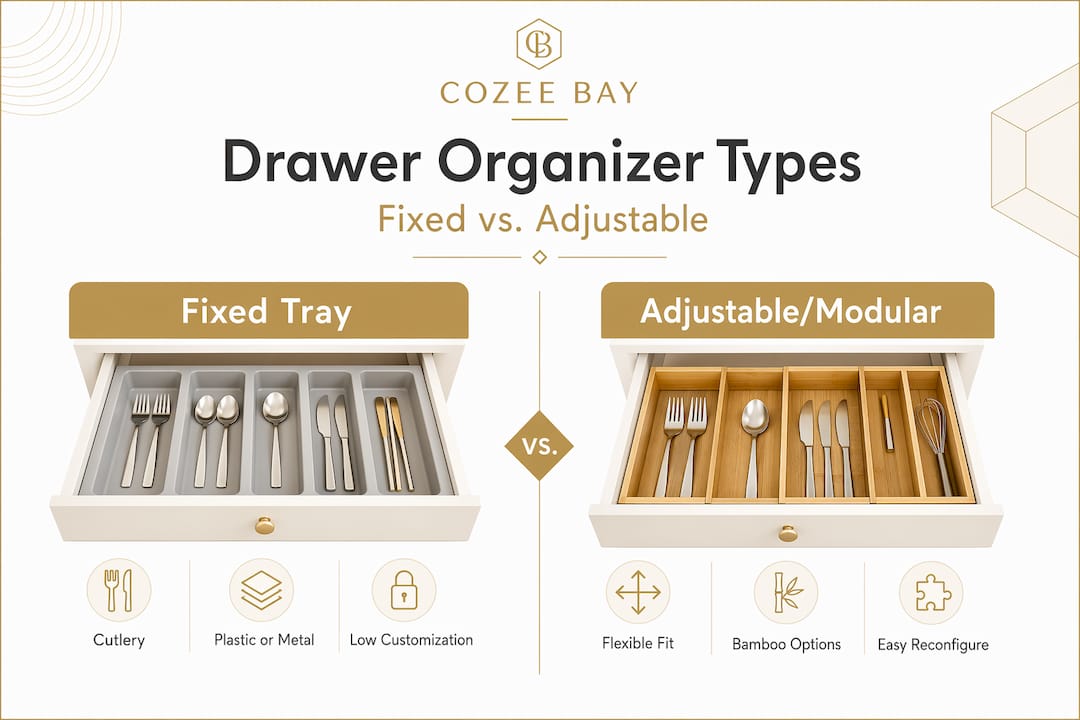
Adjustable and expandable dividers solve that problem. Expandable organizers adjust to various drawer widths, offering more flexible use than fixed-size options. Bamboo versions are particularly popular because they combine that flexibility with a warm, natural look. The best models expand from around 16 to 22 inches and use non-slip pads to stay anchored.
Modular bin systems are a smarter choice for deep drawers. Rather than one flat tray, you arrange individual stackable containers in whatever configuration your utensils require. Modular organizers outperform single trays for deep drawers by allowing fully customizable layouts suited to a variety of utensils and containers. Think of the flexibility: large bins for ladles and spatulas, small ones for peelers and bottle openers, all side by side.
Specialty inserts, like a drawer insert for cookware, are designed specifically for lids, pots, and pans stored horizontally. These vertical slot systems keep lids upright and prevent the avalanche that usually happens when you pull one item out.
Here’s a comparison to help you decide which type fits your situation:
| Type | Best use | Material options | Main drawback |
|---|---|---|---|
| Fixed tray | Small cutlery drawers | Plastic, acrylic | Won’t fit non-standard sizes |
| Expandable divider | Most kitchen drawers | Bamboo, plastic | Requires sizing check |
| Modular bins | Deep drawers, gadgets | Plastic, acrylic | Can shift without non-slip base |
| Specialty insert | Cookware, lids, bakeware | Plastic, bamboo | Limited to specific items |
On the materials side, plastic dominates the market. Modular plastic systems hold 45 to 55% of unit volume, but premium bamboo and acrylic segments are growing 7 to 10% annually and are projected to reach 22 to 28% of dollar sales by 2030. Shoppers are clearly trading up, and for good reason. Acrylic looks sleek and modern but scratches easily. Bamboo is warm, durable, and genuinely sustainable when sourced responsibly.
Pro Tip: If you want the best kitchen drawer dividers for everyday use, prioritize non-slip bottoms, removable sections for easy cleaning, and square corners that eliminate gaps.
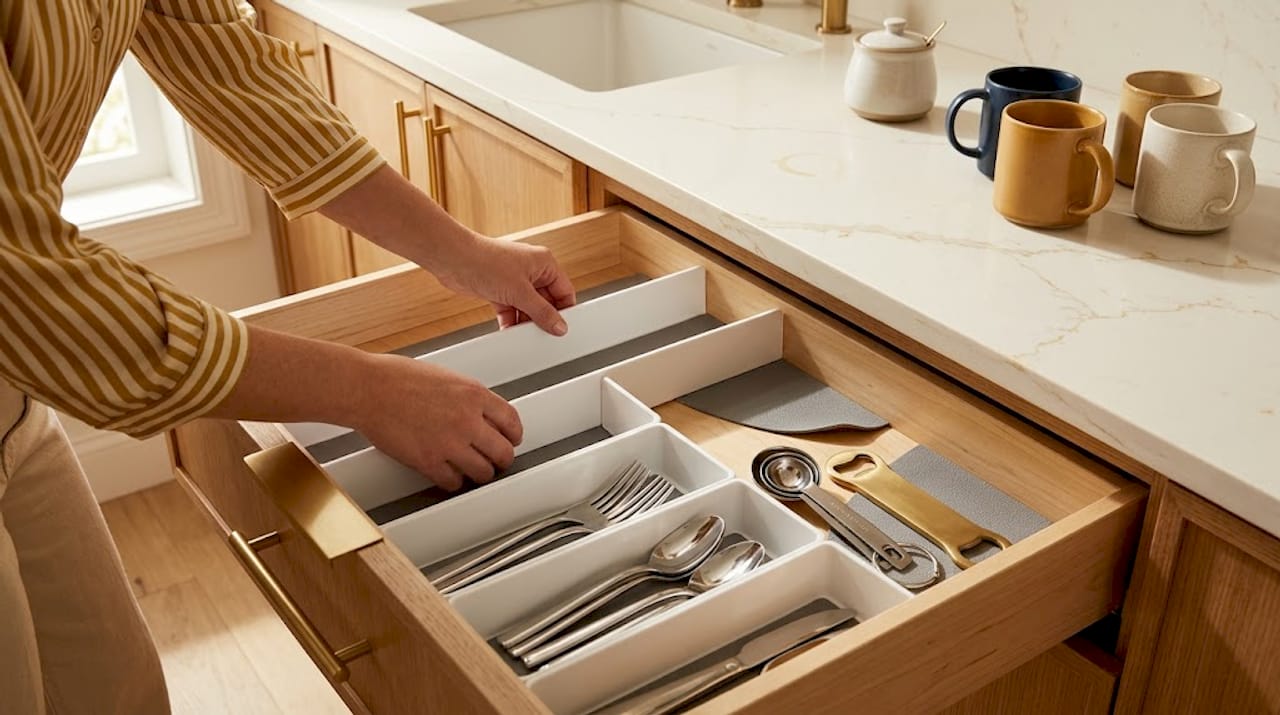
Getting the measurements right before you buy is the step most people skip, and it’s the reason so many organizers end up at a garage sale six months later.
Here’s a straightforward process to follow:
For renters, the calculus is slightly different. You want solutions that don’t require drilling, gluing, or any modification that could affect your security deposit. Expandable bamboo dividers and spring-loaded organizers are your best friends here. They grip the drawer walls through tension and come out just as easily as they went in.
Homeowners have more options, including modular systems that can be trimmed or custom drawer organizers built to exact dimensions. If you’re renovating a kitchen or building out new cabinetry, this is the time to think seriously about custom sizing.
Pro Tip: When your drawer depth falls between two standard sizes, size up the divider rather than down. A slightly larger divider creates a snug, secure fit with no wobble.
The good news about most kitchen drawer dividers is that installation requires zero tools. That’s especially true for spring-loaded bamboo models, which are genuinely one of the most renter-friendly products in the home organization category.
A few things worth knowing before you place anything in the drawer:
For cleaning, the rules vary by material. Plastic organizers can go in the dishwasher, which is convenient, but over time the heat warps them. Hand washing with warm soapy water preserves them longer. Acrylic should never go in the dishwasher since it scratches and clouds easily. Wipe it down with a soft, damp cloth instead.
Bamboo deserves a little extra care. Lacquered bamboo resists moisture and stains with occasional wiping, making it one of the lower-maintenance natural materials you can use in a kitchen. The key word is “lacquered.” Unfinished bamboo absorbs moisture and can warp or crack over time, so confirm your dividers have a protective finish before buying.
Pro Tip: Removable trays make deep cleaning dramatically easier. Every few months, pull every section out, wipe the drawer itself, and let organizers dry fully before replacing them.
Most people buy a kitchen drawer organizer thinking strictly about forks and spoons. But the same principles and products work brilliantly for almost every drawer in the house, not just the one next to the sink.
Here are some practical ways to think beyond the obvious:
The flexibility to reconfigure without starting from scratch is what separates a good kitchen drawer organizer from a great one. Rigid systems lock you into one layout. Adjustable ones grow with you.
I’ve seen a lot of people spend time and money on drawer organization only to be back where they started within a few months. Rigid trays are usually the culprit. Rigid organizers often fail in real homes because they don’t adapt to drawer variations or storage changes over time.
In my experience, the households that stay organized long term are the ones who chose adjustable over fixed. Not because adjustable is trendier, but because life changes. You get a new kitchen gadget. You move. Your cooking habits shift. A system that can’t flex with you won’t last.
I also want to push back on the idea that sustainable materials mean compromise. Bamboo is genuinely tougher in daily kitchen use than most plastic options at the same price point. It doesn’t crack, warp, or yellow the way plastic does with heat exposure. And when you’re done with it years from now, it won’t sit in a landfill for centuries.
My honest advice is to stop chasing the perfect system before you even start. Put in the adjustable dividers, live with your drawers for two weeks, then move things around based on what you actually reach for. The best layout is the one built around how you cook, not how a magazine says a kitchen should look. Learn more about this in our guide to organizing kitchen drawers for stylish and practical spaces.
— Cozee

At Cozee-bay, we believe a tidy kitchen should also be a beautiful one. Our handcrafted bamboo drawer organizers are built with real kitchen use in mind: adjustable sizing for drawers of all dimensions, a lacquered finish that resists moisture and wipes clean in seconds, and a natural aesthetic that makes your drawers genuinely worth opening. Whether you’re a renter who needs a no-damage solution or a homeowner ready to commit to a full kitchen refresh, there’s a Cozee-bay option that fits your space.
Explore our full range of bamboo drawer organizers and compare the options that work for your specific drawer layout. For a deeper look at why bamboo outperforms plastic for kitchen use, read our breakdown of bamboo organizer benefits. Every product ships free within the contiguous U.S., and each purchase is backed by our money-back guarantee. Tidy drawers are closer than you think.
Adjustable bamboo dividers are the most versatile choice for most kitchens because they expand to fit non-standard drawer widths and adapt to changing storage needs without requiring replacement.
Look for organizers with non-slip rubber or foam pads on the base. For spring-loaded dividers, placing the spring end toward the drawer’s back creates a secure fit that resists movement.
Yes. Adjustable bamboo dividers work equally well in bathroom drawers, office desks, and bedroom dressers, making them a practical investment beyond just kitchen organization.
A drawer insert for cookware is a specialty vertical slot system that holds pot lids, baking sheets, or pans upright in a deep drawer, preventing stacking and making individual items easy to grab.
Wipe bamboo organizers with a damp cloth and mild soap. Lacquered bamboo resists moisture well, but avoid soaking or dishwasher use, which can damage the finish over time.
Comments will be approved before showing up.