Your Cart is Empty


Clear everything off, sort into three piles, then give every keeper a dedicated spot with a tray or divider. That’s the whole plan. Here’s what earns a spot right now:
Every other item gets relocated, donated, or tossed. And to keep it that way: a 30-second nightly sweep, returning every stray item to its home before you turn off the light.
A functional bedside table comes down to three things: an honest clearout, a deliberate return of only routine-essential items, and a short daily habit that keeps it that way.
| Point | Details |
|---|---|
| Clear and sort first | Remove everything, sort into keep/relocate/discard, then return only what passes the routine-based test. |
| Cap the surface | Limit the top to seven items or fewer, including the lamp, water glass, and one current book. |
| Use the right organizer | Measure drawer interior dimensions before buying; choose adjustable dividers or shallow trays for daily-use items. |
| Build the maintenance habit | A 30-second nightly sweep and a 5-minute weekly reset prevent the need for full overhauls. |
| Cozee-bay bamboo organizers | Adjustable, natural-material options sized for nightstand drawers, with free U.S. shipping and a money-back guarantee. |
The simplest decision rule: does this item support your evening wind-down or your first five minutes awake? If the answer is no, it doesn’t belong at the bedside. Professional organizers often describe nightstands as “catch-alls,” and the fix is treating the surface as a purpose-built sleep-and-morning station, not a landing zone for whatever you’re carrying when you walk into the room.
Keep on the surface:
Store in the drawer:
Relocate elsewhere:
Discard or donate:
A quick note on medications: if you keep them at the bedside, store them in a labeled container with a secure lid, especially in households with children. Work-related items are worth a firm rule of their own. Sleep coaches advise keeping work-related tech and clutter out of the bedroom because a clutter-free sleep environment actively supports relaxation and better rest.
Pro Tip: Apply the routine-based test to every item before it goes back: “Do I use this in bed or within arm’s reach of waking up?” One honest answer per item keeps the surface honest.
Set aside 30–60 minutes for a full reset, or 10 minutes for a quick refresh if you’re short on time. Either way, follow the same sequence.
Take everything out. Pull every item off the surface and out of every drawer. This reveals the actual storage capacity of your nightstand and stops you from organizing around clutter you should have discarded. Wipe down the surface and drawer interiors while they’re empty.
Sort into three piles. Keep, relocate, discard or donate. Work quickly. If you haven’t touched something in two weeks and it isn’t a safety item, it goes in the relocate or discard pile.
Measure before you put anything back. Note the interior width, depth, and height of each drawer, and the usable footprint of the top surface. You’ll need these numbers if you’re adding organizers.
Designate zones. Surface zone: lamp, water, one book, catchall tray. Top drawer: daily-use items you reach for in the dark. Lower storage: backup supplies, seasonal items, or extras.
Return items intentionally. Frequently used items go closest to your hand. Heavier items go low. Cords get routed to a single spot, not draped across the surface.
Set your charger up last. Decide whether your phone charges on the nightstand or across the room. If it stays bedside, one low-profile charging dock keeps cord clutter contained.
For a quick reset on a busy night, timeboxing to 10 minutes is enough to clear the surface and return stray items to their drawer zones. The 30-second nightly sweep handles everything else between resets.
The right organizer depends on what you’re storing and how much space you have. Measure your drawer interior first: width, depth, and height. Then match the organizer type to the job.
For a deeper look at drawer organizer types and benefits, including how to match divider styles to different drawer depths, it’s worth reading through the options before you buy.
Quick purchase checklist:
A small surface or a drawer-free nightstand isn’t a dead end. It just means your storage goes vertical or adjacent.
For renters, command-strip shelves and adhesive hooks rated for the weight you need are a practical, damage-free way to add vertical storage without drilling.
Keep the top of a tiny surface to three items maximum: lamp, water, and one small tray. Everything else goes in the caddy, the basket, or the shelf.
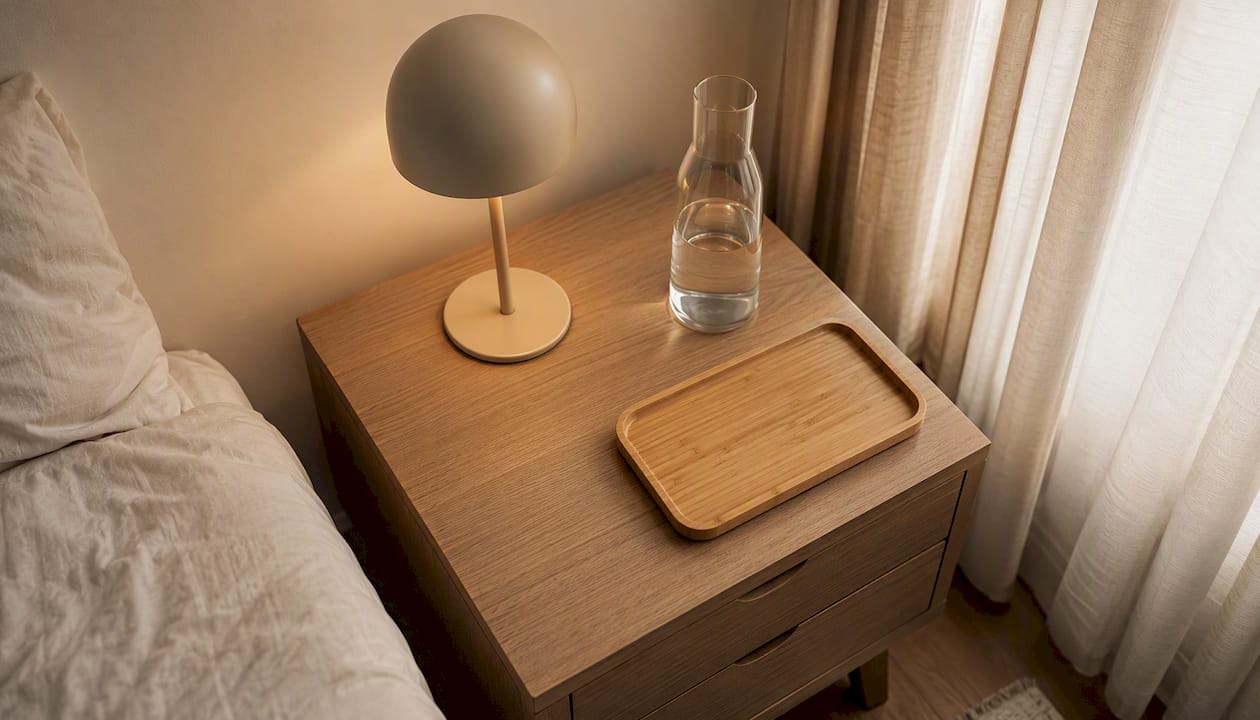
Styling a bedside table isn’t about making it look like a magazine photo. It’s about making it feel calm when you look at it from the pillow.
Start with the lamp as your anchor. It’s the tallest item and the one you’ll use every night, so it earns the back corner of the surface. From there, add one functional small item (your water glass or carafe) and one decorative accent if you want it. That’s the full composition.
Designers use this as a rule of thumb, and it works because open space reads as calm. If every inch is covered, the surface feels busy even when everything on it is technically “useful.”
Pro Tip: Swap utilitarian items for visually calm versions. A glass carafe instead of a plastic water bottle, a ceramic dish instead of a takeout container lid. The function is identical; the visual effect is completely different.
A few styling guidelines worth keeping:
The reason most nightstands slide back into chaos isn’t a lack of effort. It’s a lack of a short, repeatable habit. Professional organizers recommend a weekly or biweekly rhythm rather than occasional deep purges, because small resets prevent the slow accumulation that makes a full clearout feel necessary.
| Reset | Time | What to do |
|---|---|---|
| Nightly sweep | 30 seconds | Empty the water glass, return stray items to their drawer zone, clear any trash |
| Weekly reset | 5 minutes | Wipe the surface, tidy the catchall tray, check that chargers are routed cleanly |
| Monthly audit | 10–15 minutes | Pull the drawer, remove anything that doesn’t belong, re-evaluate what’s earning its spot |

The Sunday reset habit is the most effective single habit: a quick surface tidy, emptying the catchall back to its home, and a wipe-down. Do it before the week starts and the nightstand almost never needs a full overhaul.
Knowing the pitfalls is half the battle. Here are the ones that trip people up most often, and the fix for each.
Pro Tip: Apply the one-in, one-out rule to decorative items. Before a new accent goes on the surface, one existing item comes off. It keeps the styling intentional and prevents slow accumulation.
The step-by-step method used here isn’t guesswork. It maps directly to what professional organizers and sleep researchers recommend.
Martha Stewart’s home experts outline the same core sequence: remove everything, clean, evaluate essentials, use organizers, and return items intentionally. That sequence produces durable results because it forces you to make a conscious decision about every item rather than organizing around existing clutter.
On the sleep side, the evidence is consistent. As Forbes reports from seven sleep experts:
The maintenance rhythm is equally well-supported. Good Housekeeping’s organizing experts recommend a quick weekly reset and monthly drawer audit as the most effective way to prevent clutter from returning, because short, repeated habits outperform occasional deep purges over time.
For readers who want to go deeper on smart drawer organization ideas, the same principles of zoning and dividers that apply to kitchen and bathroom drawers translate directly to nightstand drawers.
There’s a version of nightstand organization advice that turns into a shopping list: buy this tray, this lamp, this specific carafe, this exact organizer. That approach misses the point. The bedside table works when it matches your actual routine, not when it matches a curated photo.
The before-and-after that matters isn’t visual. It’s the feeling of reaching for your water glass in the dark and finding it exactly where you left it, or waking up to a surface that doesn’t immediately demand your attention. That calm is achievable with what you already own, a 30-second habit, and a willingness to be honest about what actually belongs there.
Eco-friendly organizers made from natural materials like bamboo tend to hold up better than plastic alternatives and look calmer on a surface, which is why they’re worth considering when you do need to add a tray or divider. But the system works first. The organizer supports it.
When you’re ready to add a tray or drawer divider, the material and sizing matter more than the brand. Look for organizers made from bamboo or other natural materials: they’re durable, moisture-resistant, and visually calm in a bedroom setting. Modular or adjustable options are worth the small premium because your storage needs will shift.

Measure your drawer interior (width, depth, height) and your surface footprint before you order anything. A tray that’s a half-inch too wide creates more frustration than no tray at all. Cozee-bay’s bamboo drawer organizers are available in adjustable configurations designed for exactly this kind of small-surface, detail-oriented setup, with free shipping across the contiguous U.S. and a money-back guarantee. Browse the options, measure first, and pick the size that fits your actual drawer.
Comments will be approved before showing up.