Your Cart is Empty


Many eco-conscious designers believe bamboo’s rapid growth guarantees sustainability, but reality proves more complex. The distinction between conventional and fair trade bamboo impacts not only the planet, but also the lives of workers and the quality of your designs. Understanding the principles behind fair trade bamboo helps you select materials that align with your values and satisfy clients seeking genuine environmental responsibility.
| Point | Details |
|---|---|
| Fair Trade Certification Ensures Ethical Standards | Fair trade bamboo guarantees fair wages, safe working conditions, and sustainable farming practices through transparent supply chains. |
| Misconceptions About Bamboo Sustainability | Not all bamboo is sustainable; fair trade certification is needed to avoid worker exploitation and environmental harm. |
| Transparent Sourcing is Critical | Always request certification documentation to ensure that bamboo products meet fair trade standards and to build client trust. |
| Long-Term Value of Fair Trade Products | Although fair trade bamboo may have a higher upfront cost, its durability and quality offer a better total cost of ownership over time. |
Fair trade bamboo sounds straightforward, but misconceptions cloud the reality. Let’s clarify what it actually means and why your design projects should care about the distinction.
Fair trade bamboo refers to bamboo harvested and processed under ethical standards that guarantee fair wages for workers and sustainable farming practices. This certification ensures the entire supply chain operates transparently, from forest to finished product.
Here’s what actually separates fair trade bamboo from conventional bamboo:
Many designers assume all bamboo is sustainable. Not quite. Conventional bamboo production in some regions involves pesticide overuse, worker exploitation, and land degradation. Fair trade certification eliminates these concerns.
The common misconception? That bamboo’s rapid growth automatically makes it ethical. Growth rate ≠ ethical production. A plant can regenerate quickly while workers struggle with wages that haven’t increased in years.
Fair trade certification creates accountability across the entire supply chain, not just environmental responsibility.
Why matters for your projects: Specifying fair trade bamboo communicates values to clients. Hotels, restaurants, and corporate spaces increasingly request sustainable materials. Your choice of products like fair trade bamboo fixtures sends a message about your design philosophy.
Another myth worth addressing: “Fair trade costs significantly more.” While fair trade bamboo typically costs 10-15% more upfront, the longevity and durability justify the investment. Quality craftsmanship outlasts cheaper alternatives.
Look for third-party certifications when sourcing bamboo products. Organizations like Fair Trade International and Rainforest Alliance verify claims and audit suppliers regularly. Don’t rely on brand promises alone.
Pro tip: Request supply chain documentation from manufacturers before specifying bamboo products. Transparent vendors provide certification numbers and auditor reports—red flags when they don’t.
Fair trade bamboo certification isn’t vague marketing speak. Real standards govern every step, and understanding them helps you make informed specifications for your projects.
The core principles remain consistent globally. Fair trade certification focuses on four non-negotiable areas:
For bamboo specifically, standards address sustainable harvesting and artisan empowerment. This means workers benefit directly, not just corporations at the top.
Certification bodies like Fair Trade International and the International Bamboo and Rattan Organization set rigorous benchmarks. They don’t rubber-stamp claims—they audit regularly and verify compliance through on-site inspections.
Certification means accountability. Third-party auditors verify claims independently, not suppliers policing themselves.
Here’s what distinguishes legitimate certification from greenwashing:
Modern fair trade standards also integrate circular economy principles. Zero waste and low carbon practices reduce environmental impact during processing. This matters when you’re sourcing bamboo products for commercial spaces—you’re supporting both ethical labor and climate responsibility.
Why this matters in your specifications: Clients increasingly demand proof. When you specify fair trade bamboo, provide certification documentation. It differentiates your designs and builds client trust.
Common question: Does fair trade certification cost more? Yes, but the premium reflects real costs—living wages, auditing, community investment. Your projects benefit from this transparency.
Pro tip: Always request a Certification ID number from suppliers and verify it on the certifying organization’s website before specifying products in your designs.
Fair trade bamboo creates a three-way win that extends far beyond the product itself. Understanding these benefits helps you see why specification choices matter for your entire design practice.
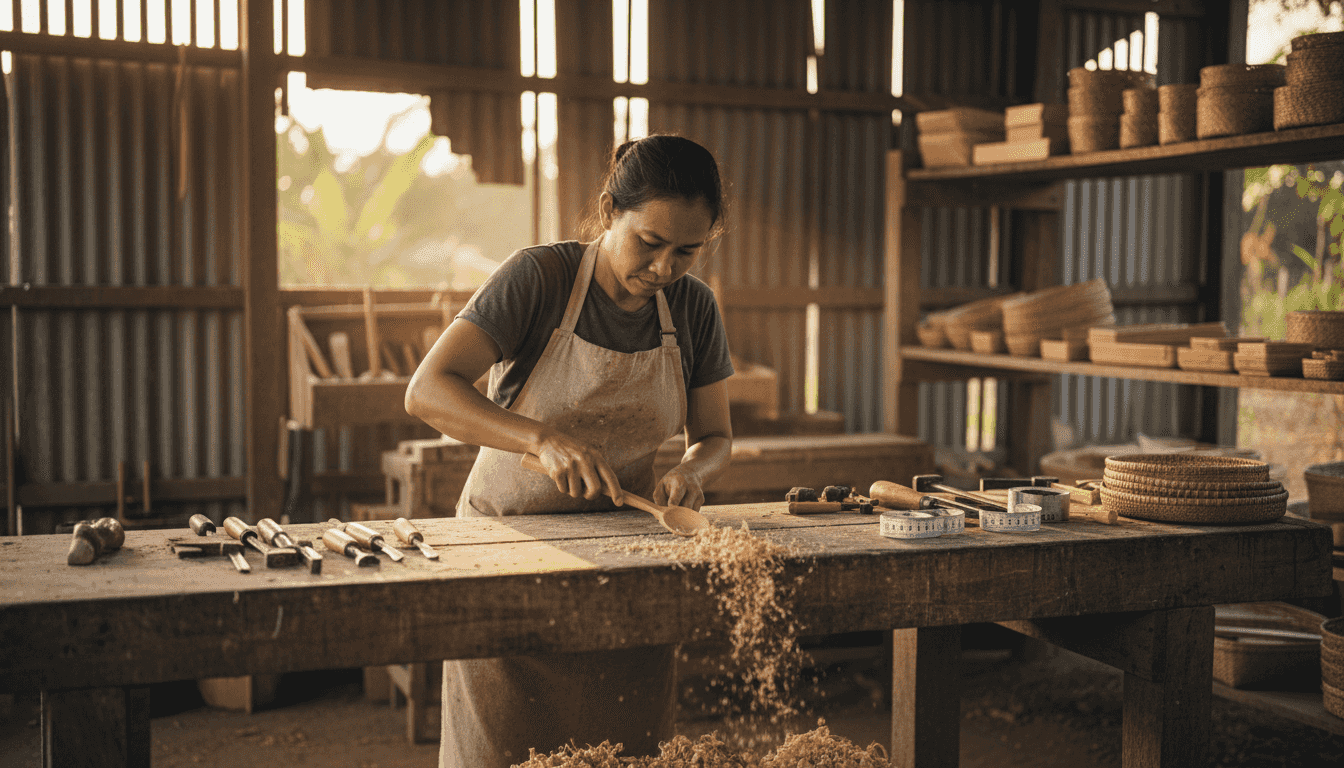
For artisans, fair trade fundamentally changes economic reality. Workers earn living wages instead of poverty pay, creating stability for families and communities.
The human impact includes:
Many artisans transition from subsistence living to genuine middle-class stability. This isn’t charity—it’s fair compensation for skilled labor.
For the environment, sustainable bamboo cultivation delivers measurable benefits. Bamboo regenerates without replanting, requires minimal pesticides, and sequesters significant carbon.
Key environmental advantages:
Your specification choices directly impact these outcomes. When you choose fair trade bamboo products, you’re actively supporting reforestation and climate action.
Fair trade bamboo delivers environmental benefits backed by verified sustainable practices, not just marketing claims.
For you as a designer, benefits are equally compelling. Fair trade products offer quality assurance through transparent sourcing and rigorous standards.
What you gain:
Handcrafted bamboo products like organizers and dispensers represent this value perfectly. They combine artisan skill, environmental responsibility, and functional elegance in single pieces.
Commercial clients—hotels, restaurants, offices—increasingly expect documentation. Fair trade certification provides that proof. Your ability to specify and defend these choices strengthens client relationships and project value.
Pro tip: Calculate the lifecycle cost of fair trade bamboo products versus cheaper alternatives—superior durability often delivers lower total cost of ownership over five to ten years.
Fair trade bamboo sounds ideal until you hit real-world obstacles. Understanding these challenges helps you navigate adoption and avoid costly mistakes in your specifications.
The biggest barrier? Price. Fair trade bamboo typically costs 15-25% more than conventional alternatives due to certification, auditing, and fair wages.
Why costs run higher:
Scaling fair trade bamboo faces economic barriers as competition from non-certified producers undercuts prices. Without subsidies or regulatory support, cost-competitiveness remains elusive.
This creates a real tension: clients want sustainability, but procurement departments scrutinize pricing. You’ll need to articulate lifecycle value to justify specifications.
Higher upfront cost doesn’t mean poor value—durability and quality often deliver superior long-term performance.
Another pitfall? Greenwashing masquerading as fair trade. Unverified claims flood the market. Producers without genuine certification slap vague language on products hoping buyers won’t dig deeper.
Common red flags:
Consumer awareness gaps limit adoption despite genuine benefits. Many designers and buyers simply don’t understand the difference between certified and uncertified bamboo.
Additional challenges affect producers too. Small artisans struggle with compliance documentation, and maintaining ecological standards during harvesting proves difficult without adequate training and resources.
How this impacts your work: Supply chain complexity means longer lead times. Certified bamboo products may require advance ordering, affecting project timelines. Plan accordingly and communicate expectations early with clients.
The silver lining? Growing demand is driving improvements. More producers are achieving certification, competition is increasing, and prices gradually decline as markets mature.
Pro tip: When costs become a barrier, shift client conversation to total cost of ownership—calculate durability, replacement frequency, and maintenance costs to justify fair trade specifications over cheap alternatives.
To help assess specification decisions, here are lifecycle value considerations for fair trade bamboo vs. conventional:
| Factor | Fair Trade Bamboo | Conventional Bamboo |
|---|---|---|
| Upfront Cost | 10-25% higher due to certification | Lowest price, minimal oversight |
| Product Longevity | Superior durability, fewer replacements | Lower quality, frequent replacement |
| Maintenance Needs | Lower, built for lasting performance | May require more upkeep |
| Brand/Client Impact | Demonstrates social & environmental care | Little to no positive differentiation |
Not all bamboo is created equal. Understanding the differences between fair trade and other sourcing methods helps you make informed decisions that align with your values and client expectations.
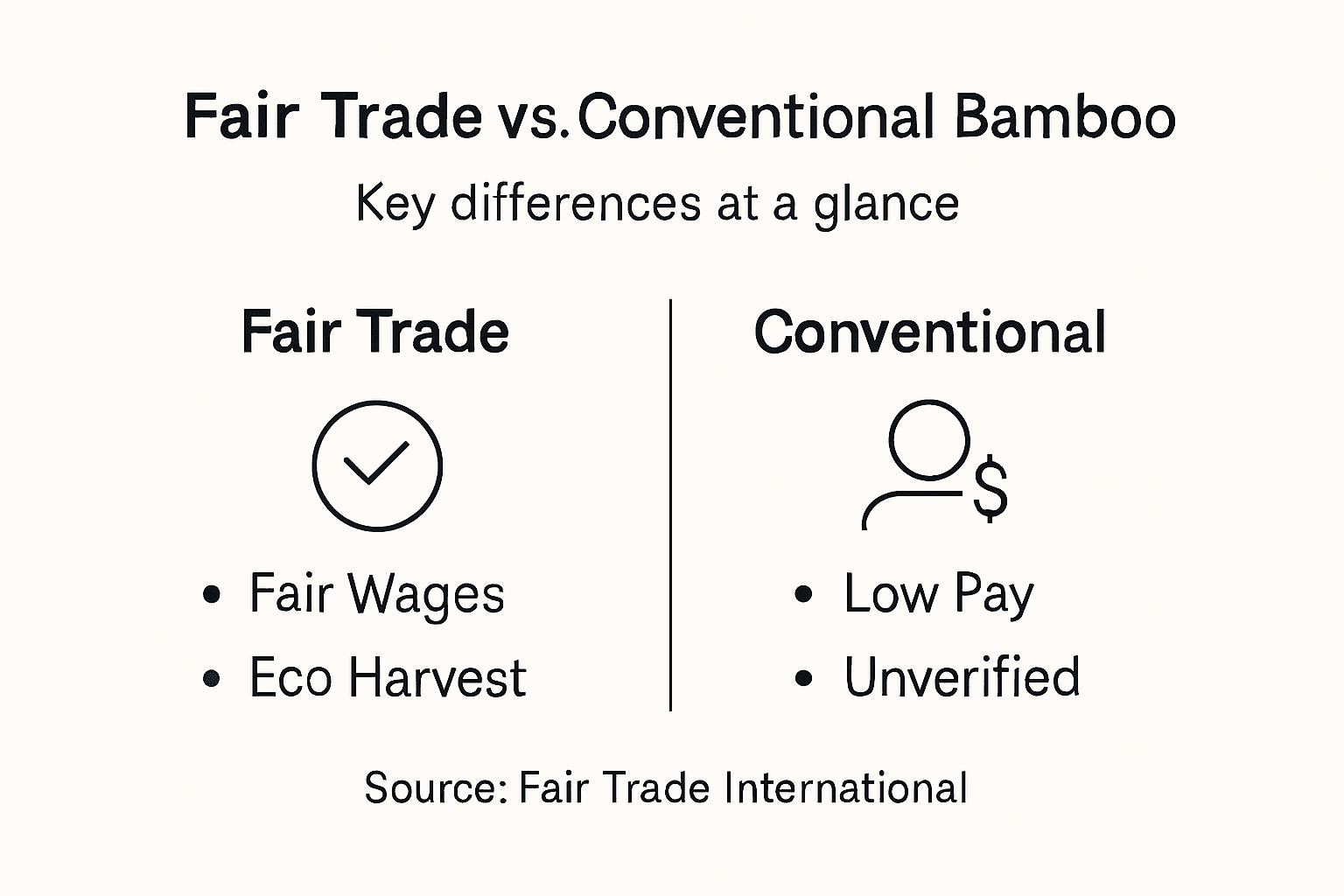
Conventional bamboo sourcing prioritizes cost and volume. Producers cut corners on labor standards, environmental practices, and transparency to maximize profits and compete on price alone.
Key differences emerge across three dimensions:
Fair trade sourcing prioritizes social equity and environmental stewardship while other methods focus primarily on cost and volume. This distinction shapes product quality, worker dignity, and ecological impact.
The practical implications matter for your specifications. When you choose fair trade bamboo products, you’re not just buying materials—you’re supporting regenerative practices and equitable economic distribution.
Fair trade certification creates accountability that conventional sourcing simply cannot match.
Common sourcing alternatives and their trade-offs:
Here’s a comparison of bamboo sourcing methods to clarify their unique impacts:
| Sourcing Method | Labor Standards | Environmental Practices | Supply Chain Transparency |
|---|---|---|---|
| Conventional Bamboo | Often exploitative | Pesticides commonly used | Minimal documentation |
| Eco-Certified Bamboo | Not always verified | Sustainable forestry focus | Limited chain tracking |
| Fair Trade Bamboo | Living wage guaranteed | Certified sustainable methods | Full traceability |
| Proprietary Sustainability | Company-defined only | Varies by program | In-house verification |
Fair trade assures ethical labor practices and sustainable harvesting through independent verification. Non-certified bamboo cannot make these guarantees without rigorous auditing.
A critical distinction: eco-certified bamboo may protect forests but ignore worker conditions. Fair trade addresses both simultaneously. Your clients deserve to know this difference.
Why the comparison matters for commercial projects: Specify fair trade bamboo for spaces where values matter. Hotels promoting sustainability, restaurants emphasizing ethical sourcing, offices committed to responsible procurement—these clients expect documentation and transparency.
Conventional sourcing creates liability risks. If worker exploitation surfaces later, your specification choices become problematic. Fair trade eliminates this exposure through verified practices.
The bamboo dispenser example illustrates this perfectly. Two identical-looking products may come from radically different supply chains. One exploits workers; one empowers them. One degrades ecosystems; one regenerates them. Price alone never tells this story.
Pro tip: When presenting options to clients, show side-by-side sourcing comparisons highlighting labor practices, environmental impact, and traceability—not just price and aesthetics.
The challenge many designers and buyers face is finding truly fair trade bamboo products backed by transparent certification and sustainable practices. Our planet and artisans deserve more than vague claims and greenwashing. If your goal is to create spaces that embody ethical labor standards, environmental stewardship, and lasting quality it is crucial to specify products that deliver verified accountability and durability.
Explore our carefully curated collection including the premium Bamboo Paper Towel Dispenser- A Sleek Look Home or Office designed for both residential and commercial use. These eco-friendly, handcrafted bamboo solutions honor fair trade principles by supporting artisans with fair wages and investing in sustainable harvesting—bringing a functional, stylish, and ethical choice to your projects.
Make a meaningful impact with your next specification by choosing Cozee Bay’s bamboo products. Visit Cozee Bay today for transparent sourcing, quality craftsmanship, and products that help you build trust with clients and protect our environment. Discover how your design can champion responsible materials for a better future.
Fair trade bamboo refers to bamboo that is harvested and processed under ethical standards, ensuring fair wages for workers and sustainable farming practices throughout the supply chain.
Fair trade bamboo guarantees fair wages, safe working conditions, sustainable harvesting, and transparent tracking, whereas conventional bamboo may involve worker exploitation and environmental harm due to unregulated practices.
Fair trade certification ensures accountability across the supply chain, confirming that ethical labor practices and environmental sustainability are upheld, which is crucial for informed purchasing decisions.
Yes, fair trade bamboo products typically cost 10-25% more upfront due to certification and fair wages; however, their durability and quality often provide better long-term value compared to conventional options.
Comments will be approved before showing up.