Your Cart is Empty


Changing how American restaurants and commercial spaces look and feel does not have to compromise sustainability. Many property managers and eco-conscious restaurateurs assume bamboo veneer is a weak or temporary choice. In truth, bamboo’s rapid renewability and high strength-to-weight ratio set it apart from traditional wood, offering both style and durability. This guide highlights what makes bamboo veneer a reliable, beautiful, and environmentally sound option for today’s forward-thinking interiors.
| Point | Details |
|---|---|
| Bamboo Veneer Offers Sustainability | Bamboo is a rapidly renewable material with high strength and durability, making it a sustainable alternative to traditional hardwoods. |
| Mechanical Properties are Influenced by Factors | The performance of bamboo veneer varies based on species, maturity at harvest, and processing techniques. |
| Advanced Manufacturing Enhances Quality | Sophisticated production methods improve the structural integrity and aesthetic qualities of bamboo veneer. |
| Versatile Applications in Design | Bamboo veneer is suitable for a wide range of applications in commercial and residential spaces, combining functionality with eco-friendly appeal. |
Bamboo veneer represents an innovative sustainable material transforming interior design landscapes. Unlike traditional wood veneers, bamboo offers unique characteristics that challenge conventional perceptions. Research demonstrates bamboo’s architectural versatility by highlighting its potential beyond basic construction materials.
Understanding bamboo veneer requires dispelling several persistent misconceptions. Many commercial property managers and restaurant owners mistakenly believe bamboo is a weak, temporary material. In reality, bamboo possesses remarkable properties:
The mechanical properties of bamboo veneers vary significantly based on multiple factors including:
Mechanical Performance is particularly nuanced. Sustainable harvesting advances are progressively changing perceptions about bamboo’s quality and structural reliability. Western markets historically undervalued bamboo as a “poor man’s lumber,” but contemporary research demonstrates its sophisticated engineering potential.
Modern bamboo veneer production involves sophisticated techniques that transform raw bamboo into sleek, consistent materials suitable for high-end commercial and residential applications. Treatment processes enhance durability, making bamboo competitive with traditional wood products across multiple performance metrics.
Here’s a summary comparing bamboo veneer mechanical performance factors:
| Factor Influencing Performance | Description | Impact on Veneer Quality |
|---|---|---|
| Bamboo Species | Different species offer unique strength and elasticity | Determines core mechanical properties |
| Harvest Age | Maturity at harvest affects durability | Older bamboo enhances structural reliability |
| Growth Location | Climate and soil impact material consistency | Regional variation alters uniformity |
| Processing Technique | Boiling, drying, and lamination methods | Directly influences strength and finish |
Pro tip: When evaluating bamboo veneer, request detailed mechanical performance specifications and third-party testing documentation to understand its specific characteristics and suitability for your project.
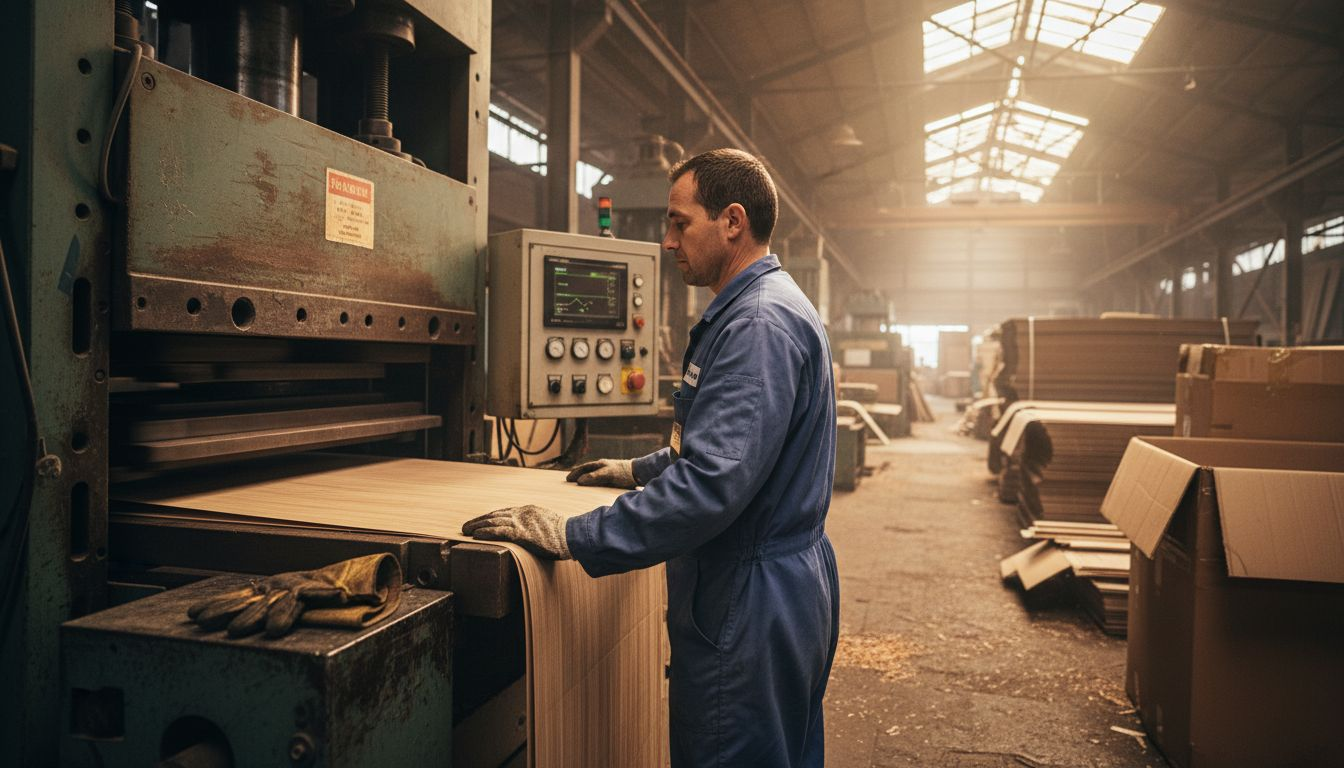
Engineered bamboo materials represent a sophisticated technological approach to transforming raw bamboo into versatile design elements. Engineered bamboo manufacturing processes involve complex techniques that convert natural bamboo culms into specialized materials with precise structural properties.
Bamboo veneer production encompasses several critical manufacturing classifications:
The comprehensive manufacturing workflow includes multiple intricate stages:
Precision Processing is paramount. Advanced manufacturing technologies enable manufacturers to create consistently high-quality bamboo veneers while maintaining ecological sustainability. Each processing step directly influences the final product’s mechanical performance, aesthetic qualities, and structural integrity.
The transformation from raw bamboo to refined veneer involves sophisticated engineering techniques that preserve the material’s inherent strength and natural beauty. Modern equipment and sustainable harvesting protocols ensure that bamboo veneers meet increasingly demanding architectural and design specifications.
Pro tip: Request detailed manufacturing documentation from bamboo veneer suppliers to understand the specific processing techniques used in creating your selected materials.
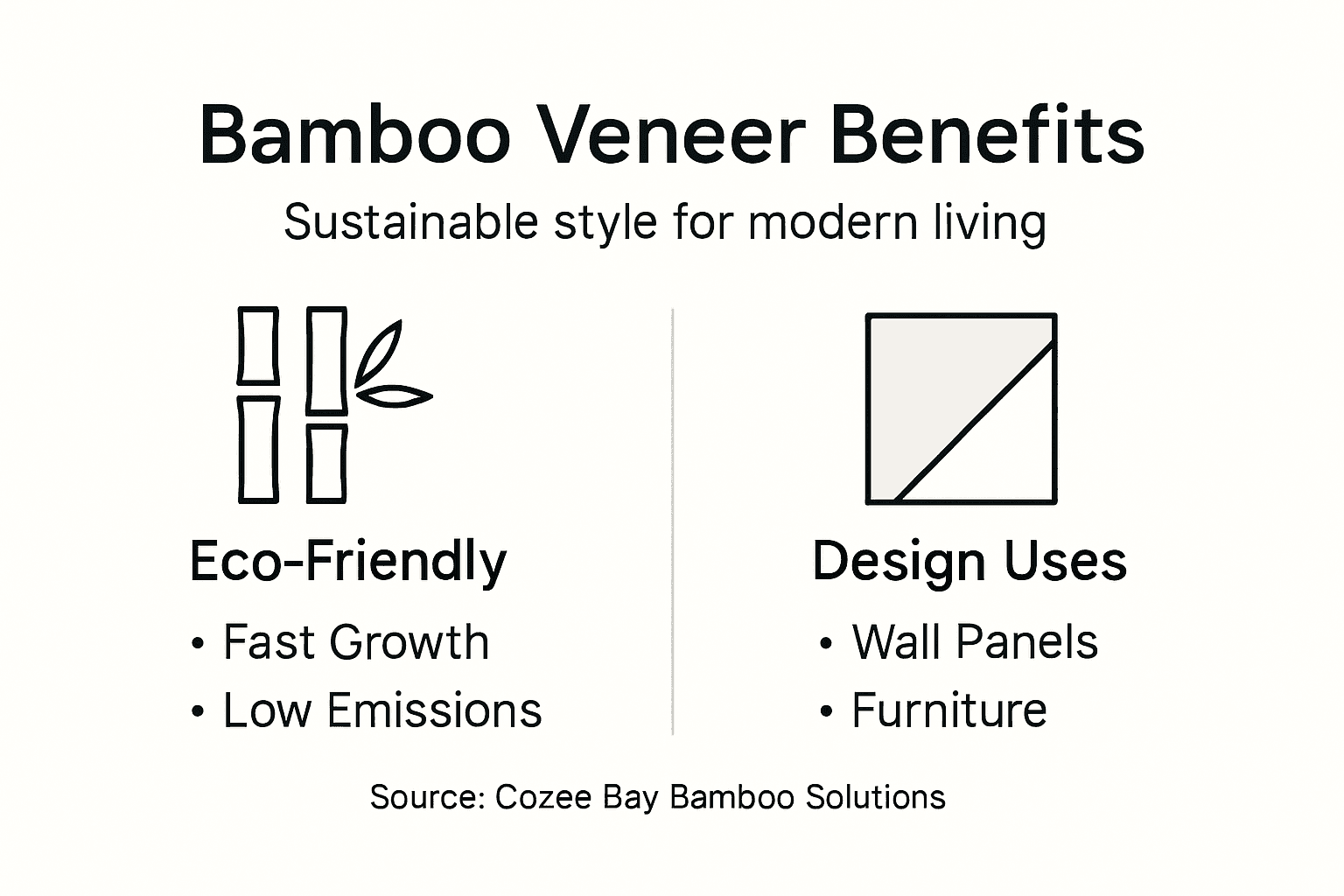
Bamboo veneer represents a breakthrough in sustainable material design, offering exceptional performance characteristics that challenge traditional wood products. Bamboo exhibits remarkable structural properties that make it an increasingly attractive option for modern architectural and design applications.
The key performance features of bamboo veneer include:
Mechanical performance is particularly impressive. Multilayer bamboo composites demonstrate enhanced strength through strategic lamination techniques that optimize fiber volume and orientation.
Environmental benefits complement the material’s impressive technical characteristics. Bamboo veneers contribute to carbon sequestration, offer superior dimensional stability, and provide a sustainable alternative to traditional wood composites. The material’s ability to maintain structural integrity while minimizing environmental impact makes it an ideal choice for eco-conscious commercial and residential design projects.
Pro tip: Request comprehensive performance testing documentation when selecting bamboo veneer to verify its specific mechanical and environmental characteristics for your unique application.
Sustainable bamboo veneer applications have dramatically expanded across residential and commercial design landscapes, offering innovative solutions for environmentally conscious spaces. The material’s versatility enables transformative design approaches that balance aesthetic appeal with functional performance.
Commercial applications of bamboo veneer encompass several key design domains:
Residential applications showcase bamboo veneer’s remarkable adaptability:
Global design trends highlight bamboo veneer’s expanding commercial potential, particularly in regions emphasizing sustainable materials. Traditional markets in East Asia are now complemented by growing interest from North American and European designers seeking eco-friendly alternatives.
The material’s ability to integrate seamlessly across diverse design contexts makes bamboo veneer a compelling choice for forward-thinking commercial and residential projects. Its performance characteristics and aesthetic flexibility continue to challenge conventional material selections.
Pro tip: Consult design professionals experienced with bamboo veneer to understand specific installation requirements and optimize material performance for your unique project.
Comparative studies reveal significant differences between bamboo veneer and traditional wood materials, challenging long-established perceptions about sustainable design solutions. The competition between these materials goes far beyond aesthetic considerations, encompassing environmental impact, performance characteristics, and long-term sustainability.
Key comparative attributes include:
Performance metrics demonstrate bamboo veneer’s competitive advantages:
Traditional wood veneers maintain certain advantages, including established manufacturing processes and diverse aesthetic options. However, bamboo veneer increasingly outperforms conventional materials in sustainability, structural integrity, and design flexibility.
Compare bamboo veneer and traditional wood across key attributes:
| Attribute | Bamboo Veneer | Traditional Wood Veneer |
|---|---|---|
| Growth Cycle | 3-5 years (rapid) | 20-120 years (slow) |
| Carbon Sequestration | High capacity | Moderate capacity |
| Structural Weight | Lightweight | Heavier material |
| Renewable Sourcing | Easily renewable | Limited renewability |
| Dimensional Stability | Strong resistance to warping | Varies by species |
| Manufacturing Energy | Lower production energy | Higher energy needs |
Bamboo veneer represents the future of eco-conscious material selection, bridging performance with environmental responsibility.
Pro tip: Request third-party performance testing documentation when comparing bamboo and traditional wood veneers to make an informed material selection.
Selecting high-quality bamboo veneer requires a nuanced understanding of multiple technical and performance factors that directly impact material integrity and long-term performance. Commercial property managers and designers must develop a sophisticated approach to material selection that goes beyond surface-level aesthetics.
Critical quality assessment criteria include:
Key warning signs of low-quality bamboo veneer:
Advanced manufacturing technologies play a crucial role in ensuring veneer quality. Experienced manufacturers employ sophisticated techniques like high-temperature pressure bonding and comprehensive surface treatments to enhance material performance and durability.
Quality bamboo veneer is not just a material choice - it’s an investment in sustainable, high-performance design.
Pro tip: Request comprehensive technical documentation and performance test results from manufacturers before finalizing your bamboo veneer selection.
If you are inspired by the strength, renewability, and sleek appeal of bamboo veneer discussed in the article, why not bring that sustainable elegance directly into your everyday spaces with Cozee Bay’s handcrafted bamboo products? Our Bamboo Paper Towel Dispenser- A Sleek Look Home or Office perfectly combines eco-conscious design with high functionality to enhance any residential or commercial environment. Imagine the impact of durable, stylish bamboo pieces that align with your values for sustainability and quality.
Take the next step in transforming your space by exploring our full selection of eco-friendly bamboo items at Cozee Bay. Experience premium craftsmanship and enjoy free shipping within the U.S. Start your journey to greener living with products that impress both in style and performance today.
Bamboo veneer is a sustainable material made from processed bamboo strips, offering unique characteristics such as rapid renewability, exceptional strength-to-weight ratio, and high elasticity. Unlike traditional wood veneer, bamboo matures much faster and is more environmentally sustainable.
Bamboo veneer offers numerous benefits, including exceptional strength comparable to traditional wood, lightweight design, high flexibility, and rapid renewability. It also contributes to carbon sequestration and environmental sustainability, making it a great choice for eco-conscious designs.
To ensure quality, look for bamboo sourced from Moso species, harvested at 5-6 years of age, and processed with controlled techniques. Check for high-quality adhesives, consistent surface texture, and request third-party certification documentation to confirm durability and moisture resistance.
Bamboo veneer is versatile and can be used in various applications, including architectural interiors such as wall paneling and reception areas, furniture design, kitchen cabinetry, flooring, decorative screen panels, and even in hospitality environments like restaurants and hotels.
Comments will be approved before showing up.