Your Cart is Empty


TL;DR:
- Choosing a consistent vessel style and stalk count simplifies maintaining beautiful lucky bamboo displays across multiple spaces.
- Opt for arrangements like glass cylinders with pebbles or shallow ceramic bowls in strategic locations to enhance decor and support plant health.
You finally have the perfect corner in your living room, an empty shelf in the office lobby, or a side table just begging for something green and calming. Lucky bamboo feels like the obvious answer, but then the second-guessing starts: Which vessel? How many stalks? Will it survive the low light in that hallway? Getting the look you want while keeping a live plant healthy can feel overwhelming, especially when you are managing multiple spaces. The good news is that once you lock in a simple framework, which covers vessel style, stalk count, placement, and a basic water routine, everything else clicks into place quickly and stays manageable long-term.
| Point | Details |
|---|---|
| Framework for selection | Choose arrangements based on stalk count, vessel type, placement, and watering routine for maximum style and practicality. |
| Best design options | Small repeated groupings and modern vessel choices make lucky bamboo displays both stylish and easy to manage. |
| Home vs. commercial settings | Use true lucky bamboo for homes and desks; bamboo palm is better for large commercial lobbies. |
| Quick comparison | A side-by-side table helps quickly compare design ideas and care requirements. |
| Consistency matters | Repeated small displays create a bigger, more practical visual impact than single large installations. |
Now that we’ve established the framework for bamboo decor success, let’s look at the specific selection criteria that actually move the needle. Choosing a lucky bamboo design is not just about picking the prettiest arrangement you see on a shelf. It is about matching the plant’s needs to your space and your schedule, so the display stays gorgeous without turning into a chore.
Stalk count matters more than you think. Different stalk counts carry different symbolic meanings in traditional Feng Shui, but from a pure design standpoint, they also affect visual weight. A single stalk reads as minimalist and sculptural. Three to five stalks grouped together feel balanced and approachable. Seven or more stalks make a statement, but they also require a wider vessel and more water management.
Vessel style drives the overall mood. A clear glass cylinder brings a modern, airy feel and lets you see the root system, which is actually a design feature on its own. A ceramic bowl in muted earth tones pushes the arrangement toward something warm and grounded. A shallow dish with river pebbles gives you a low-profile, zen-inspired look that works beautifully on coffee tables and windowsills.
Light requirements are non-negotiable. Lucky bamboo prefers bright, indirect light. Direct sun will scorch the leaves. A north-facing or east-facing window is often the sweet spot. If you are placing an arrangement in a dim hallway or windowless conference room, plan on rotating it toward a light source every few days or supplement with a small grow light.
Here is a quick breakdown of the pros and cons of micro-displays versus larger installations:
A practical approach that works especially well for stylish bamboo plant ideas in repeated settings is to build what designers call a “repeatable micro-display.” This is exactly what the methodology suggests: specify stalk count, vessel size, placement light level, and water routine, then deploy the same groupings across multiple spaces. It keeps your decor cohesive and your maintenance schedule predictable.
Pro Tip: If you manage several units, apartments, or offices, commit to one vessel style and one stalk count. Buying in small quantities of the same vessel means you can swap out a struggling plant quickly without disrupting the overall look.
With your selection criteria in mind, let’s explore the best design ideas for maximizing both style and ease. These seven options cover a wide range of moods, budgets, and maintenance levels, so you can pick what fits your space right now.
1. Glass cylinder with pebbles. This is the go-to arrangement for anyone who wants a clean, contemporary look. Use a clear glass cylinder about six to eight inches tall, fill the bottom third with white river pebbles or polished black stones, and add filtered water up to just below the pebble line. Three or five stalks tied loosely with a red ribbon look sharp and intentional. Place it on a desk, kitchen counter, or bathroom shelf.
2. Ceramic bowl in earth tones. A wide, shallow ceramic bowl in sage green, warm terracotta, or matte sand creates a grounded, spa-like feel. This works especially well in bedrooms and meditation spaces. The wider opening allows you to arrange stalks at slightly different heights for a more organic look.
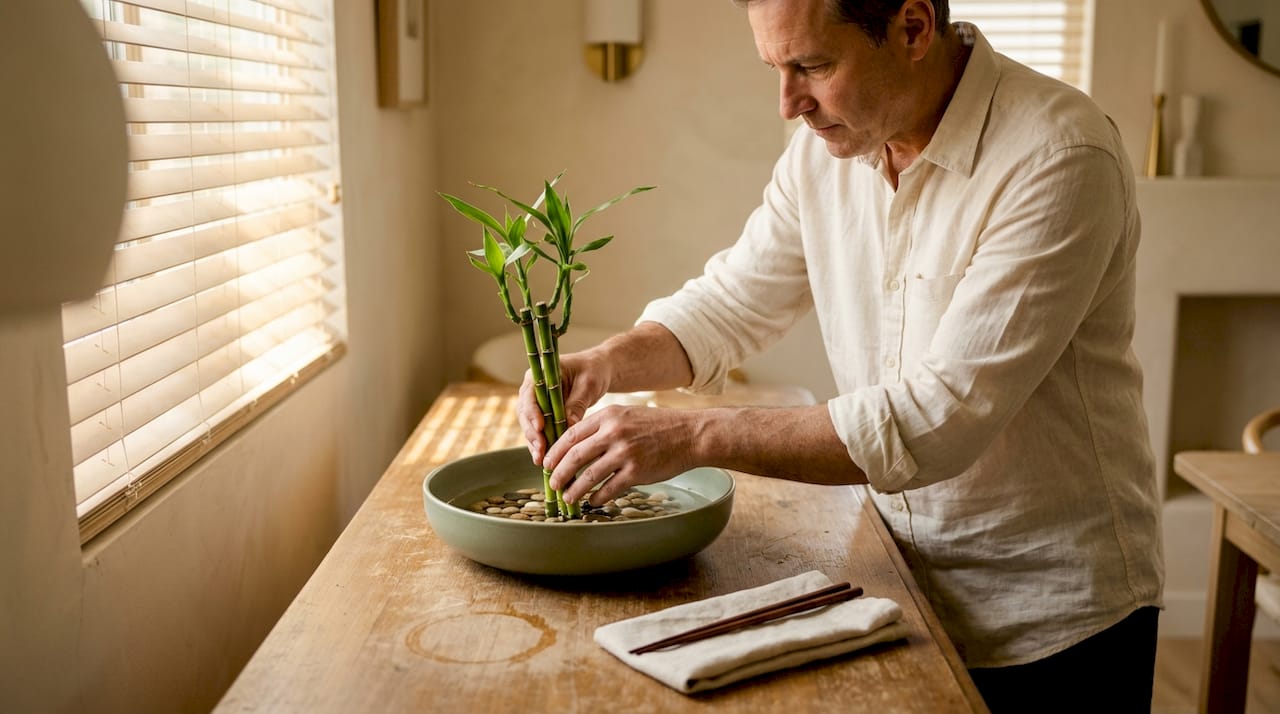
3. Repeated 3 to 5 stalk groupings in shallow vessels. Lining up three identical shallow white dishes along a dining table or windowsill, each with a simple trio of stalks, is a powerful design move. The repetition creates rhythm. Using consistent vessel and arrangement styles across a space is a proven design approach that also simplifies maintenance, since every vessel gets the same water refresh schedule.
4. Floating bamboo in water bowls. Fill a wide, low glass bowl with distilled water and let the stalks float gently above a bed of smooth pebbles. This arrangement reads as almost meditative and works beautifully on a fireplace mantel or entry console table. It is a conversation starter every time.
5. Lucky bamboo paired with fairy lights or moss. Tuck small string fairy lights among taller stalks in a glass vase, or nestle a grouping of stalks into a bed of preserved sheet moss inside a wooden tray. The warm glow of the lights at night turns a simple plant arrangement into genuine ambient lighting. This idea pairs especially well with modern bamboo decor strategies for living rooms and home offices.
6. Lucky bamboo terrariums for small spaces. A wide-mouth glass terrarium planted with lucky bamboo, small river rocks, and a layer of decorative sand creates a self-contained mini landscape. This is ideal for apartment dwellers or anyone working with tight shelf space. Keep the terrarium near a window and avoid sealing the top since airflow helps prevent root rot.
7. Statement arrangements for reception or lobby tables. For commercial spaces, a large ceramic urn or wide wooden trough planted with seven or more stalks makes an impressive first impression. Pair it with bamboo tray accents or natural fiber mats underneath for a cohesive eco-friendly bamboo design look that signals sustainability from the moment guests walk in.
Pro Tip: For office settings, choose glazed ceramic over glass. Glazed vessels hide minor water residue and look polished longer between cleanings, which is genuinely helpful in busy environments where nobody has time for daily wipe-downs.
Not all “bamboo” designs use true lucky bamboo, and choosing the right plant can enhance both look and function in commercial and home spaces. This is one of those distinctions that makes a real difference when you are planning a larger interior project.
Lucky bamboo is actually Dracaena sanderiana, a tropical plant that grows in water or moist soil. It is compact, elegant, and perfect for tabletop displays. Bamboo palm (Chamaedorea seifrizii) is an entirely different plant, a true palm with feathery fronds that can reach six to twelve feet tall indoors. It is often used in lobbies, atriums, and large commercial spaces where you need floor-level greenery.
| Feature | Lucky bamboo | Bamboo palm |
|---|---|---|
| Botanical name | Dracaena sanderiana | Chamaedorea seifrizii |
| Typical indoor size | 1 to 3 feet | 4 to 12 feet |
| Growth medium | Water or moist soil | Potting soil |
| Light needs | Bright indirect light | Low to medium indirect light |
| Best use case | Desk, table, shelf displays | Lobby, atrium, large open areas |
| Maintenance level | Low (weekly water change) | Moderate (regular watering, pruning) |
| Air purifying ability | Moderate | High |
“Bamboo palm is a commercial and lobby-friendly option, offering a different form and fit in interior landscape design compared to lucky bamboo.” JohnMini
The practical takeaway here is simple. If you are styling a reception desk, a private office, a hotel room, or a restaurant table, lucky bamboo is your plant. If you need to fill vertical space in an open-plan office, a church foyer, or a hotel atrium, bamboo palm is the better call. Mixing both in a single commercial space actually works beautifully, just treat them as separate display systems with separate care routines. Explore more ideas in our guide on creative bamboo decor ideas for homes and commercial settings.
To help you decide, here’s an at-a-glance table summarizing the key design options we’ve covered. Compare these options side by side and match them to your specific space, budget, and care capacity.
| Design type | Recommended vessel | Ideal placement | Stalk count | Care notes |
|---|---|---|---|---|
| Glass cylinder with pebbles | Clear glass cylinder, 6-8 in. | Desk, kitchen counter | 3 or 5 | Refresh water every 7-10 days |
| Ceramic earth-tone bowl | Shallow ceramic bowl | Bedroom, meditation space | 3 to 7 | Wipe vessel monthly |
| Repeated shallow dish groupings | Identical small white dishes | Dining table, windowsill | 3 per dish | Same schedule for all vessels |
| Floating water bowl | Wide, low glass bowl | Mantel, entry console | 3 to 5 | Change water weekly |
| Fairy light and moss accent | Tall glass vase plus tray | Living room, home office | 5 to 7 | Check moss moisture weekly |
| Terrarium display | Wide-mouth glass terrarium | Shelf, small apartment | 1 to 3 | Keep near window, open top |
| Lobby statement urn | Ceramic urn or wooden trough | Reception, lobby table | 7 to 10 | Bi-weekly water and trim |
Use this table as your shopping list. Once you pick a design type, you know exactly what vessel to source, how many stalks to buy, and what your weekly to-do looks like. You can also explore smart bamboo decoration tips to refine your choices even further.
Now that you have the comparison and visual inspiration, here’s a design philosophy shift you might not expect. Most people try to make lucky bamboo feel impressive by going bigger and bolder, a dramatic 12-stalk tower in the entryway, an elaborate terrarium that took two hours to assemble. And then, three months later, the arrangement is struggling and nobody has gotten around to fixing it because it was just too complicated to maintain.
The designers and property managers who actually get it right almost always say the same thing: consistency beats complexity every time. A row of three identical glass cylinders, each holding five clean stalks, refreshed every Wednesday, is more visually powerful than one elaborate centerpiece that looks tired by February. Repetition creates intention. It signals to anyone who walks into the space that someone cares about the details.
This is especially true if you are managing multiple spaces, whether that is several rental units, a multi-room office, or a restaurant with tables to style. The repeatable micro-display methodology gives you a system where every grouping is the same stalk count, same vessel, same water routine. You can train anyone on the team to maintain it. You can replace a vessel in ten minutes without disrupting the whole look.
Think of your bamboo decor the same way you think about a well-organized drawer. One consistent system, repeated cleanly, always looks more intentional than a jumbled collection of creative attempts. For practical inspiration on applying this approach room by room, browse our eco-friendly bamboo living tips for real-world examples that fit both residential and commercial settings.
Pro Tip: Set a calendar reminder for your water refresh every 7 to 10 days. Tie it to something you already do, like your weekly grocery run or Monday morning coffee. That single habit keeps every arrangement looking fresh with almost zero effort.
You now have everything you need to style a space that feels intentional, calming, and genuinely beautiful. From a simple glass cylinder on your desk to a statement urn in a hotel lobby, the right lucky bamboo arrangement transforms how a room feels the moment someone walks in.

At Cozee Bay, we are passionate about helping you bring that eco-friendly, thoughtful design to life. Our curated bamboo products and decor inspiration are designed with the same philosophy we’ve talked about throughout this article: simple, repeatable, and built to last. Whether you are outfitting a single room or an entire commercial property, we have the sustainable solutions to match your vision. Visit Cozee Bay to browse our full collection of handcrafted bamboo products and find the pieces that complete your perfect lucky bamboo display.
Clear glass vases with pebbles or shallow ceramic bowls offer optimal style and easy plant care, since both allow you to monitor water levels and root health at a glance. Different vessel styles each support practical maintenance while contributing distinct aesthetic moods to your space.
Arrangements of 3 to 5 stalks are both visually balanced and easy to maintain, making them perfect for repeat displays across multiple rooms or units. Repeatable micro-displays of this size are the go-to for anyone who wants a consistent, polished look without heavy upkeep.
Yes, lucky bamboo excels in small groupings for desks or side tables, but for large statement pieces in lobbies and atriums, consider bamboo palm instead. Commercial and lobby-friendly bamboo palm offers a different scale and form that suits open, high-traffic spaces far better.
Lucky bamboo prefers bright, indirect light and should be kept away from direct sunlight, which can scorch the leaves and turn the stalks yellow. A north-facing or east-facing window position is usually ideal for keeping the plant healthy and vibrant.
Refresh the water every 7 to 10 days to keep plants healthy and prevent algae from building up on the vessel walls and roots. Using filtered or distilled water rather than tap water makes a noticeable difference in keeping stalks green and strong over time.
Comments will be approved before showing up.