
Free Standard Shipping for Contiguous U.S. Orders!

0

Your Cart is Empty

September 14, 2026 8 min read

Bamboo ceilings are one of the most durable, eco-friendly ways to bring texture and warmth into a room, and they cover a wider design range than most homeowners realize. From exposed rafters to fiber-optic starlight panels, the options below hit rustic, modern, and tropical styles alike. What follows is the full lineup of ideas, plus the material choices, installation know-how, and maintenance habits that keep a bamboo ceiling looking good for years.


TL;DR:

  • Strand-woven bamboo offers twice the hardness of red oak, making it highly impact-resistant for high-traffic or impacted ceiling areas.
  • Proper installation includes acclimating panels for 48-72 hours and carefully matching fasteners to avoid warping or misalignment, especially in patterned layouts.
  • Staining and carbonization expand color options, with heat treatment deepening tones for a darker, industrial look without altering the bamboo’s structure.
  • In humid rooms like kitchens and bathrooms, sealing bamboo with moisture-resistant finishes and maintaining ventilation prevents warping and prolongs appearance.
  • Matching ceiling materials with similar finishes and tones in flooring and furniture enhances overall aesthetic harmony and design cohesion.

Cozee-bay
Bring Sustainable Bamboo Into Your Home
Explore handcrafted bamboo products that add practical function, stylish design, and eco-conscious materials to kitchens, bathrooms, and offices.

Table of Contents

10 Bamboo Ceiling Design Ideas Worth Copying

Bamboo ceiling design ideas range from raw structural drama to quiet, refined texture, and the right pick depends on your ceiling height, room function, and how much maintenance you want to sign up for. Here are ten proven approaches worth considering for your next remodel.

  1. Exposed bamboo rafters. Thick bamboo poles or half-poles running across a vaulted or high ceiling create a bold, structural look that fills large volumes with a grounded, cozy feel. Best in great rooms, cabins, and covered outdoor living spaces with real height to work with.
  2. Bamboo woven panels. Hand-woven strips add depth and texture that flat drywall simply cannot match, and they work well as a single feature ceiling in a reading nook or bedroom.
  3. Bamboo plywood. Smooth, uniform, and modern, plywood panels suit minimalist kitchens and home offices where you want warmth without visual noise.
  4. Bamboo matting. This is the budget-friendly option, and it doubles as a fast fix for popcorn ceilings or uneven drywall since the matting covers imperfections without demolition. Expect a breezy, tropical feel in sunrooms and covered patios.
  5. Bamboo beadboard. Classic vertical lines give a room rhythm and a slightly coastal cottage feel, which makes it a natural fit for mudrooms, hallways, and powder rooms.
  6. Bamboo coffered ceiling. A grid of recessed panels framed in bamboo trim adds architectural weight to formal dining rooms and living rooms with at least nine feet of ceiling height.
  7. Bamboo fiberboard. Engineered for moisture resistance, fiberboard panels hold up in bathrooms, laundry rooms, and mudrooms where humidity would warp lesser materials.
  8. Stained or carbonized bamboo ceiling. Staining opens up a color range from light honey to deep caramel, while carbonization (a heat treatment) pushes the tone darker for an industrial or contemporary look.
  9. Bamboo grid or slat ceiling. Linear slats mounted with gaps create a contemporary pattern that also helps soften echo in open-plan living rooms, a nice bonus in homes with hard flooring.
  10. Bamboo fiber-optic ceiling. Fine fiber-optic strands woven behind or through bamboo slats mimic a starry night, a striking effect for home theaters and primary bedrooms.

Several of these ideas overlap in practice. A suspended bamboo trellis, for instance, borrows from both the grid ceiling and woven panel categories, and it happens to be a practical way to hide ductwork or pipework while keeping service access open for repairs.

Which Bamboo Material and Finish Should You Choose?

Strand-woven bamboo is the toughest option on this list. It’s manufactured by compressing bamboo fibers under heat and pressure, and the result is roughly twice as hard as red oak, which matters if your ceiling will take any impact from furniture moves or foot traffic in an attic conversion.

  • Bamboo plywood offers a smooth, consistent surface ideal for painted or lightly stained modern looks.
  • Matting and rolls are the most affordable and forgiving option, though they’re less durable under heavy moisture.
  • Fiberboard brings built-in moisture resistance, making it the safer pick for kitchens, bathrooms, and mudrooms.
  • Stains widen your color palette without changing the wood’s structure, while carbonization deepens the tone through heat treatment alone, no dye involved.

Bamboo grows significantly faster than most hardwood trees, which is why it’s become a go-to renewable material for interior design and architecture. If you’re weighing bamboo against oak or pine paneling on sustainability alone, that regeneration rate is the number that settles it.

How Do You Install a Bamboo Ceiling Without Mistakes?

Getting a bamboo false ceiling design right comes down to prep, not just the install day itself.

  1. Acclimate the panels. Let bamboo sit in the room for 48 to 72 hours before installation so it adjusts to your home’s humidity and won’t warp later.
  2. Measure and plan the layout. Sketch the ceiling grid on paper first, especially for herringbone or checkerboard patterns where panel direction matters.
  3. Number your panels. Mark each panel and its planned location on the ceiling grid before you start fastening. This single habit prevents the orientation mix-ups that ruin patterned installs.
  4. Match fasteners to substrate. Panels typically attach with construction adhesive and finish nails into joists, while drywall or suspended grid ceilings may need furring strips or a compatible track system first.
  5. Call a contractor for structural or electrical work. If your plan involves rerouting wiring for recessed lights or altering ceiling framing, bring in a licensed pro rather than guessing.

Pro Tip: Lay all your panels face up on the floor in the order they’ll go on the ceiling before you climb the ladder. It sounds like an extra step, but it turns a two-person guessing game into a straightforward, mistake-free install.

How Do You Light a Bamboo Ceiling the Right Way?

Lighting can make or break a bamboo ceiling design, and a few planning choices protect both the look and the material.

  • Keep a clearance gap around recessed can lights so heat doesn’t dry out or discolor the bamboo over time.
  • Choose low-heat LED fiber-optic kits if you’re going for the starlight effect. Traditional halogen sources run too hot for tight installations behind slats.
  • Use cove or backlighting along the edges of a grid or slat ceiling to accent the linear texture while hiding wiring runs entirely from view.
  • For woven panel ceilings, uplighting from wall sconces often reads better than direct overhead cans, since it highlights the weave’s shadow pattern.

Which Bamboo Ceiling Idea Fits Your Room?

Matching the idea to the room saves you from a costly redo. Coffered ceilings need height and formality, so save them for dining rooms and living rooms with nine-foot ceilings or better. Matting, on the other hand, is forgiving enough for covered patios, sunrooms, and quick popcorn-ceiling coverups.

  • Japandi and modern minimalist: bamboo plywood or a slat grid ceiling, kept pale and unstained.
  • Coastal: bamboo beadboard or matting in natural, light tones.
  • Tropical or boho: woven panels or exposed rafters, paired with rattan furniture and warm textiles.
  • Rustic: exposed bamboo rafters or carbonized bamboo for a darker, weathered look.
  • Contemporary or industrial: carbonized bamboo slats or fiberboard in a grid pattern.

Coordinate your ceiling tone with flooring and furniture rather than walls. Light bamboo pairs well with white oak floors and linen upholstery, while carbonized bamboo holds its own against black metal fixtures and deep green or navy accent walls. If you’re furnishing the room around a new ceiling, our bamboo living room decor ideas walk through pairing options in more detail.

How Do You Maintain a Bamboo Ceiling in Humid Rooms?

Bamboo holds up well once it’s properly finished, but humidity control still matters, especially in kitchens and bathrooms.

  • Seal bamboo in kitchens and bathrooms with a moisture-resistant polyurethane finish, reapplied every few years depending on exposure.
  • Dust with a soft cloth or vacuum brush attachment monthly, and skip harsh ammonia-based cleaners that can dull the finish.
  • Run a bathroom fan or dehumidifier in consistently damp rooms, and inspect panels twice a year for any gaps or warping at the seams.

Pro Tip: If you spot a slightly raised seam after a humid summer, don’t panic and pull the whole panel down. Often a light sanding and a fresh coat of sealant is all it takes to settle bamboo back into place.

Where Cozee-bay Fits Into Your Bamboo Project

Cozee-bay has spent years handcrafting bamboo home goods, from paper towel dispensers to drawer organizers, with the same renewable material driving the ceiling ideas above… For more on sourcing and sustainability, see our piece on how renewable bamboo transforms home goods.
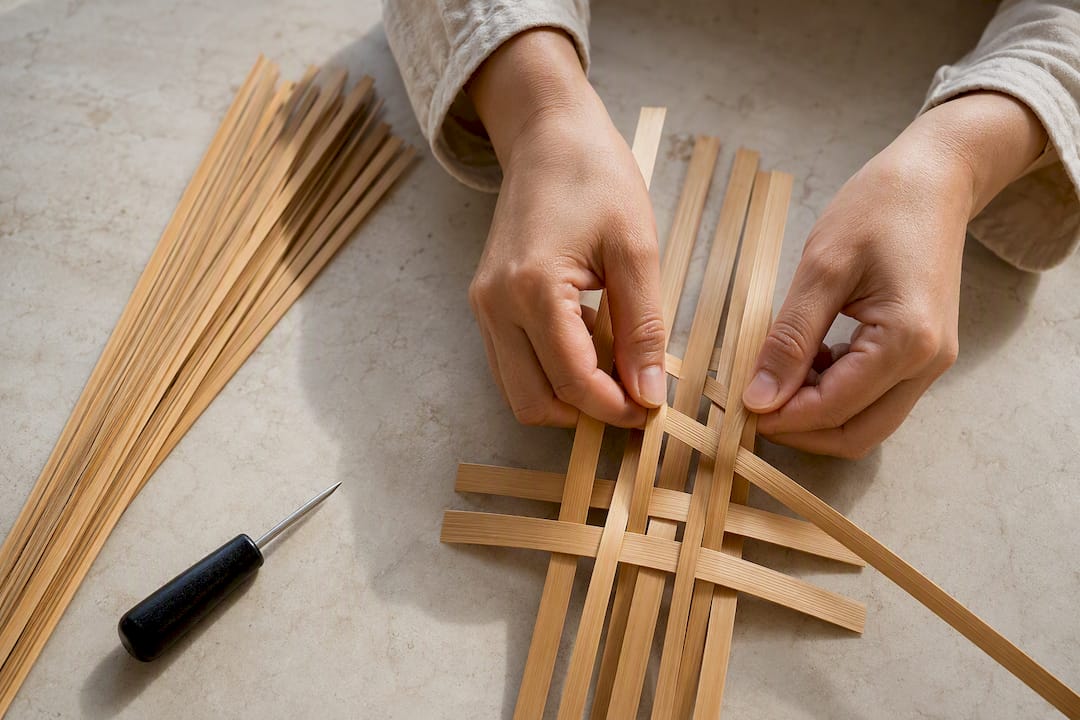
Hands weaving renewable bamboo strips

A Quick Take on Bamboo’s Design Payoff

Bamboo earns its spot on a ceiling because it regenerates fast and still performs like a hardwood once it’s strand-woven. If you’re on the fence, order a few sample panels or have a tradesperson measure your space before committing to a full install.

— Cozee

Bring the Bamboo Look Into the Rest of Your Home

A bamboo ceiling looks best when the room around it carries the same material language, and that’s where Cozee-bay comes in. Cozee-bay’s handcrafted bamboo paper towel dispensers, drawer organizers, and wrap dispensers give you an easy way to echo that ceiling texture in the kitchen or bath without hunting down a dozen different suppliers.

Cozee-bay

Shipping details and return policies are available on the Cozee Bay website, offering customer assurances regarding fit and finish. If you’re also updating linens to match a light bamboo ceiling, a bamboo duvet cover rounds out the look in the bedroom. Browse the Cozee-bay catalog and pick a piece that pairs with your new ceiling today.

Sources

FAQ

Is a bamboo ceiling suitable for bathrooms?

Yes, if you choose bamboo fiberboard or a properly sealed plywood panel, both of which resist moisture better than untreated matting.

How long does bamboo take to install on a ceiling?

A single room typically takes a weekend for an experienced DIYer, though patterned layouts like herringbone add time for measuring and panel numbering.

What’s the difference between stained and carbonized bamboo?

Staining adds color with a dye or pigment, while carbonization uses heat treatment alone to darken the bamboo’s natural tone.

Does bamboo work with recessed lighting?

Yes, but keep clearance around each can light so heat doesn’t dry out or discolor the surrounding panels over time.

Can Cozee-bay products match my bamboo ceiling’s finish?

Cozee-bay’s handcrafted bamboo dispensers and organizers come in natural tones that complement most stained and unstained bamboo ceiling finishes.

Leave a comment

Comments will be approved before showing up.