Your Cart is Empty


Most American kitchens lose up to 30 percent of their usable space to clutter each year, yet the right workflow can completely change that. Sustainable organization is more than a passing trend for eco-conscious homeowners and small business managers, it is a lifestyle choice with real environmental impact. With a practical kitchen decluttering workflow and a stylish focus on bamboo products, you can create a space that looks great and supports your sustainability goals every day.
| Point | Details |
|---|---|
| Systematic Organization | A kitchen decluttering workflow is essential for creating a functional and efficient kitchen space through strategic decision-making and intentional organization. |
| Functional Zones | Define key kitchen zones such as preparation, cooking, and cleaning to streamline tasks and enhance workflow. |
| Sustainable Alternatives | Incorporate bamboo products to minimize environmental impact while ensuring durable and aesthetically pleasing kitchen organization. |
| Consistent Maintenance | Establish a regular maintenance routine to preserve kitchen organization and prevent clutter from returning. |
A kitchen decluttering workflow represents a systematic approach to transforming your kitchen space through intentional organization, efficiency, and sustainability. Unlike traditional cleaning methods, this workflow goes beyond simple tidying by creating a deliberate strategy that maximizes functionality while reducing unnecessary material consumption.
At its core, a kitchen decluttering workflow involves strategic decision-making about household possessions that balances practical needs with mindful consumption. The process is not just about removing items, but about creating an intentional environment that supports daily kitchen activities. This approach requires a holistic examination of kitchen spaces, analyzing how each item contributes to meal preparation, storage, and overall household efficiency.
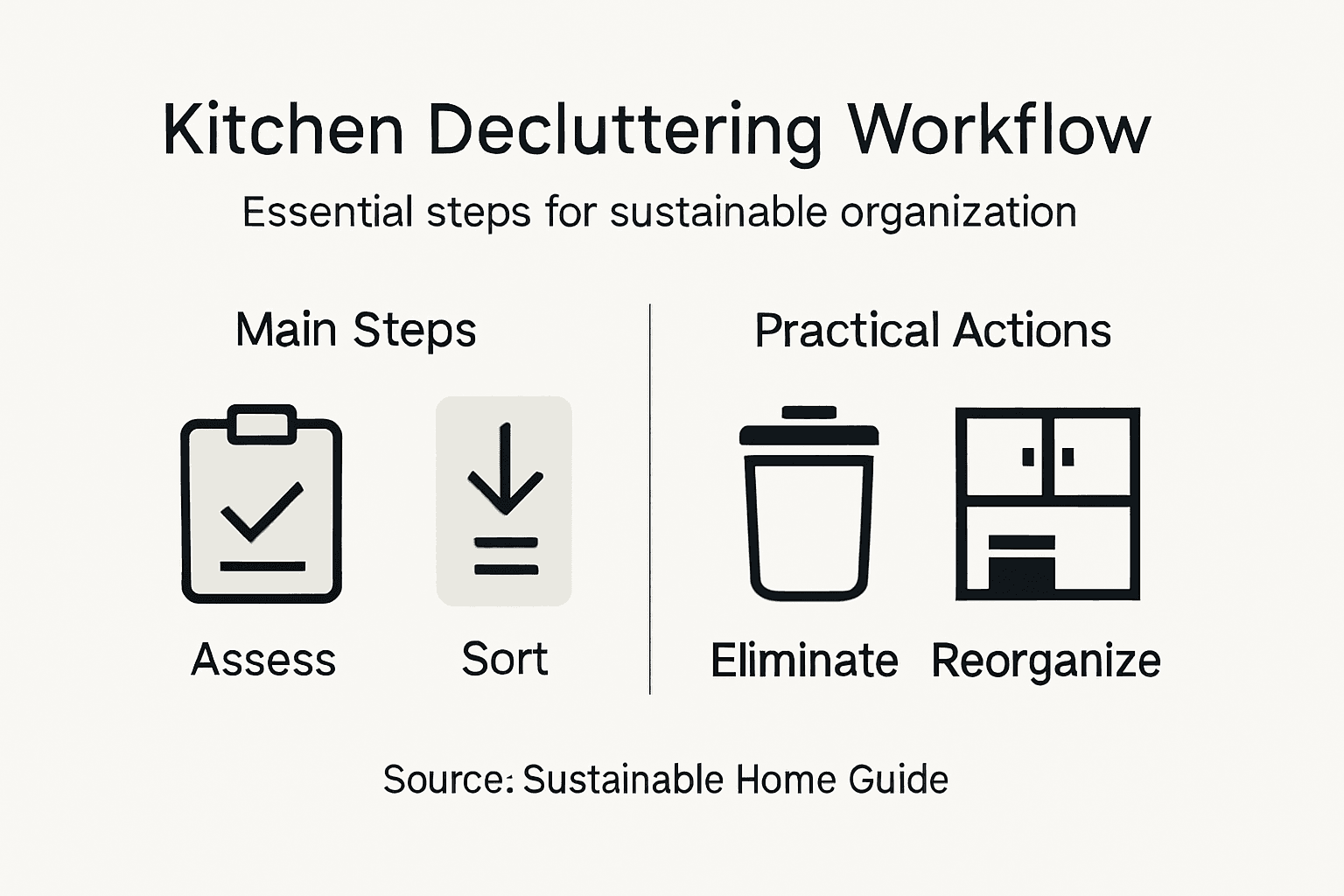
The workflow typically includes several key components: assessment, sorting, elimination, reorganization, and sustainable maintenance. During the assessment phase, individuals critically evaluate their current kitchen setup, identifying areas of unnecessary clutter and inefficient use of space. Sorting involves categorizing items based on frequency of use, utility, and emotional significance. The elimination stage focuses on responsibly removing items through donation, recycling, or careful disposal. Reorganization then reimagines the kitchen layout to support smoother kitchen workflow principles that minimize unnecessary movements and maximize convenience.
Pro tip: Start your kitchen decluttering workflow by removing everything from one small area like a single drawer, which helps build momentum without feeling overwhelmed and provides an immediate sense of accomplishment.
A successful kitchen decluttering workflow relies on strategically defining and organizing functional kitchen zones that transform your space into an efficient and purposeful environment. These zones are critical for streamlining daily activities and creating a logical flow between different kitchen tasks, ensuring that every area serves a specific and intentional purpose.
The primary kitchen zones typically include preparation, cooking, cleaning, storage, and pantry areas. Each zone requires careful consideration of item placement, accessibility, and frequency of use. In the preparation zone, for instance, you might group cutting boards, knives, mixing bowls, and measuring tools near a spacious countertop. The cooking zone should centralize stovetop, oven, and essential cooking utensils, while the cleaning zone concentrates dishwashing supplies, trash bins, and cleaning equipment in a convenient, logical arrangement.
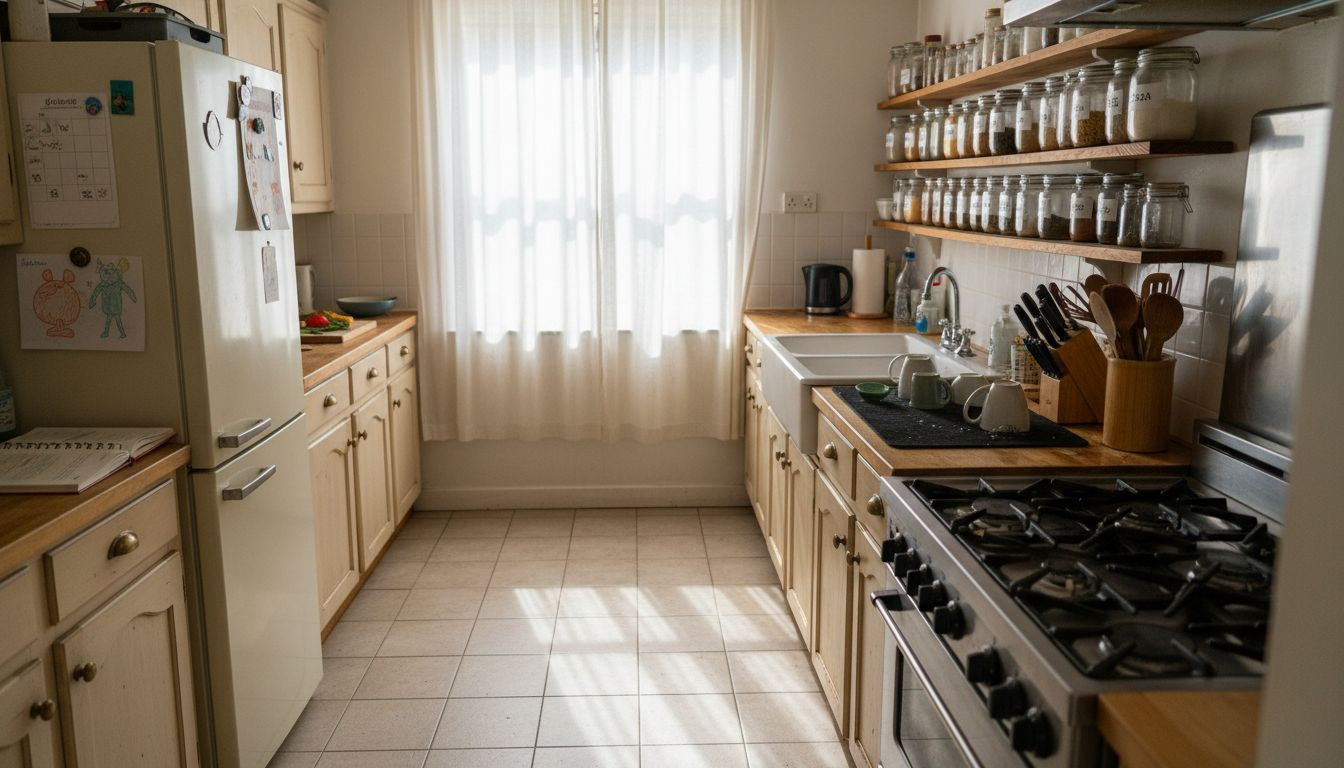
Implementing this zonal approach involves a systematic step-by-step process. Kitchen organization strategies recommend beginning with a comprehensive assessment of your current kitchen layout. Start by completely emptying each zone, critically evaluating every item’s utility and condition. Sort items into clear categories: keep, donate, recycle, and discard. Prioritize items based on frequency of use, condition, and genuine necessity. For frequently used items, consider proximity to where they will be used most often, creating an intuitive workflow that minimizes unnecessary movement and maximizes kitchen efficiency.
Pro tip: Create a temporary staging area during your kitchen zone reorganization, using a folding table or clear countertop to sort items systematically without creating overwhelming chaos in your primary workspace.
Kitchen workflow types represent diverse organizational strategies designed to optimize space and efficiency, with each variation tailored to specific cooking styles, kitchen dimensions, and user preferences. Kitchen workflow configurations range from traditional designs to modern adaptive approaches that prioritize individual household needs and functional requirements.
The most prominent workflow types include the classic work triangle, zone-based layouts, and linear or assembly-line configurations. The traditional work triangle connects refrigerator, stove, and sink in a triangular arrangement, minimizing unnecessary movement during meal preparation. Zone-based layouts, by contrast, segment the kitchen into specialized areas like preparation, cooking, cleaning, and storage, allowing more flexible and personalized organization. Workflow design variations also account for different household dynamics, such as single-cook versus multi-user kitchens and open versus closed kitchen configurations.
Each workflow type presents unique advantages depending on kitchen size, cooking frequency, and personal preferences. Small kitchens might benefit from compact, linear layouts that maximize limited space, while larger kitchens can accommodate more complex zonal arrangements. Multi-user kitchens require broader pathways and multiple workstations to prevent bottlenecks, whereas single-cook environments can focus on creating ultra-efficient, tightly configured spaces that minimize unnecessary movement and optimize task completion.
Here’s a summary comparing popular kitchen workflow types and their best-fit scenarios:
| Workflow Type | Ideal Kitchen Size | Best For | Key Benefit |
|---|---|---|---|
| Work Triangle | Medium to large | Single cook | Minimizes walking distance |
| Zone-Based Layout | Large or open | Multi-user households | Customizes workstations |
| Linear (Assembly Line) | Small or narrow | One or two cooks | Maximizes compact spaces |
| Island/Circular Flow | Large with island | Social cooking/events | Enables group meal prep |
Pro tip: Sketch your kitchen layout before implementing a new workflow, using colored markers to map potential movement paths and identify potential bottlenecks in your current design.
Sustainable decluttering strategies extend beyond simply removing items, focusing instead on intentional replacement with eco-friendly alternatives that minimize environmental impact. Bamboo products emerge as an exceptional solution for environmentally conscious homeowners seeking to transform their kitchen spaces with materials that are both functional and environmentally responsible.
Bamboo’s remarkable sustainability credentials make it an ideal material for kitchen organization. Unlike traditional plastic or metal storage solutions, bamboo offers a renewable resource that grows rapidly, requires minimal water, and biodegrades naturally. These products can replace single-use plastics and non-recyclable containers, creating storage systems that are not just aesthetically pleasing but also contribute to reducing global waste. Bamboo’s inherent durability ensures that organizational tools like drawer dividers, utensil holders, and cutting boards can withstand extensive use while maintaining their structural integrity and natural beauty.
Implementing bamboo products into your kitchen decluttering workflow involves strategic selection and thoughtful placement. Consider replacing existing plastic storage containers with bamboo alternatives, investing in modular bamboo drawer organizers that can be reconfigured as your needs change, and selecting multipurpose bamboo tools that serve multiple functions. By gradually introducing these sustainable materials, you create a kitchen environment that reflects both ecological consciousness and practical design principles. Sustainable kitchen transformations represent more than an organizational strategy - they’re a commitment to reducing environmental impact through mindful consumption.
See how bamboo compares to traditional kitchen materials for sustainable decluttering:
| Feature | Bamboo | Plastic | Metal |
|---|---|---|---|
| Sustainability | Renewable and biodegradable | Non-renewable, non-biodegradable | Recyclable but energy intensive |
| Durability | Strong, resists warping | Prone to scratching | Very durable |
| Aesthetics | Warm, natural appearance | May look utilitarian | Modern, sleek look |
| End of Life | Compostable | Prolonged landfill time | Often recyclable |
Pro tip: Start your bamboo product transition with one specific area like utensil storage or pantry organization, allowing you to experience the benefits without overwhelming yourself with a complete kitchen overhaul.
Successful kitchen decluttering requires understanding and anticipating potential challenges that can derail your organizational efforts. Kitchen decluttering challenges often stem from common psychological barriers and habitual behaviors that undermine even the most well-intentioned organizational strategies.
One critical pitfall involves emotional attachment to unnecessary items, which leads to accumulation and clutter. Homeowners frequently struggle with keeping duplicate tools, sentimental kitchenware, or gadgets purchased with good intentions but rarely used. Strategic decluttering techniques recommend implementing a systematic approach where each item must justify its existence through practical utility or genuine joy. This means critically examining every kitchen item and asking direct questions: When was the last time this was used? Does this serve a current purpose? Would I purchase this item again today?
Maintaining an organized kitchen requires consistent, intentional effort beyond the initial decluttering process. Develop a sustainable maintenance routine that includes weekly assessments of kitchen zones, quick daily reset periods, and quarterly deep organizational reviews. Create designated storage spaces for every item, ensuring that objects have clear homes and can be easily returned after use. Implement a one-in-one-out rule to prevent gradual re-accumulation, where acquiring a new kitchen item means removing an existing one. This approach not only prevents clutter but also encourages more mindful purchasing decisions and helps maintain the streamlined kitchen workflow you’ve worked hard to establish.
Pro tip: Set a monthly 15-minute maintenance session where you quickly scan and reset your kitchen organization, preventing small clutters from becoming overwhelming systemic issues.
Decluttering your kitchen is challenging when you face emotional attachments to clutter or struggle to find functional storage that supports a smooth workflow. The article highlights the importance of strategic assessment, zone-based organization, and sustainable materials like bamboo to create an efficient and eco-conscious kitchen environment. If your goal is to eliminate clutter while embracing durable, environmentally friendly options, you need products that combine style, sustainability, and purpose.
Discover the perfect way to enhance your kitchen zones with our handcrafted bamboo Drawer Organizers | Cozee Bay® designed for seamless reorganization. Pair them with our Bag Organizer with Wrap Dispenser | Cozee Bay® to simplify pantry storage and reduce plastic waste.

Take the next step in your kitchen decluttering workflow with Cozee Bay’s eco-friendly bamboo products crafted for long-lasting use and elegant design. Visit Cozee Bay now and begin transforming your kitchen into a clutter-free, sustainable space that inspires every meal.
A kitchen decluttering workflow is a systematic approach to organizing your kitchen, emphasizing efficiency and sustainability. It involves assessment, sorting, elimination, reorganization, and sustainable maintenance to create a functional kitchen space that supports daily activities.
Begin by assessing a small area, such as a single drawer. Remove all items, evaluate their utility, and sort them into categories: keep, donate, recycle, and discard. This helps build momentum and provides an immediate sense of accomplishment.
Functional kitchen zones are designated areas within the kitchen, such as preparation, cooking, cleaning, and storage. These zones streamline daily activities and create a logical flow, ensuring that every area serves a specific purpose and enhances the overall efficiency of the kitchen.
Develop a maintenance routine that includes weekly assessments of kitchen zones, daily resets, and quarterly deep organizational reviews. Adopting a one-in-one-out rule will help prevent clutter from accumulating and encourage mindful purchasing decisions.
Comments will be approved before showing up.