Your Cart is Empty


Start by decluttering and creating low, labeled zones your kids can use on their own. That single move solves most of the “toys everywhere” problem before you buy a single bin.
Here’s the one-line plan: declutter first, then build low, labeled zones your kids can actually reach and reset themselves.
Pro Tip: Run the 3-second test on any storage idea before you commit to it. If your child can’t find and put away an item in under three seconds, the container or the placement is wrong, not the kid. Cozee-bay builds its own bamboo organizers around this exact rule.
Playrooms stay organized when storage is decluttered first, sized to a child’s reach, labeled clearly, and rotated every 4 to 6 weeks.
| Point | Details |
|---|---|
| Declutter before buying | Sort into Keep, Donate, Trash before adding any new bin or shelf. |
| Use the reach line method | Keep daily-use items below your child’s flat-palm reach height, re-measured twice a year. |
| Run the 3-second test | If a toy can’t be found and put away in under three seconds, change the container or spot. |
| Rotate toys every 4 to 6 weeks | Store half the collection out of sight to cut active clutter and renew interest. |
| Choose durable materials | Bamboo organizers from Cozee-bay resist warping and cracking better than plastic bins over time. |
You don’t need a month. You need one clear order of operations and a little patience with the sorting pile.
1. Declutter first (1 to 2 hours). Sort every toy into Keep, Donate, or Trash before you buy a single bin. This step is not optional. The Spruce recommends decluttering and right-sizing your space before shopping for playroom storage, and it’s the difference between a system that works and a room that just looks organized for a week. Broken toys, missing puzzle pieces, and outgrown baby toys go now, not “someday.”
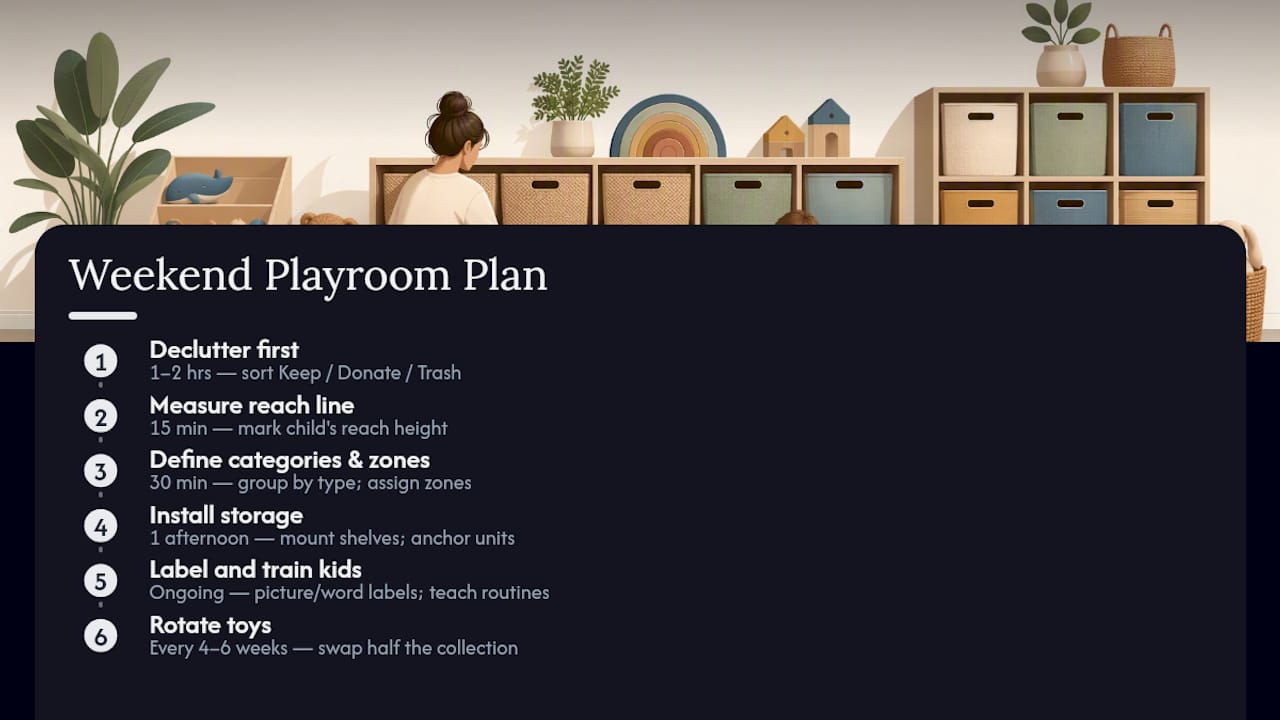
2. Measure the reach line (15 minutes). Have your child stand and reach up with a flat palm. That height is your reach line. Everything they’re responsible for putting away goes below it; everything fragile or dangerous goes above it. Re-measure every six months since kids grow faster than furniture does.
3. Define categories and zone the room (30 minutes). Group toys by type, not by bin size: books, art supplies, small parts, dress-up, daily favorites. Assign each category one physical zone.
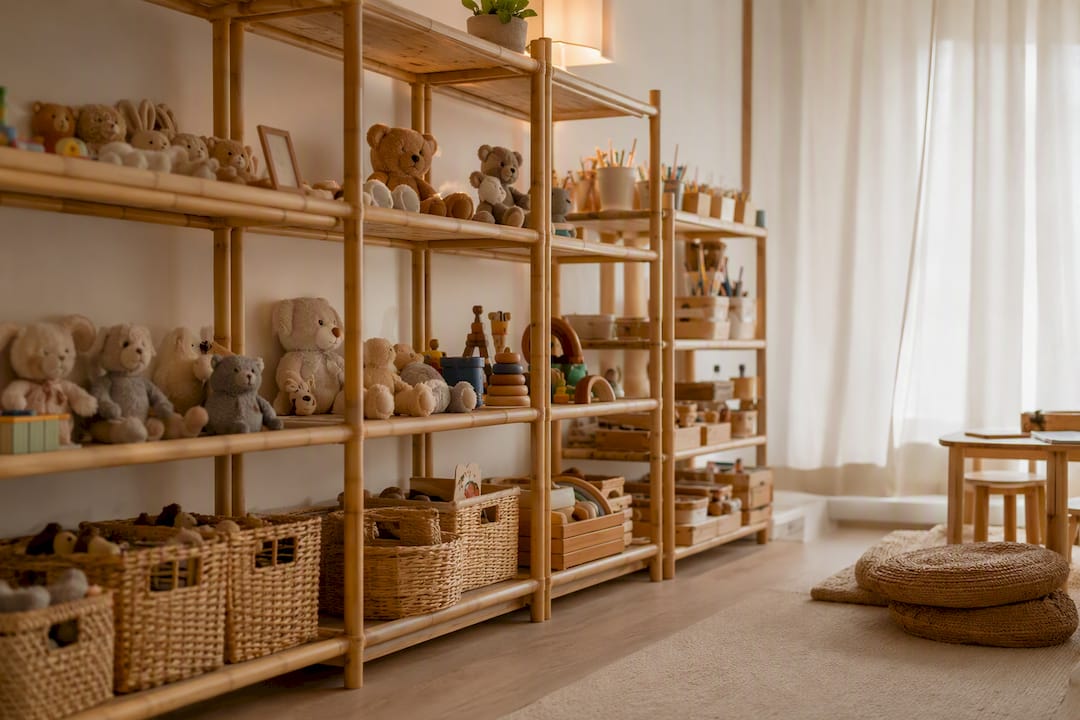
4. Install storage (1 afternoon). Mount shelves, anchor tall units, and place bins. This is where budget matters most.
5. Label and train kids (ongoing). Picture labels for pre-readers, word labels for older kids.
6. Rotate toys every 4 to 6 weeks. Store half the collection in a closet bin and swap it in when interest fades. HomeOrganizeHacks recommends rotation to cut active inventory roughly in half, which means less to clean up and less visual overload.
Budget-wise, a basic bin-and-label system can be very affordable. Mid-range setups include cube organizers and wall shelving. Built-ins or custom bamboo shelving tend to be higher-end options, valued for durability and longevity.
These are grouped by what they hold, since that’s how your kids will actually use them. Each one notes who it’s best for and what it costs.
Daily-access toys
Small parts and messy categories
Furniture and built-ins
Zones and display
Wherever you place tall units, anchor them to the wall. Tip-over incidents are one of the most preventable playroom hazards, and it takes ten minutes with an anti-tip strap.
The wrong bin creates more clutter than no bin at all. Before buying anything, run through a short checklist.
On materials, plastic bins are light and cheap but crack and yellow within a couple of years. Fabric bins are quiet and soft on toes but sag over time and stain easily. Metal wire baskets look sleek but show fingerprints and can pinch small fingers at the seams. Bamboo and wood organizers cost more upfront, resist warping, and don’t off-gas the way some plastics do, which is why Cozee-bay builds its drawer organizers and basket lines from bamboo rather than composite materials.
Safety comes down to a short list: anchor every tall unit to the wall with an anti-tip strap, choose rounded corners over sharp ones, and confirm finishes are non-toxic since kids chew on furniture edges more than parents expect. Renters can use Command-hook mounting kits instead of drilling.
Pro Tip: Don’t buy more storage before you declutter. A bigger bin just means a bigger pile of stuff nobody uses.
Most systems fail for one simple reason: they’re designed for adult convenience, not child capability. A beautiful shelf with lidded bins and tiny labels looks great on moving-in day and gets ignored by week three because a four-year-old can’t manage the lid.
The reach line method solves this at the root. Measure the highest point your child can reach with a flat palm, keep everything they’re responsible for below that line, and re-measure twice a year. Pair it with the 3-second test, and if a toy can’t be found and put away in under three seconds, change the container or move it.
Pro Tip: Assign each bin a color or number, then turn cleanup into a two-minute matching game. “Blue bin, blue toys” works faster than any verbal instruction.
Every idea on this list favors durable, reusable materials over disposable plastic bins that crack within a year. As a brand built on handcrafted bamboo, we lean toward wood-based organizers here because they hold up to the daily wear a playroom throws at them.
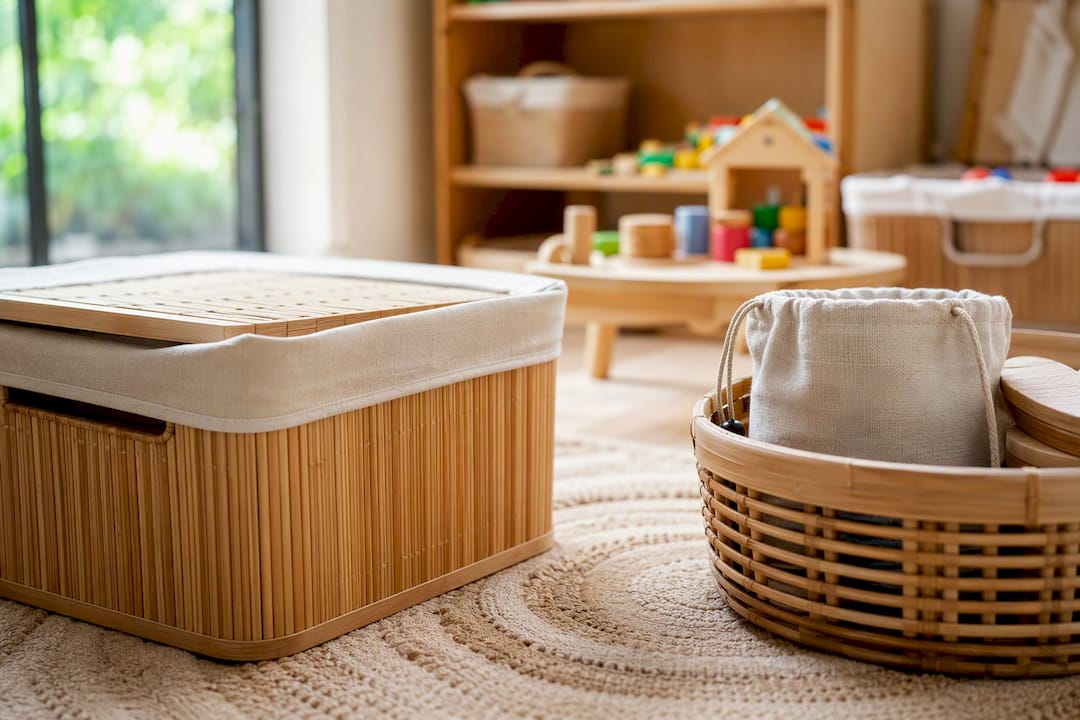
If you’ve read this far, you already know the fix isn’t more storage. It’s storage your kids can actually reach and reset on their own, made from something that survives years of daily use instead of cracking after one holiday season of new toys.

That’s the gap Cozee-bay’s bamboo organizers are built to close. Our bamboo drawer organizers hold up to the compartment-by-compartment sorting art supplies and small parts demand, without the flimsy dividers that collapse in plastic versions. Paired with bamboo basket styling ideas for open, low-shelf storage, you get a system that looks like it belongs in your living space, not just your kid’s room.
Before you buy, check the product page for a few things:
Browse the full bamboo storage collection to find pieces that fit your reach-line measurements and your budget.
What is the cheapest way to organize a playroom? Open bins, labeled baskets, and wall hooks cost the least and work well for daily-use toys. A full setup for a small playroom can stay under $50 if you skip built-ins and stick to basic bins and shelving you already own.
How do I stop my kids from making a mess right after I organize? Lower the storage to their reach line and simplify the containers. If cleanup requires two hands, a tight lid, or reaching above shoulder height, most kids under eight will skip it, and the mess returns within days.
Should I use bins with lids or open bins? Open bins work best for everyday toys since kids can drop items in without a fight. Save lidded bins for small parts like LEGO or beads, where the lid prevents choking hazards and keeps pieces from spreading.
How often should I rotate toys in a playroom? Every 4 to 6 weeks works for most households. Store the off-rotation toys in a labeled closet bin, then swap them back in when your child’s interest in the current set fades.
Do I need to anchor playroom furniture to the wall? Yes, for any bookshelf, cube unit, or dresser taller than your child’s waist. Anti-tip straps take about ten minutes to install and prevent one of the most common home injury risks for young kids.
Comments will be approved before showing up.