Your Cart is Empty


Over 90 percent of American commercial spaces now consider sustainable fixtures when planning restroom upgrades. For North American property managers and eco conscious business owners, combining style with sustainability can be a challenge, especially with high traffic restrooms. Choosing a bamboo paper towel dispenser signals environmental commitment and elevates restroom appeal. This guide reveals how to select, install, and maintain bamboo dispensers that exceed expectations for performance, accessibility, and responsible sourcing.
| Key Insight | Explanation |
|---|---|
| 1. Install at Proper Height | Position the dispenser between 34 and 48 inches for accessibility. This ensures usability for all individuals, including those with mobility challenges. |
| 2. Evaluate Wall Strength | Ensure wall can support the dispenser’s weight and is suitable for secure mounting. Poor support may lead to safety hazards and dispenser damage. |
| 3. Conduct Operational Tests | Test the dispenser multiple times to confirm smooth operation and adequate towel dispensing. This helps identify any functional issues early on. |
| 4. Organize Tools Efficiently | Use a portable toolbox to keep tools organized for streamlined workflow during installation. This prevents interruptions and enhances efficiency. |
| 5. Monitor Paper Usage | Keep a log to track loading dates and usage patterns. This practice aids in timely restocking and effective resource management. |
Identifying the optimal location for your commercial paper towel dispenser involves strategic planning and careful evaluation of your specific space requirements. Understanding installation placement standards will help ensure proper functionality and long-term performance.
When selecting your installation site, consider multiple critical factors. First, examine the physical environment for structural integrity and adequate space. You want a location that provides easy access for maintenance while protecting the dispenser from potential damage. Evaluate wall strength to guarantee secure mounting and assess the surrounding area for potential moisture exposure or temperature fluctuations that could impact dispenser performance. Aim for areas with consistent environmental conditions and minimal risk of accidental impacts or interference.
Ensure your chosen location meets accessibility guidelines for all users. This means positioning the dispenser at a height and angle that accommodates individuals with different physical capabilities. Consider traffic flow patterns and potential obstructions that might impede convenient paper towel access. The goal is creating a seamless, user friendly experience that integrates smoothly with the existing space.
Here’s a summary of key considerations for dispenser placement:
| Consideration | Why It Matters | Potential Impact |
|---|---|---|
| Wall strength | Prevents dispenser detachment | Ensures long-term safety |
| Height from floor | Meets accessibility standards | Inclusive for all users |
| Traffic flow | Avoids congestion near dispenser | Increases user satisfaction |
| Environment stability | Reduces moisture and temperature damage | Extends dispenser lifespan |
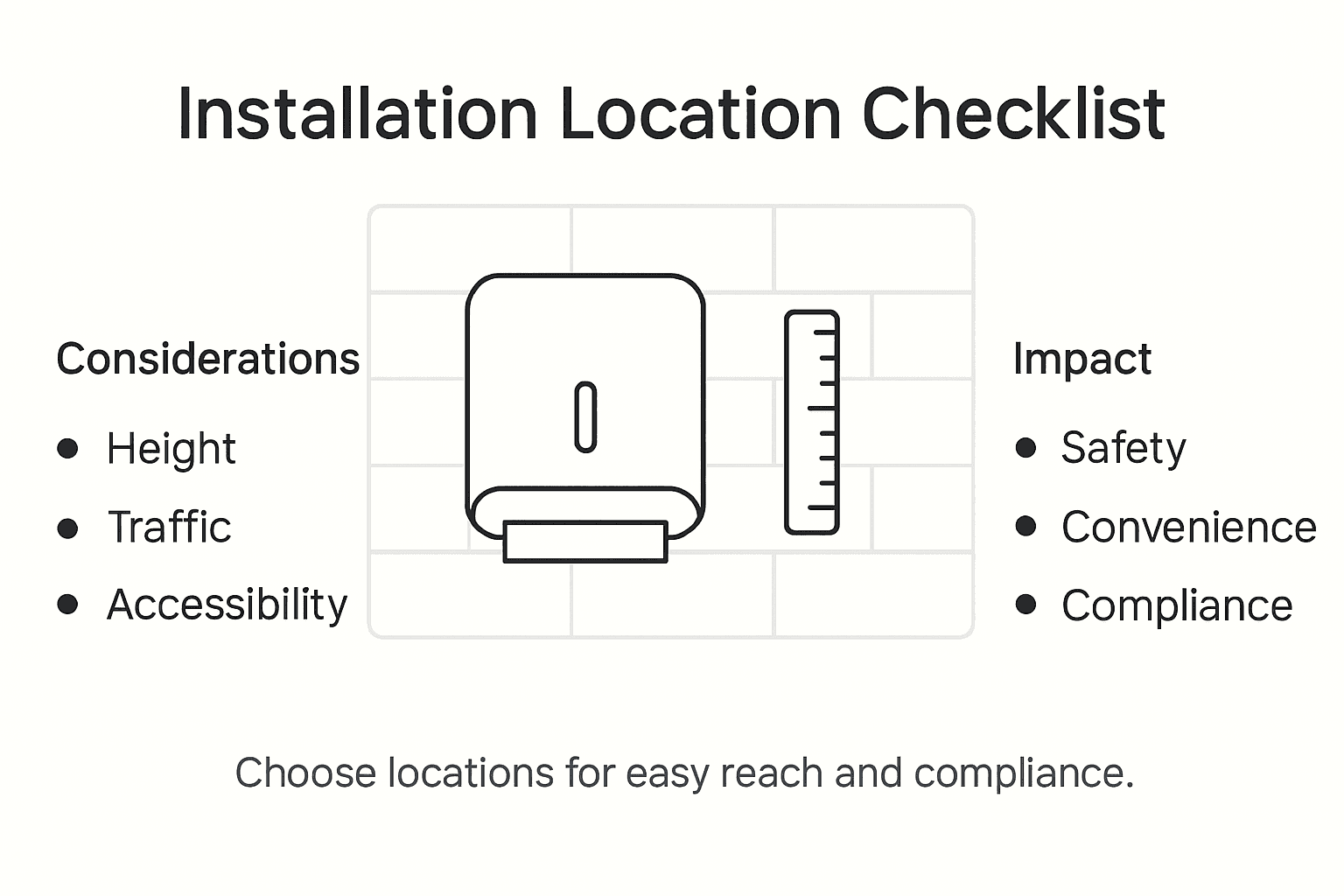
Pro tip: Use a level and measuring tape during initial assessment to guarantee precise and professional installation placement.
Preparing for your commercial dispenser installation requires strategic tool selection and comprehensive preparation. Understanding essential installation requirements will help you assemble the right equipment for a smooth and professional setup.
Your toolkit should include several key components to ensure a successful installation. Gather precision measuring tools like a level and measuring tape for accurate positioning. You will need mounting hardware such as sturdy wall anchors, screws appropriate for your wall material, and adjustable mounting brackets. Safety equipment is crucial look for protective gloves, safety glasses, and a sturdy ladder or step stool that provides stable access. Include a power drill with multiple drill bit sizes, a pencil for marking mounting points, and a stud finder to locate secure wall supports. Consider having silicone sealant or waterproof adhesive on hand to ensure a tight seal and protect against moisture.
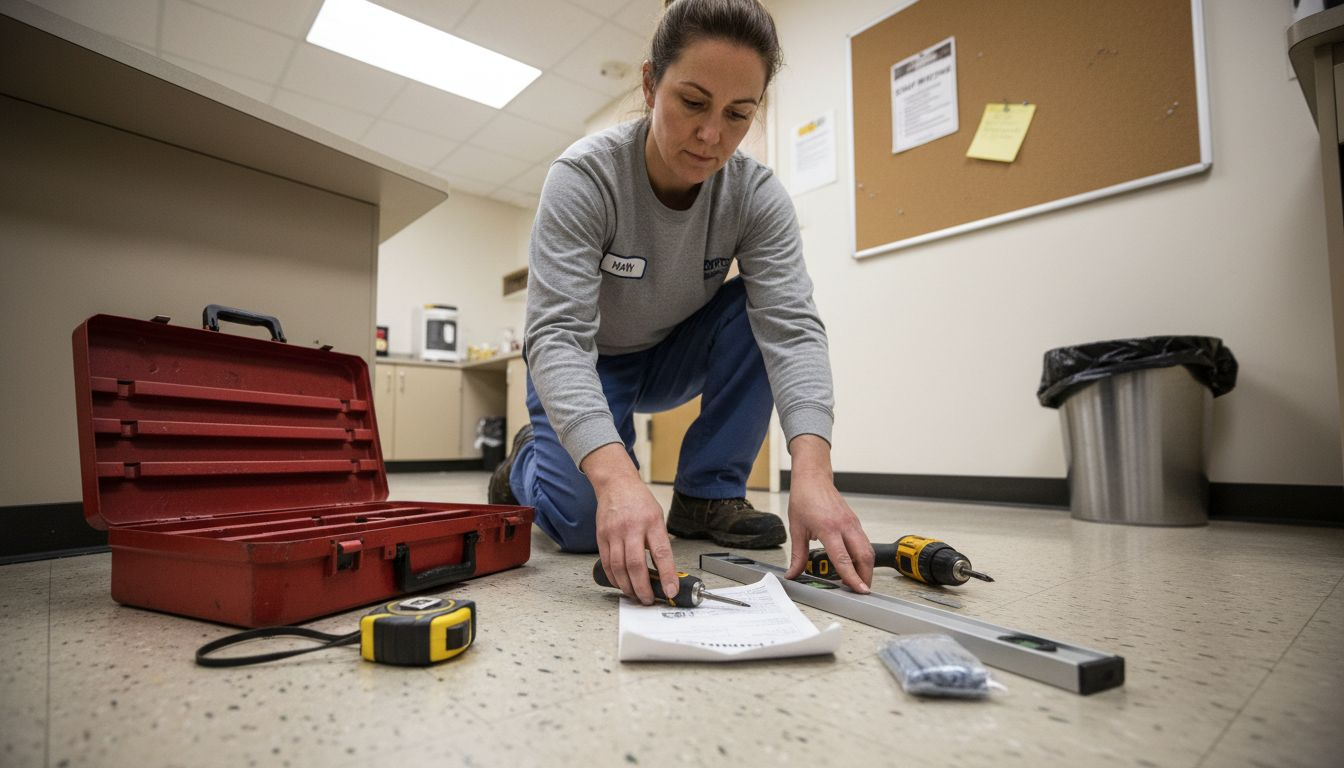
In addition to physical tools, collect all manufacturer documentation and local building code references. These resources will guide you through specific installation requirements and help you verify compliance with regional regulations. Having these materials readily available prevents potential delays and ensures you can reference critical installation specifications as you work.
The following table highlights essential tools and their functions during installation:
| Tool | Primary Use | Additional Benefit |
|---|---|---|
| Level | Ensures horizontal alignment | Results in a professional look |
| Stud finder | Locates secure wall supports | Prevents mounting failures |
| Power drill | Creates mounting holes | Speeds up installation |
| Ladder/step stool | Safely reaches installation height | Reduces injury risk |
Pro tip: Organize your tools and supplies in a portable toolbox or carry container before beginning the installation to streamline your workflow and prevent unnecessary interruptions.
Successful commercial dispenser installation requires precision and careful attention to accessibility standards. Your goal is to create a secure mounting that ensures optimal functionality and user convenience.
Begin by marking the precise mounting location using your level and pencil. Verify the wall surface can support the dispenser weight and choose appropriate wall anchors based on the wall material. For most commercial spaces, you will want to position the dispenser between 34 and 48 inches from the floor to maximize accessibility for all users. Use your stud finder to locate secure mounting points and drill pilot holes carefully to prevent wall damage. When inserting wall anchors, ensure they are flush and stable before attaching the mounting brackets. Align the dispenser brackets precisely and use the recommended screws to create a sturdy connection that can withstand regular use.
Double check the dispenser is level and securely fastened before testing its stability. Gently apply pressure to confirm the mounting can handle daily interactions without wobbling or shifting. Pay attention to surrounding clearance requirements to prevent obstruction of doors or walkways and ensure the dispenser remains easily accessible to all individuals.
Pro tip: Always keep a spare set of mounting hardware on hand in case you need to make adjustments or replace components during installation.
Loading paper towels into your commercial dispenser requires precision and care to ensure smooth operation. Understanding paper towel dispenser mechanics will help you complete this task efficiently and effectively.
Open the dispenser compartment carefully and inspect the interior for any debris or moisture. Verify the paper towel roll or stack matches the dispenser specifications exactly. When inserting the paper towels, align them centrally and ensure they are not twisted or compressed. Most commercial dispensers have specific loading mechanisms that hold paper towels securely and prevent jamming. If your dispenser includes a locking mechanism, engage it fully after loading to prevent unauthorized access and protect against potential paper theft. Adjust the dispensing mechanism to control towel length and minimize waste.
After loading, perform a test run by gently pulling a paper towel to confirm smooth dispensing. Check that the towels emerge cleanly without tearing or getting stuck. Make certain the dispenser closes completely and locks if required. Monitor the initial few dispensing cycles to ensure everything functions as expected and make any necessary adjustments to tension or alignment.
Pro tip: Keep a small log near the dispenser to track loading dates and monitor paper towel usage patterns for more efficient restocking.
Verifying the functionality of your newly installed commercial paper towel dispenser is critical to ensuring user satisfaction and proper performance. Comprehensive operational testing will help you identify and resolve any potential issues.
Begin by conducting multiple test cycles with the dispenser. Pull several paper towels to confirm consistent dispensing and check for smooth operation without jamming or tearing. Observe the towel release mechanism and ensure it delivers the appropriate length for typical user needs. During this process, pay close attention to the dispenser height and accessibility. Test the dispenser from different angles and user perspectives to confirm it meets the needs of all potential users including individuals with mobility challenges.
If you notice any operational inconsistencies such as uneven towel release or difficulty reaching the dispenser, make incremental adjustments. This might involve repositioning the mounting brackets slightly or recalibrating the dispensing mechanism. Check that the dispenser remains securely attached to the wall while making these adjustments. Verify that the locking mechanism functions correctly and that the dispenser door closes completely without resistance. Take time to simulate various usage scenarios to ensure reliable performance across different interaction types.
Pro tip: Keep a small adjustment log near the dispenser to track any modifications and document the final optimal positioning.
Setting up commercial paper towel dispensers can be challenging when aiming for perfect placement, secure mounting, and smooth operation for every user. The article highlights key pain points such as optimal installation height, wall strength, and accessibility to create a functional and inclusive environment. Ensuring your dispenser meets these standards is crucial for safety, convenience, and long-lasting use.
Experience the difference of sustainable style and practical innovation with Cozee Bay’s premium bamboo dispensers. Our Commercial Paper Towel Dispensers | Cozee Bay® collection offers eco-friendly solutions that combine durability with elegant design, making them ideal for restaurants, schools, churches, and more. Secure your installation further with specialized features found in our Cozee Bay Paper Towel Dispenser with Adapter and Top Lid, designed for easy loading and theft prevention.

Ready to upgrade your commercial space with a dispenser that fits perfectly and performs flawlessly? Visit Cozee Bay today to explore our carefully crafted bamboo wood dispensers. Act now and provide your business with a sustainable, stylish, and user-friendly solution that makes a lasting impression.
To assess the best installation location, evaluate the wall’s strength, the dispenser height, and the flow of traffic in the area. Aim to position the dispenser between 34 to 48 inches from the floor for optimal accessibility while ensuring it’s in a location that minimizes moisture exposure and potential obstructions.
You will need tools such as a level, measuring tape, a power drill, and mounting hardware like wall anchors and screws. Gather these tools before you begin installing to ensure a smooth and efficient setup.
To mount the dispenser securely, first locate sturdy wall studs using a stud finder, then drill pilot holes for mounting. Ensure the dispenser is level and attach it with appropriate screws, checking for stability by applying gentle pressure before finalizing the installation.
Open the dispenser compartment, clean out any debris, and insert the paper towels while aligning them centrally to avoid jamming. Lock the compartment if applicable, and check the dispensing mechanism to ensure it operates smoothly before closing it fully.
Conduct multiple test cycles by pulling paper towels to ensure consistent dispensing without jamming. Adjust the dispenser height or mechanism as necessary to meet user needs, particularly for individuals with mobility challenges.
If the dispenser isn’t functioning as expected, verify that it is securely mounted and that the paper towels are loaded correctly. Make any necessary adjustments to its height or the dispensing mechanism based on user feedback to improve its performance.
Comments will be approved before showing up.