Your Cart is Empty


Trying to keep a small kitchen organized can feel endless, especially for North American homeowners who want both style and sustainability. Every messy silverware drawer brings clutter and hidden crumbs that threaten cleanliness and space efficiency. By focusing on a complete drawer clean-out and adopting eco-friendly materials like bamboo organizers, you can achieve a modern kitchen aesthetic while making your daily routines smoother. Discover how a few smart adjustments lead to a functional and beautiful space for every meal.
| Key Insight | Explanation |
|---|---|
| 1. Remove Everything First | Completely empty the silverware drawer to thoroughly clean and assess what should be kept or discarded. |
| 2. Organize by Type | Categorize silverware into groups like forks, spoons, and knives to streamline access and visibility. |
| 3. Select a Snug Organizer | Choose an organizer that fits your drawer dimensions precisely to prevent shifting and maintain order. |
| 4. Arrange for Accessibility | Place frequently used items in front and ensure handles face forward for quick grabbing and ease of use. |
| 5. Regular Maintenance Checks | Conduct monthly cleanings and periodic re-sorting to keep the drawer organized and functional over time. |
Your silverware drawer accumulates more than just flatware over time. Crumbs, dust, and forgotten items hide beneath the surface, making it the perfect time to start fresh by completely emptying everything out.
Begin by removing all silverware, organizers, and liners from the drawer. Don’t just pull out the utensil tray—take everything. This gives you a clear workspace and lets you see exactly what you’re working with.
Next, sort through what’s actually in there:
Once you’ve decluttered, it’s time to address the grime. Cleaning silverware drawer trays with vinegar or a mild cleaner removes buildup effectively. If your trays are dishwasher-safe and have stubborn grime, soak and scrub them thoroughly.
For the drawer itself, wipe down the entire interior with a microfiber cloth to remove crumbs and debris. This prevents pest attraction and maintains hygiene in your kitchen. Pay special attention to corners and edges where dust collects.
When selecting organizers for your refreshed drawer, consider how proper drawer organization works to maximize both style and function. A clean slate gives you the freedom to redesign your space exactly as you need it.
Regular monthly cleanings keep your drawer fresh and prevent the mess from returning.
Pro tip: Add a protective liner or bamboo organizer to your cleaned drawer before returning items—it catches future crumbs and makes your next cleaning session significantly easier.
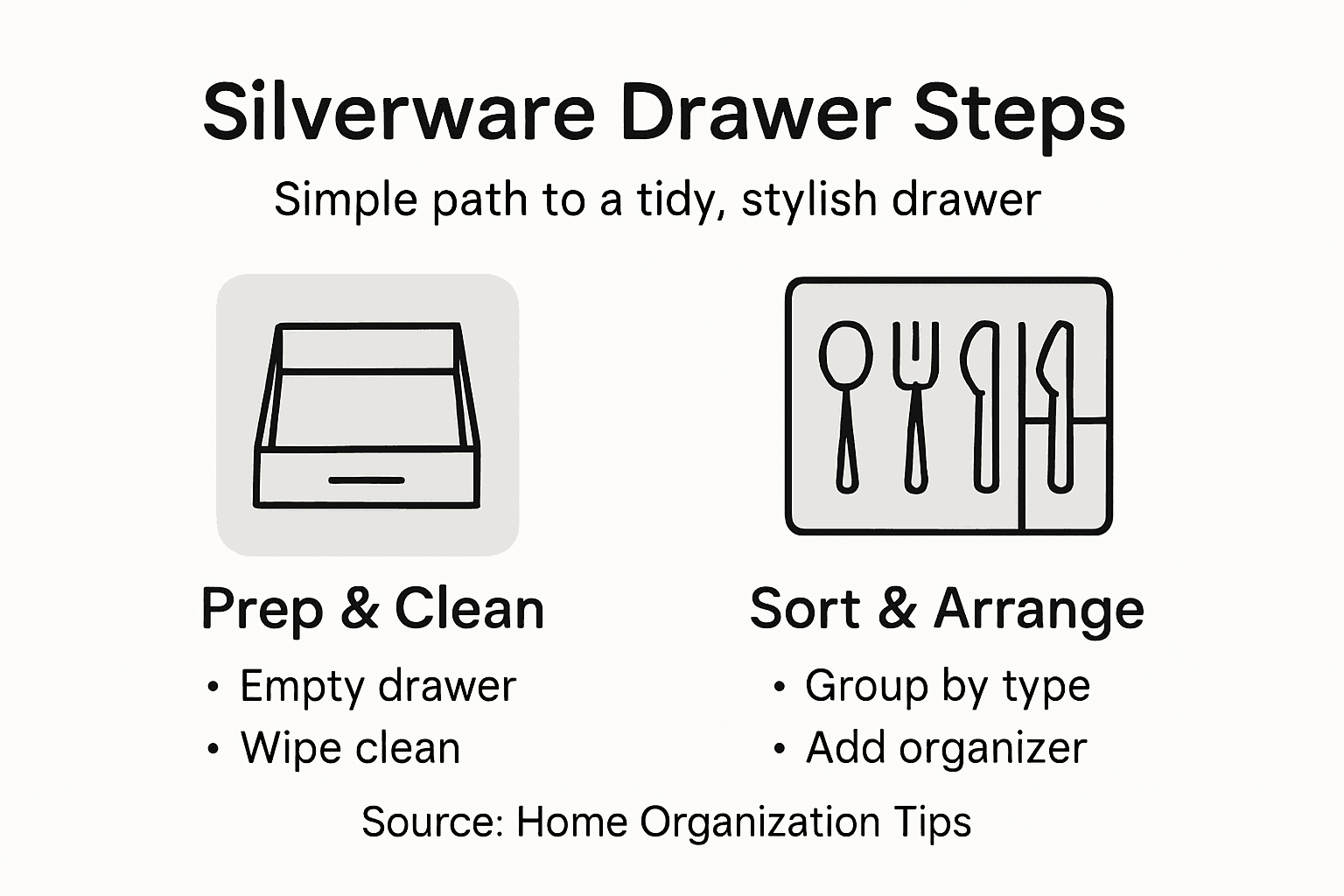
Now that your drawer is clean, it’s time to organize what’s going back in. Sorting silverware by type creates a logical system that makes finding what you need effortless and keeps your drawer looking intentional.
Start by separating flatware into categories. Group all your forks together, spoons in another section, and knives separately. This foundational sorting makes the next stages much faster and helps you see exactly what you own.
As you sort, be honest about what you actually use:
Decision time arrives now. Grouping smaller accessories and odd items together facilitates organization and improves accessibility. Ask yourself which specialty utensils you actually reach for regularly. If you haven’t used that set of steak knives in a year, they’re taking up valuable space. Consider storing infrequently used items elsewhere to keep your main drawer functional and streamlined.
Your sorting creates the foundation for a drawer that works harder for you. Items you use daily stay front and center, while specialty pieces have their designated spots or move to storage elsewhere.
When planning how to arrange these sorted categories, smart drawer organization ideas help you make the most of your available space. Different people need different layouts, so your sorted piles give you the flexibility to design exactly what fits your cooking style.
The goal is accessibility, not display. Your everyday items should be easiest to reach.
Pro tip: Count your utensil types before organizing—knowing you have eight forks instead of twelve helps you choose the right compartment size and avoid cramming.
Choosing the right organizer transforms your sorted silverware into a beautifully functional drawer. Your organizer is the backbone of your system, so picking one that matches your drawer size and utensil collection matters.
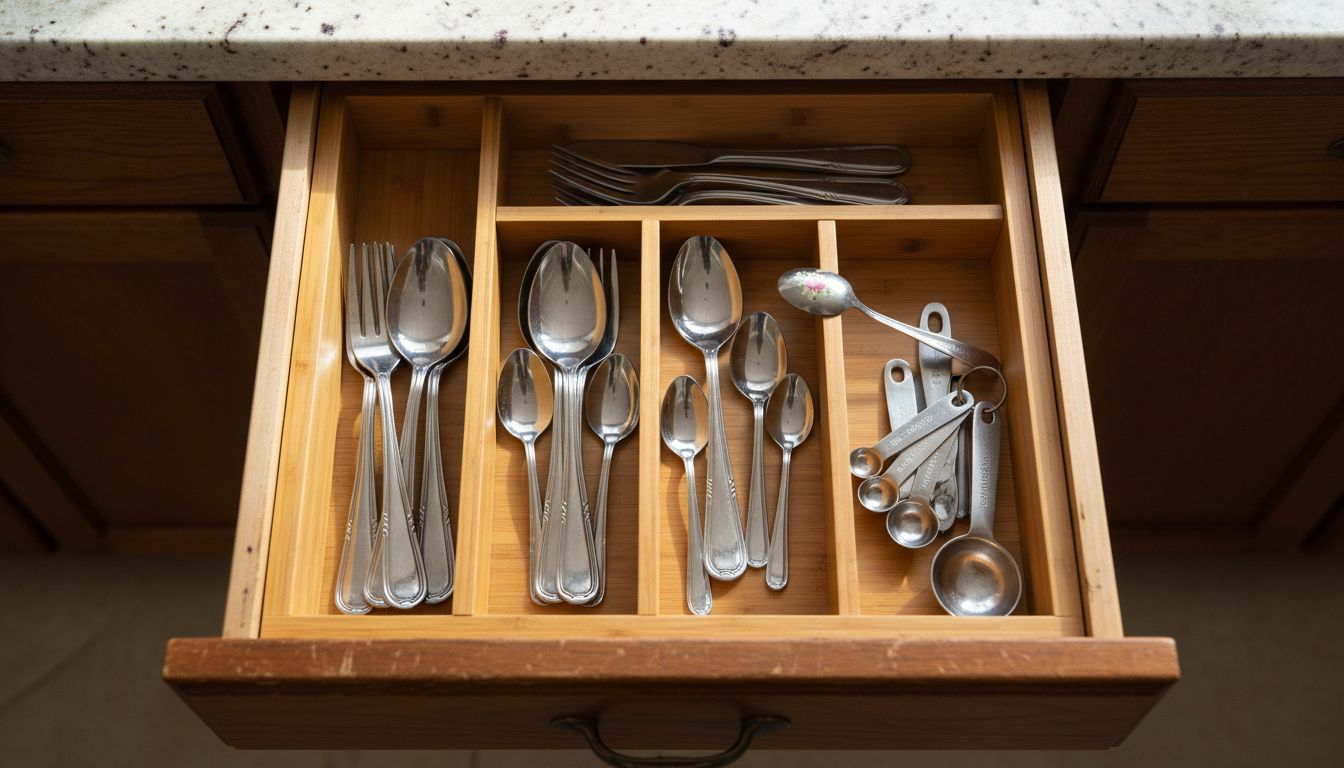
Start by measuring your drawer dimensions carefully. Width, depth, and height all affect which organizers will fit snugly without shifting. An organizer that moves around defeats the purpose and creates frustration every time you reach for a fork.
Consider what types of compartments you need:
Material choices matter for your kitchen’s style and sustainability. Plastic organizers are budget-friendly and lightweight, while bamboo drawer organizers offer eco-friendly durability with a natural aesthetic that complements modern kitchens. Bamboo resists moisture better than some alternatives and aligns with sustainable home practices that eco-conscious homeowners appreciate.
When selecting an organizer, look for adjustable dividers that allow customization to fit your specific silverware collection. This flexibility means your organizer grows with you if your utensil needs change over time. The compartments should have clearly defined sections that prevent forks from mingling with spoons.
Your organizer works best when it fits your drawer’s dimensions precisely. Gaps on the sides or front create wobble and waste space. Take those measurements to the store or use them when shopping online to ensure a perfect fit.
Here’s how popular silverware organizer materials compare:
| Material Type | Durability | Environmental Impact | Maintenance |
|---|---|---|---|
| Plastic | Lightweight, long-lasting | Not biodegradable, recyclable variants exist | Easy to rinse, may stain |
| Bamboo | Highly durable, resists water warping | Renewable, compostable, eco-friendly | Hand wash preferred |
| Metal | Extremely sturdy, rust-resistant if stainless | Recyclable but high-energy production | Wipe clean, may show water spots |
| Wood | Durable, classic appearance | Biodegradable, source-dependent impact | Wipe dry quickly to prevent warping |
The best organizer is one you’ll actually use. Choose something that feels right for your space and lifestyle.
Pro tip: Choose an organizer with slightly raised edges or a lip that prevents items from sliding out when you open and close the drawer.
Now comes the moment where function meets style. How you arrange your silverware determines whether your drawer feels effortless or frustrating on busy mornings. Smart placement turns your organized drawer into a time-saver.
Start with a simple principle: place frequently used items in front. Your everyday forks, spoons, and knives deserve the easiest-to-reach real estate. Specialty utensils, extra pieces, and items you rarely grab belong toward the back or in less accessible compartments.
Position your silverware strategically within each compartment:
When arranging silverware for stylish functionality, consistent placement by category helps maintain organization and speeds up meal preparation. Every time you open the drawer, you know exactly where to find what you need. This consistency transforms daily tasks and prevents the drawer from becoming chaotic.
Think about your cooking habits. Do you use soup spoons constantly or rarely? Are your steak knives gathering dust? Place what you actually use within arm’s reach. Leave the back compartments for occasional items or backup sets.
For eco-conscious homeowners managing small spaces, this arrangement strategy is crucial. Every inch matters, so optimize your kitchen organization by ensuring items you touch most frequently need zero hunting time.
Easy access means your drawer works as hard as you do.
Pro tip: Create a mental map of your arrangement and teach household members where items live, so everyone maintains the system and the drawer stays organized.
You’re almost there. Now it’s time to make sure everything fits perfectly and functions smoothly. A drawer that works effortlessly is one where nothing shifts when you open and close it.
Start by opening and closing your drawer several times. Pay attention to any movement in the organizer or silverware. Everything should sit snugly without sliding around. If items are shifting, your system will deteriorate quickly.
Test your setup thoroughly:
If you notice movement, it’s time to adjust. Ensuring your organizer fits snugly prevents shifting when opening or closing the drawer. You can shift items to fill gaps, adjust compartment dividers if your organizer has them, or reposition the entire organizer for a tighter fit.
Sometimes small adjustments make all the difference. Move forks slightly forward to fill a gap, or redistribute spoons to balance weight evenly. These micro-adjustments create a polished, stable layout that maintains order every single day.
If your organizer still moves after adjusting items, consider adding a protective drawer liner underneath. Liners prevent the organizer from shifting while also protecting your drawer surface from moisture and crumbs. This dual benefit improves functionality and keeps everything clean longer.
For eco-conscious homeowners, bamboo liners complement bamboo organizers beautifully while adding stability. The final result is a drawer that looks intentional, functions smoothly, and stays organized with minimal maintenance.
A properly fitted drawer is a drawer that stays organized on its own.
The table below summarizes steps for maintaining a consistently organized silverware drawer:
| Task | Frequency | Benefit |
|---|---|---|
| Clear out and clean | Once per month | Prevents buildup and pests |
| Re-sort utensils | Every 2-3 months | Removes rarely used items |
| Check organizer fit | After each reload | Maintains stable layout |
| Replace liners | Twice a year | Keeps drawer fresh and hygienic |
Pro tip: Take a photo of your finished drawer setup on your phone—if items ever get misplaced, you have a visual reference to restore the system quickly.
Organizing your silverware drawer for stylish functionality requires thoughtful selection of durable and well-fitting organizers that create order and ease. If you face challenges like utensil clutter, shifting compartments, or low-quality plastic trays, choosing eco-friendly bamboo drawer organizers offers a lasting, elegant upgrade. The article highlights the importance of snug-fitting dividers and easy access placement—qualities perfectly matched by Cozee Bay’s handcrafted bamboo products designed to fit your lifestyle and kitchen space while embracing sustainability.

Discover how our premium bamboo organizers and related kitchen accessories can elevate your drawer organization with natural durability and timeless style. Don’t wait to bring calm and environmental consciousness into your home. Explore the full collection today at Cozee Bay and take advantage of free shipping within the contiguous U.S. Create a kitchen that blends function with eco-friendly design by visiting Cozee Bay’s homepage. Start your journey toward a clutter-free, classy silverware drawer now.
Regularly clean your silverware drawer at least once a month to prevent buildup and pest attraction. Take this time to empty the drawer, wipe it down, and check for any items that need to be discarded or cleaned.
Sort your silverware by type, grouping forks, spoons, and knives into separate categories. This foundational organization simplifies the process, helping you quickly find the items you use daily while making it easy to store specialty pieces in designated spots.
Select an organizer that fits your drawer dimensions snugly to avoid shifting when opening and closing the drawer. Measure the width, depth, and height of your drawer, then look for compartments that can accommodate your specific collection of utensils.
Place frequently used items in the front of your drawer to maintain easy access. Additionally, arrange utensils with handles facing forward to improve visual clarity and quick retrieval.
If your organizer shifts, check for gaps and adjust the placement of the silverware within to better fit the available space. Consider adding a protective drawer liner underneath to stabilize the organizer and prevent movement effectively.
Checking the fit of your silverware organizer ensures that everything stays in place and functions smoothly. Regularly verify that items are snugly positioned to maintain an organized appearance and prevent chaos during everyday use.
Comments will be approved before showing up.