Your Cart is Empty


TL;DR:
- Bamboo sheets offer superior softness, breathability, and moisture-wicking compared to cotton. Lyocell bamboo sheets are more eco-friendly and durable than viscose options, but they require careful washing to maximize lifespan. Most shoppers should verify OEKO-TEX certification and set proper care routines to ensure quality and safety.
Bamboo sheets are bedding made from bamboo-derived fabrics, most commonly viscose or lyocell, and they deliver superior softness, breathability, and moisture-wicking performance compared to traditional cotton. If you wake up sweaty, deal with sensitive skin, or simply want bedding that sits lighter on your conscience, bamboo bed linens are worth a serious look. STANDARD 100 by OEKO-TEX certification verifies that finished bamboo textiles are free from pesticides and toxic chemicals, covering more than 100 restricted substances. That certification matters because not all bamboo sheet sets are created equal, and knowing what to look for saves you from a disappointing purchase.
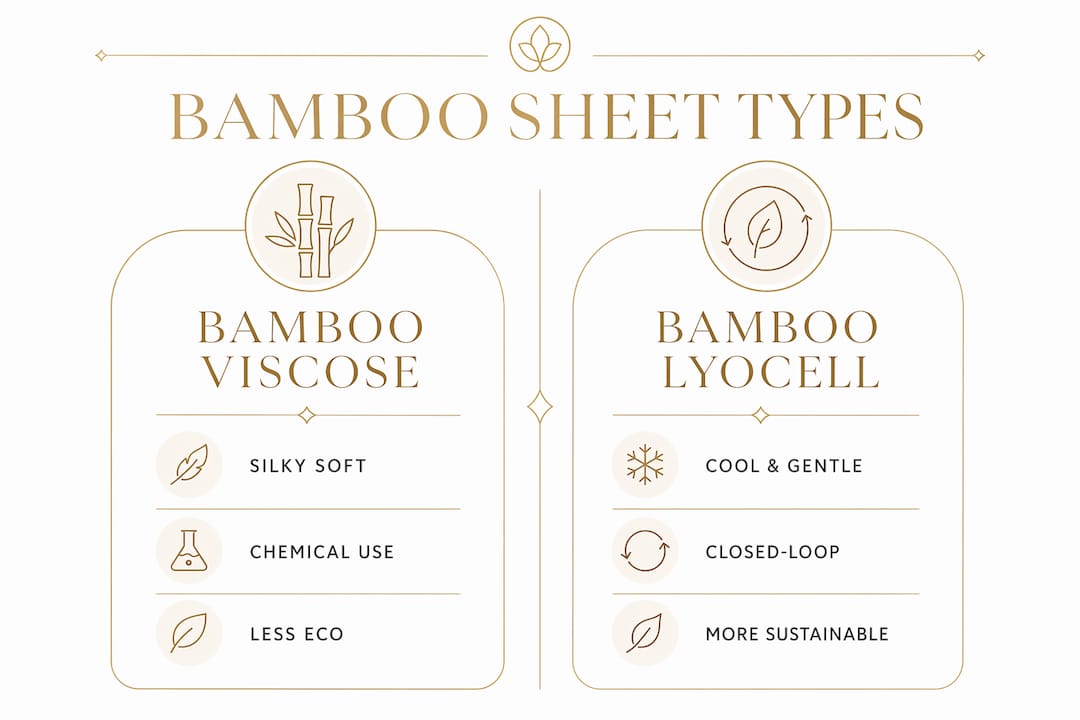
The fabric inside your bamboo sheet set determines everything from softness to environmental impact. Two types dominate the market: bamboo viscose and bamboo lyocell. Understanding the difference helps you spend your money wisely.
Bamboo viscose is the more common option. It produces a silky, soft fabric that feels luxurious against your skin. The trade-off is a chemically intensive manufacturing process that uses harsh solvents to break down bamboo pulp into fiber. Queen-size viscose sheet sets typically range from $80 to $180, making them the accessible entry point for most shoppers.
Bamboo lyocell takes a different path. Its closed-loop production process recycles solvents back into the system, releasing far fewer harmful chemicals into the environment. The result is a higher-quality, more durable sheet with a smaller ecological footprint. Queen-size lyocell sets run $250 to $350, reflecting that cleaner, more resource-intensive process.
Here is a quick breakdown of what separates the two:
Pro Tip: If sustainability is your top priority, choose bamboo lyocell and verify the OEKO-TEX certification number on the brand’s website before buying.
The bamboo vs cotton sheets debate comes down to what you value most: cooling comfort or long-term durability. Both are legitimate priorities, and neither fabric wins on every front.
Bamboo provides an immediate cool-touch feel that hot sleepers notice from the first night. Cotton percale, by contrast, may offer better airflow over time depending on how much you move during sleep. Bamboo’s silky texture also tends to feel gentler on skin from the start, while cotton softens gradually through repeated washing.
Bamboo’s natural fiber structure wicks moisture away from your body faster than standard cotton. That means less clamminess during warm nights. Cotton holds moisture longer, which can feel heavy if you sweat heavily. For humid climates or warm seasons, bamboo bed linens have a clear practical edge.
This is where cotton pulls ahead. High-quality bamboo sheets last 3–7 years with proper care, while premium long-staple cotton sheets can last 5–10 or more years. That gap matters when you are spending $250 or more on a lyocell set. Cotton is also more forgiving of machine washing errors, which makes it easier to maintain over time.
Thread count is a useful metric for cotton, but it misleads shoppers when applied to bamboo. A higher thread count in bamboo sheets creates a denser fabric that traps heat and reduces the breathability you paid for. GSM (grams per square meter) is the better measure for bamboo. A GSM in the 250–350 range typically signals a well-balanced sheet: substantial enough to feel quality, light enough to breathe.
| Fabric type | Softness | Cooling | Durability | Eco-friendliness |
|---|---|---|---|---|
| Bamboo viscose | Very high | High | Moderate | Moderate |
| Bamboo lyocell | High | Very high | Good | Excellent |
| Egyptian cotton | High (after washing) | Moderate | Excellent | Low to moderate |
| Cotton percale | Crisp | Good airflow | Excellent | Low to moderate |
Pro Tip: Wash bamboo sheets before their first use. That first cold-water wash removes any residual manufacturing finish and lets the fabric reach its true softness.
Bamboo’s moisture-wicking and silky softness make it an excellent choice for allergy sufferers and those with sensitive skin. The fiber’s natural properties resist dust mites and reduce the buildup of moisture that bacteria need to thrive. That combination is genuinely useful, not just marketing language.
The specific benefits break down clearly:
Lyocell generally outperforms viscose on cooling and skin gentleness because its closed-loop process preserves more of the fiber’s natural structure. If sensitive skin is your primary concern, lyocell is the better investment.
Bamboo sheets need delicate care to avoid pilling and damage. The good news is that the right routine takes no more effort than your regular laundry. The bad news is that one hot wash or a dryer set too high can permanently alter the fabric’s texture.
Follow these steps every time you wash your bamboo bed linens:
For a deeper look at maintaining your bamboo products, Cozee-bay’s bamboo care steps guide walks through each stage in detail.
Pro Tip: Add a half-cup of white vinegar to the rinse cycle once a month. It removes detergent buildup, restores softness, and keeps bamboo fibers fresh without harsh chemicals.
Bamboo lyocell sheets offer the best combination of eco-friendly manufacturing, cooling performance, and skin-friendly softness, but they require careful washing and realistic durability expectations to justify the price.
| Point | Details |
|---|---|
| Lyocell beats viscose for sustainability | Lyocell’s closed-loop process uses fewer harsh chemicals and yields a more durable sheet. |
| GSM matters more than thread count | Focus on fabric weight (250–350 GSM) rather than thread count for true bamboo breathability. |
| Lifespan is shorter than cotton | Bamboo sheets last 3–7 years; premium cotton can reach 5–10 or more years with proper care. |
| Cold water washing is non-negotiable | Hot water and high dryer heat are the top causes of pilling and premature fiber breakdown. |
| OEKO-TEX certification confirms safety | Look for STANDARD 100 by OEKO-TEX to verify your sheets are free from harmful residues. |
Most people shopping for the best bamboo bedding fixate on thread count and price, and both of those instincts lead them astray. Thread count is a cotton metric. It tells you almost nothing useful about a bamboo sheet’s performance. And the lowest-priced “lyocell” sets are often mislabeled viscose, which means you pay a premium for a product that does not deliver the sustainability or durability you expected.
What I have found actually works is treating the OEKO-TEX certification number as a non-negotiable filter. If a brand cannot give you a verifiable certification number, move on. That one step eliminates most of the low-quality options without requiring you to become a textile expert.
The durability gap between bamboo and cotton is real, and I think it is worth saying plainly: if you want sheets that last a decade with minimal fuss, premium long-staple cotton is the more practical choice. Bamboo earns its place for hot sleepers, sensitive skin, and eco-conscious buyers who are willing to wash carefully and replace every five to seven years. That is a reasonable trade-off, but only if you go in with clear expectations.
For anyone serious about bamboo product longevity, the care routine is where you either protect your investment or waste it. The fabric is forgiving of a lot of things. A hot dryer is not one of them.
— Cozee
At Cozee-bay, bamboo is not just a material. It is a commitment to products that perform well and leave a lighter footprint. Whether you are building a more sustainable bedroom or outfitting a kitchen with eco-conscious accessories, the same principles apply: quality materials, verified certifications, and care routines that extend the life of what you own.

Cozee-bay’s bamboo care tips guide covers everything from washing routines to storage, so your bamboo products stay in top condition longer. And if you are ready to bring more sustainable bamboo into your home beyond the bedroom, Cozee-bay’s bamboo home collection offers handcrafted, eco-friendly options built for both style and daily use. Free shipping within the contiguous U.S. and a money-back guarantee make it easy to try without risk.
Bamboo provides an immediate cool-touch feel that most hot sleepers notice from the first night, while cotton percale may offer better sustained airflow depending on sleep movement. Lyocell bamboo generally performs best for temperature regulation.
STANDARD 100 by OEKO-TEX verifies that the finished textile is free from more than 100 harmful substances, including pesticides and toxic dyes. It is the most reliable way to confirm your sheets are safe for sensitive skin.
High-quality bamboo sheets last 3–7 years with proper care, compared to 5–10 or more years for premium long-staple cotton. Cold-water washing and low-heat drying are the most important factors in reaching that upper range.
Viscose is more affordable but uses a chemically intensive production process. Lyocell uses a closed-loop system that recycles solvents, making it the more eco-friendly and durable option.
Fabric softener coats bamboo fibers and reduces their natural moisture-wicking ability over time. Use a mild detergent without enzymes or bleach, and add white vinegar to the rinse cycle instead for softness without damage.
Comments will be approved before showing up.