Your Cart is Empty


Sourcing the right paper towel dispenser can feel challenging when you want every detail in your restaurant to reflect your commitment to style and sustainability. The shift to reusable dispensers is more than a trend, offering American restaurant owners a real path to reduce waste and create a sophisticated atmosphere. Drawing on global research, these systems are designed to lower your environmental impact without sacrificing convenience or aesthetic appeal.
| Point | Details |
|---|---|
| Sustainable Solution | Reusable dispensers create a circular economy model, substantially reducing resource consumption and carbon footprint. |
| Economic Benefits | Although initial costs are higher, reusable dispensers lead to significant long-term savings and lower operational expenses. |
| Operational Efficiency | Properly managed reusable systems enhance hygiene and can streamline restaurant operations without sacrificing user experience. |
| Environmental Impact | Reusable dispensers drastically minimize single-use plastic waste and demonstrate strong environmental return on investment. |
Reusable dispensers represent an innovative solution for sustainable spaces, offering a practical alternative to single-use packaging systems. These containers are specifically designed for multiple use cycles, enabling repeated refilling and cleaning while minimizing environmental waste. Unlike disposable options, reusable dispensers create a circular economy model that significantly reduces resource consumption and carbon footprint.
Understanding the core characteristics of reusable dispensers requires examining their fundamental design principles. Key features include:
Many organizations harbor misconceptions about reusable systems, often assuming they are less hygienic or more expensive than single-use alternatives. However, comprehensive life cycle assessments demonstrate that properly managed reusable dispensers can substantially reduce environmental impact. The United Nations Environment Programme research reveals that when used correctly, these systems generate significantly lower carbon emissions compared to disposable counterparts.
Pilot studies have further validated the effectiveness of reusable dispenser systems. University research on reusable containers showed that consumer acceptance remains high when systems are well-designed and convenient. Restaurant and commercial spaces can achieve meaningful waste reduction without compromising operational efficiency or user experience.
Pro tip: Implement a standardized cleaning and maintenance protocol to maximize the hygiene and longevity of your reusable dispensers.
Restaurants have multiple options for implementing reusable dispensers that support sustainable operations while maintaining efficiency and hygiene. Restaurant serviceware systems offer diverse solutions tailored to different food service environments, enabling significant waste reduction across various dining contexts.
The primary categories of reusable dispensers for restaurants include:
Environmental assessments demonstrate that strategically implemented reusable dispensers can dramatically reduce packaging waste. Bulk dispenser systems create substantial sustainability benefits by minimizing single-use packaging and streamlining product distribution across restaurant settings.
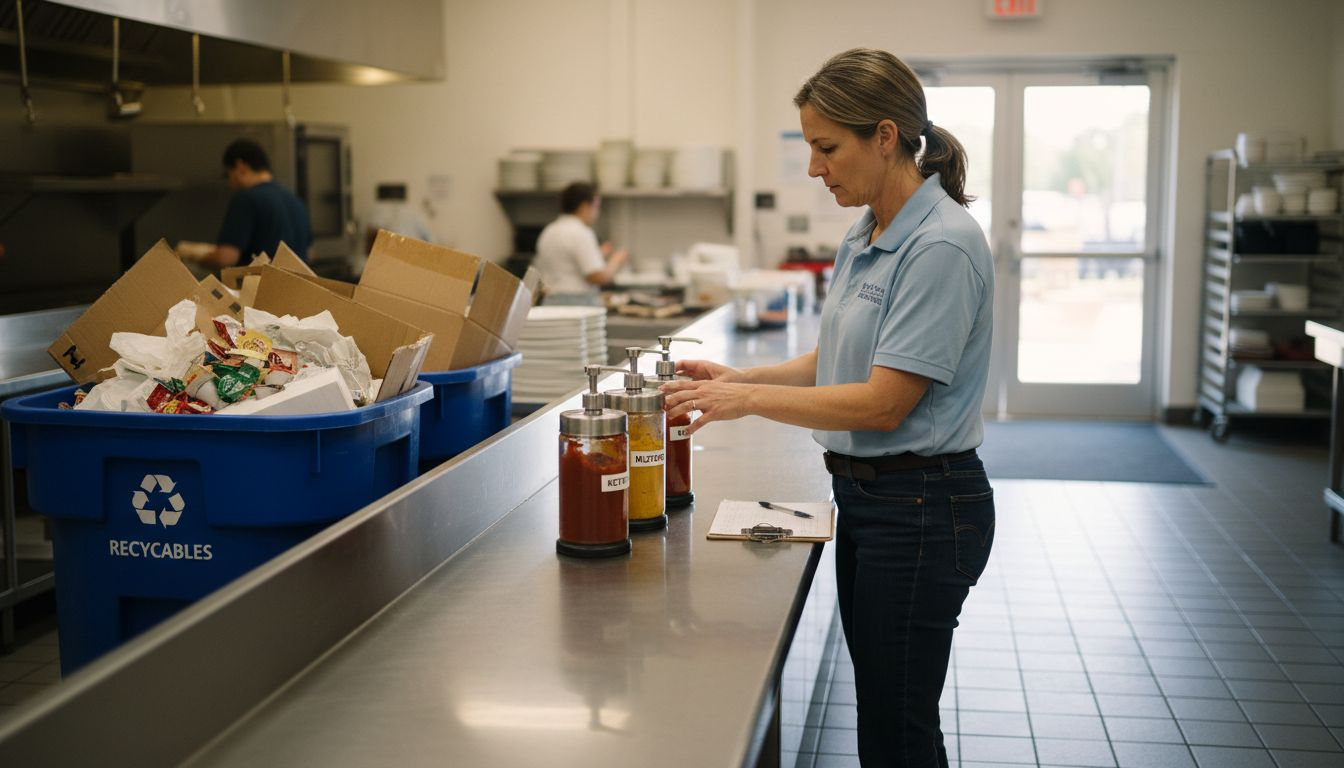
Designing an effective reusable dispenser strategy requires careful consideration of restaurant layout, customer flow, and specific operational needs. Materials like stainless steel, durable plastics, and food-grade ceramics offer long-lasting solutions that maintain hygiene standards while supporting environmental goals.
Pro tip: Standardize cleaning protocols and invest in high-quality, easy-to-sanitize dispensers to ensure consistent food safety and sustainability.
Reusable dispensers represent a strategic investment that delivers multiple advantages for environmentally conscious businesses and consumers. Sustainable packaging solutions offer a compelling approach to reducing waste while simultaneously enhancing operational efficiency and brand perception.
The key benefits of reusable dispensers can be categorized into three primary dimensions:
Reusable container research demonstrates that these systems provide substantial economic advantages beyond traditional single-use alternatives. By investing in high-quality, durable dispensers, organizations can achieve significant cost savings while simultaneously projecting a commitment to environmental responsibility.
Moreover, modern reusable dispensers are engineered to balance aesthetic appeal with practical functionality. Advanced materials and design techniques ensure that sustainable solutions do not compromise style, allowing businesses to create visually appealing spaces that reflect ecological consciousness and contemporary design sensibilities.
Pro tip: Calculate your potential cost savings by comparing annual expenses for disposable versus reusable dispensers to make a data-driven sustainability investment.
Transitioning from single-use to reusable dispensers represents a transformative approach to waste management across various settings. Reuse and refill systems fundamentally disrupt the traditional linear consumption model by eliminating disposable packaging at its source and creating sustainable infrastructure for product distribution.
Practical waste reduction strategies through reusable dispensers include:
To highlight the impact of selecting the right dispenser, here’s a comparison of key use cases for reusable dispensers in different settings:
| Setting | Primary Benefit | Example Implementation |
|---|---|---|
| Restaurant Dining | Waste reduction, efficiency | Bulk condiment stations |
| Event Venues | Lower single-use materials | Centralized refill centers |
| Workplaces | Cost control, convenience | Communal coffee dispensers |
| Commercial Kitchens | Streamlined operations | Modular ingredient systems |
Practical waste diversion strategies demonstrate significant environmental impact through coordinated reusable systems. By establishing partnerships with waste reduction organizations and creating reverse logistics infrastructure, businesses can dramatically decrease their plastic consumption and environmental footprint.
Successful implementation requires comprehensive strategies that address consumer behavior, operational logistics, and systemic infrastructure. Advanced reusable dispensers not only reduce waste but also create opportunities for organizations to demonstrate environmental leadership and innovative sustainability practices.
Pro tip: Design a comprehensive tracking system to measure waste reduction and cost savings from transitioning to reusable dispensers.
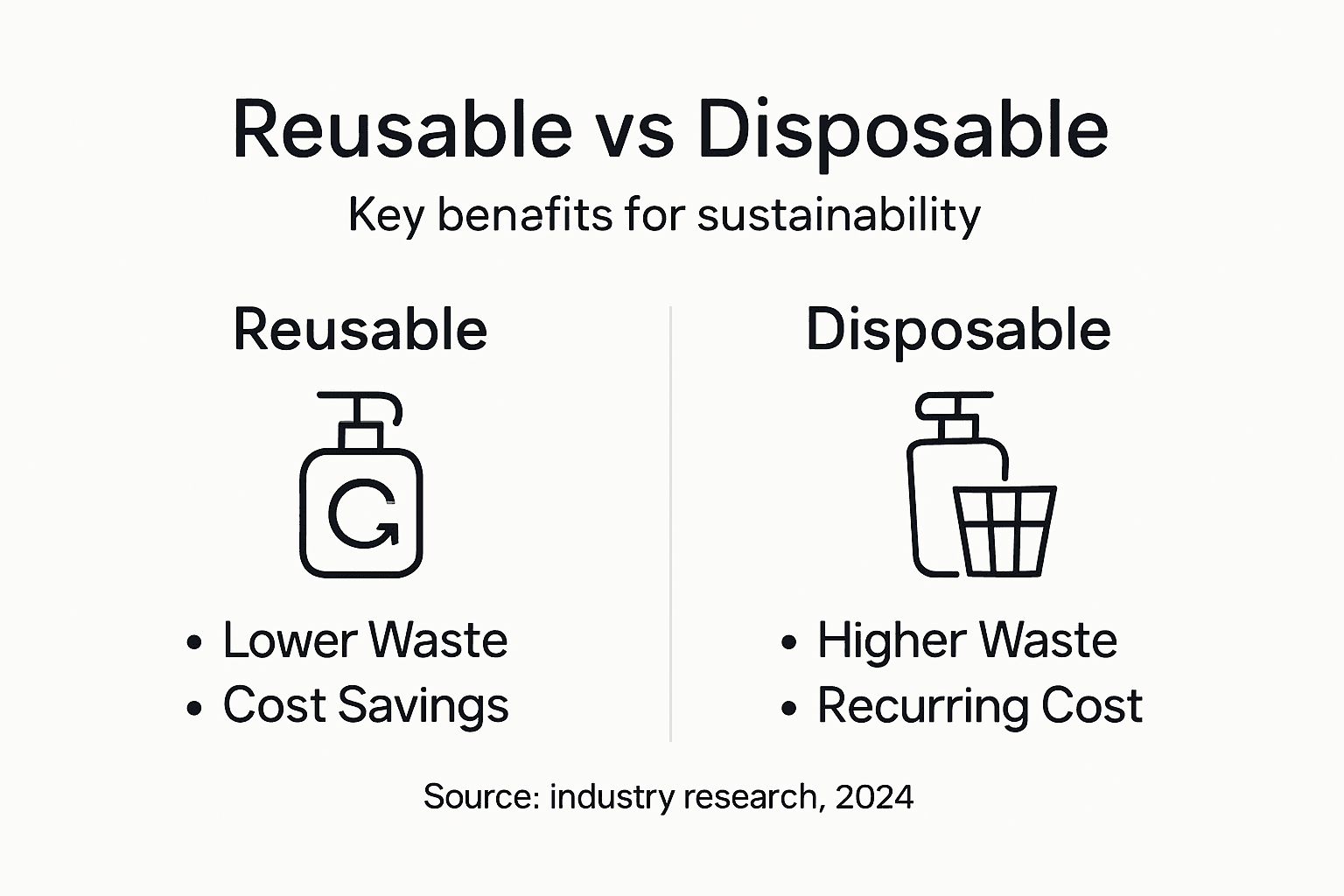
The debate between reusable and disposable dispensers extends beyond simple environmental considerations, encompassing complex economic and practical dimensions. Lifecycle assessment studies reveal that reusable dispensers consistently demonstrate superior environmental performance when implemented strategically, challenging traditional assumptions about convenience and sustainability.
Key comparative characteristics include:
Here is a side-by-side summary comparing reusable and disposable dispensers to support strategic decision-making:
| Aspect | Reusable Dispensers | Disposable Dispensers |
|---|---|---|
| Initial Cost | Higher upfront expense | Lower purchase price |
| Long-Term Savings | Significant cost savings | Minimal ongoing savings |
| Sustainability | Strong environmental ROI | Increases landfill waste |
| Maintenance Needs | Requires cleaning setup | Immediate disposal only |
| Brand Perception | Signals eco-responsibility | Associated with wastefulness |
Comprehensive packaging research indicates that 72% of comparative studies favor reusable systems. Critical success factors include transport efficiency, production methods, and establishing robust reuse infrastructure.
Effective implementation demands a holistic approach that considers not just environmental metrics, but also practical usability, organizational culture, and systemic support for sustainable practices. Businesses must evaluate their specific context to design optimal dispensing strategies.
Pro tip: Conduct a comprehensive cost-benefit analysis incorporating environmental impact, operational expenses, and long-term sustainability goals before transitioning between dispenser models.
Struggling to reduce single-use waste while maintaining style and functionality in your restaurant or commercial space Discover the lasting benefits of reusable dispensers that combine environmental sustainability with practical design from Cozee Bay Our premium bamboo dispensers are handcrafted to meet the challenges of repeated use and cleaning protocols highlighted in the article They offer durability, modern aesthetics, and eco-conscious materials perfectly suited for sustainable spaces

Explore our Commercial Paper Towel Dispensers | Cozee Bay® crafted for both home and commercial environments where quality and sustainability matter Take advantage of our selection that includes innovative features like adapters and top lids to ensure hygienic and efficient use Visit Plastic Wrap Dispenser With Cutter | Cozee Bay® to find additional eco-friendly solutions for your daily operations Find your ideal fit now at Cozee Bay and make a confident step toward reducing your environmental footprint with stylish reusable dispensers that deliver both cost savings and peace of mind Act today and support sustainability with elegance and purpose
Reusable dispensers are containers designed for multiple use cycles, allowing for repeated refilling and cleaning while reducing environmental waste compared to single-use packaging systems.
Reusable dispensers minimize single-use plastic waste, lower carbon footprints, and conserve raw material resources by creating a circular economy model that promotes longer product lifespans.
Yes, when properly maintained with a standardized cleaning protocol, reusable dispensers can maintain high hygiene standards while significantly reducing environmental impact compared to disposable options.
Reusable dispensers can lead to lower long-term operational costs, reduced purchasing frequency, and decreased waste disposal expenses, ultimately resulting in significant cost savings for businesses.
Comments will be approved before showing up.