Your Cart is Empty


Most American households and businesses still rely on plastic dispensers for everyday hygiene needs, even though sustainable alternatives are growing in popularity. The debate between bamboo and plastic dispensers matters more than ever as people seek solutions that balance health, style, and the impact on the planet. With bamboo reaching maturity up to 20 times faster than typical hardwoods, this guide compares key differences to help you make a smarter, eco-conscious choice.
| Point | Details |
|---|---|
| Material Sustainability | Bamboo dispensers are eco-friendly and biodegradable, significantly reducing environmental impact compared to plastic dispensers. |
| Cost Considerations | Although bamboo dispensers have a higher initial purchase price, they offer long-term value through durability and lower operating costs. |
| Aesthetic Appeal | Bamboo dispensers combine functionality with natural elegance, appealing to environmentally conscious consumers seeking stylish options. |
| Maintenance Requirements | Bamboo dispensers require more careful maintenance than plastic but provide natural antimicrobial properties that enhance hygiene. |
Paper towel dispensers are essential fixtures in both residential and commercial settings, designed to provide convenient, hygienic hand-drying solutions. Traditionally, these dispensers have been manufactured from plastic materials, serving a fundamental role in maintaining cleanliness across various environments. Modern innovations, however, are introducing sustainable alternatives like bamboo dispensers that challenge conventional manufacturing approaches.
A plastic dispenser typically represents a mass-produced item constructed from petroleum-based synthetic materials. These dispensers are lightweight, inexpensive to manufacture, and have been industry standards for decades. In contrast, a bamboo dispenser represents an eco-friendly alternative crafted from renewable plant resources. Bamboo-based dispensers are designed to provide the same functional utility as plastic versions while significantly reducing environmental impact.
The key differences between bamboo and plastic dispensers extend beyond material composition. While plastic dispensers are often characterized by their low initial cost and widespread availability, bamboo dispensers offer unique advantages such as biodegradability, natural antimicrobial properties, and a significantly lower carbon footprint. These innovative bamboo solutions represent a thoughtful evolution in product design, prioritizing sustainability without compromising performance or aesthetic appeal.
The environmental implications of choosing between bamboo and plastic dispensers represent a critical consideration for eco-conscious consumers. Packaging materials reveal stark differences in sustainability, with bamboo emerging as a significantly more environmentally friendly alternative. Bamboo’s rapid renewability allows it to reach maturity in just three to five years, contrasting sharply with plastic’s centuries-long decomposition timeline.
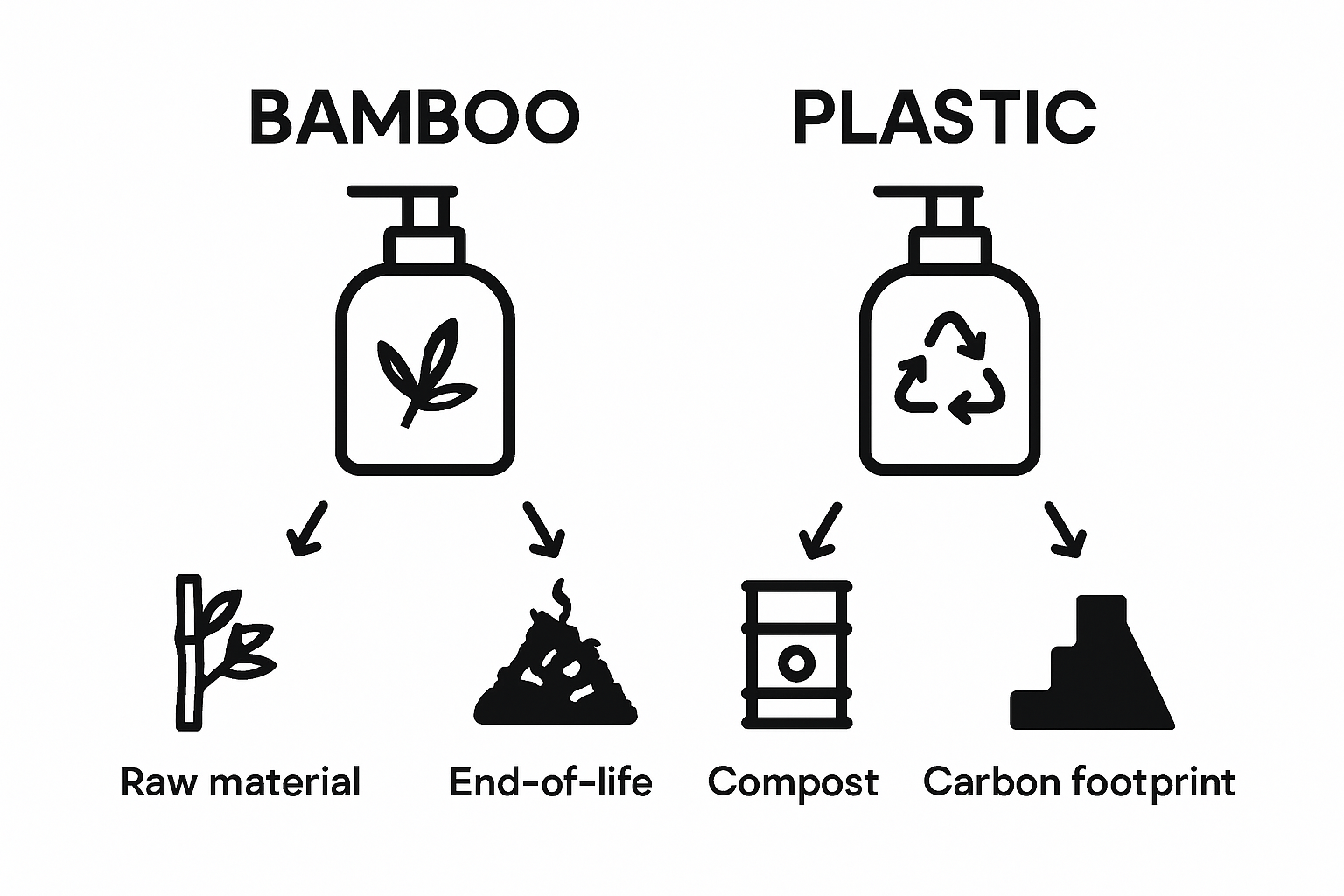
Research highlights complex nuances in the environmental assessment of bamboo products. While bamboo offers remarkable potential, production processes can still generate substantial carbon emissions. Studies indicate that manufacturing stages for bamboo items account for 56.5–77.7% of total environmental impact, primarily due to semi-automated production methods requiring significant manual intervention and energy consumption.
The sustainability comparison extends beyond raw material characteristics. Plastic dispensers contribute extensively to long-term environmental degradation, generating persistent waste that accumulates in landfills and marine ecosystems. Bamboo home products represent a transformative approach, offering biodegradable alternatives that naturally decompose and support circular economic principles. By choosing bamboo, consumers actively participate in reducing plastic pollution and supporting more regenerative manufacturing practices that prioritize environmental stewardship.
Durability represents a critical factor when comparing bamboo and plastic dispensers, with each material presenting unique performance characteristics. Plastic dispensers have long been valued for their consistent manufacturing and predictable structural integrity. In contrast, bamboo dispensers introduce innovative material properties that challenge traditional durability expectations, offering natural resilience with distinct maintenance requirements.

Manufacturing processes reveal significant differences in production complexity. Plastic dispensers benefit from streamlined injection molding techniques, allowing for mass production with minimal variability. Bamboo products, however, require specialized processing and potentially additional additives, which can increase production complexity and associated costs. These manufacturing nuances directly impact the initial durability and long-term performance of dispensers.
Maintenance considerations further distinguish these materials. Plastic dispensers typically offer straightforward cleaning and minimal degradation over time, making them attractive for high-traffic environments. Bamboo dispensers, while requiring more careful maintenance, provide natural antimicrobial properties and a unique aesthetic that appeals to environmentally conscious consumers. The lifespan of each material depends on factors like humidity, usage intensity, and specific environmental conditions, with bamboo demanding more attentive care to preserve its structural integrity and aesthetic appeal.
The financial considerations of choosing between bamboo and plastic dispensers extend far beyond their initial purchase price. Cost-benefit analysis reveals a nuanced economic landscape where sustainable materials demonstrate compelling long-term value propositions. While bamboo dispensers typically require a higher upfront investment due to specialized manufacturing equipment, they offer significant economic advantages through reduced operating costs and minimized environmental externalities.
Initial procurement costs present the most immediate financial difference. Plastic dispensers remain less expensive to purchase, leveraging established mass production techniques that keep manufacturing expenses low. Bamboo dispensers, conversely, demand more sophisticated production processes, translating to higher initial prices. However, the total cost of ownership tells a more complex story, with bamboo’s durability and environmental benefits creating substantial economic value over time.
Economic considerations extend beyond direct monetary expenses. Bamboo home products represent an investment in sustainability that delivers intangible returns through reduced environmental impact, potential tax incentives for green purchasing, and alignment with corporate social responsibility objectives. Environmentally conscious consumers and businesses increasingly recognize that true value encompasses not just immediate cost, but long-term ecological and social implications of material choices.
The evolution of dispensers transcends mere functionality, with materials now playing a crucial role in aesthetic and practical design. Innovative bamboo dispensers are revolutionizing traditional hygiene and hospitality spaces, offering 100% sustainable alternatives that combine visual appeal with environmental consciousness. These dispensers seamlessly integrate natural elegance with practical performance, challenging the utilitarian design of conventional plastic models.
Manufacturing complexities highlight the nuanced production challenges inherent in bamboo design. While plastic dispensers benefit from standardized injection molding techniques, bamboo requires specialized processing that demands more sophisticated manufacturing approaches. This complexity translates into unique design opportunities, allowing for more customized and artisanal product variations that plastic cannot easily replicate.
Bamboo home products excel in versatility across various settings. From commercial spaces like restaurants and hotels to residential environments including kitchens and bathrooms, these dispensers offer a sophisticated solution that speaks to both aesthetic preferences and environmental values. The natural grain, warm tones, and sustainable narrative of bamboo dispensers provide a compelling alternative to sterile plastic designs, appealing to consumers seeking products that reflect both style and ecological responsibility.
If you are seeking a practical solution that balances eco impact and durability, bamboo paper towel dispensers offer a thoughtful alternative to traditional plastic options. The article highlights critical concerns around environmental waste, sustainability, and product longevity that many face when selecting dispensers for home or commercial spaces. With bamboo’s natural antimicrobial properties and biodegradable nature combined with sophisticated craftsmanship, you can reduce plastic pollution while enjoying elegant, functional designs.

Explore our curated collection of Bamboo Paper Towel Dispenser- A Sleek Look Home or Office for premium, handcrafted options that fit restaurants, schools, coffee shops, and more. Discover convenient accessories with our Paper Towel Dispensers - Accessories | Cozee Bay® to keep your setup fresh and efficient. Don’t wait to make a positive environmental impact and upgrade your space with sustainable style. Visit Cozee Bay now to shop and enjoy free shipping across the contiguous U.S.
Bamboo dispensers are eco-friendly alternatives made from renewable resources, while plastic dispensers are lightweight and inexpensive but contribute to long-term environmental degradation. Bamboo offers biodegradability, natural antimicrobial properties, and a lower carbon footprint compared to plastic.
Plastic dispensers are known for their consistent durability and low maintenance. In contrast, bamboo dispensers require more careful maintenance to preserve their structural integrity but offer natural resilience and aesthetic appeal, along with antimicrobial properties.
Yes, bamboo dispensers are considered more environmentally friendly due to bamboo’s rapid renewability and biodegradability. Unlike plastic, which can take centuries to decompose, bamboo naturally decomposes and contributes significantly less to environmental pollution.
Initially, bamboo dispensers are generally more expensive due to specialized manufacturing processes. However, they may provide long-term value through reduced operational costs and environmental benefits, making them a worthwhile investment for eco-conscious consumers.
Comments will be approved before showing up.