Your Cart is Empty


Bamboo is changing the way american builders think about construction. With the ability to absorb nearly 17 tonnes of carbon per hectare every year, this natural material offers environmental benefits that rival any traditional resource. Its impressive strength-to-weight ratio and rapid renewability mean bamboo delivers durability and flexibility while helping projects stay eco-friendly and cost-effective. Discover how this ancient plant is becoming a powerhouse choice for modern american construction.
| Point | Details |
|---|---|
| Bamboo’s Versatility | Bamboo can be used for almost every building component, making it a valuable alternative to traditional materials like wood and steel. |
| Exceptional Strength | Bamboo offers a high strength-to-weight ratio, with tensile strength comparable to mild steel, enabling lightweight yet robust structures. |
| Sustainability Benefits | Bamboo sequesters carbon effectively and requires no fertilizers or pesticides, making it an environmentally friendly construction option. |
| Cost-Effectiveness | Bamboo’s lower material and processing costs, alongside its local availability, make it an economically viable building choice. |
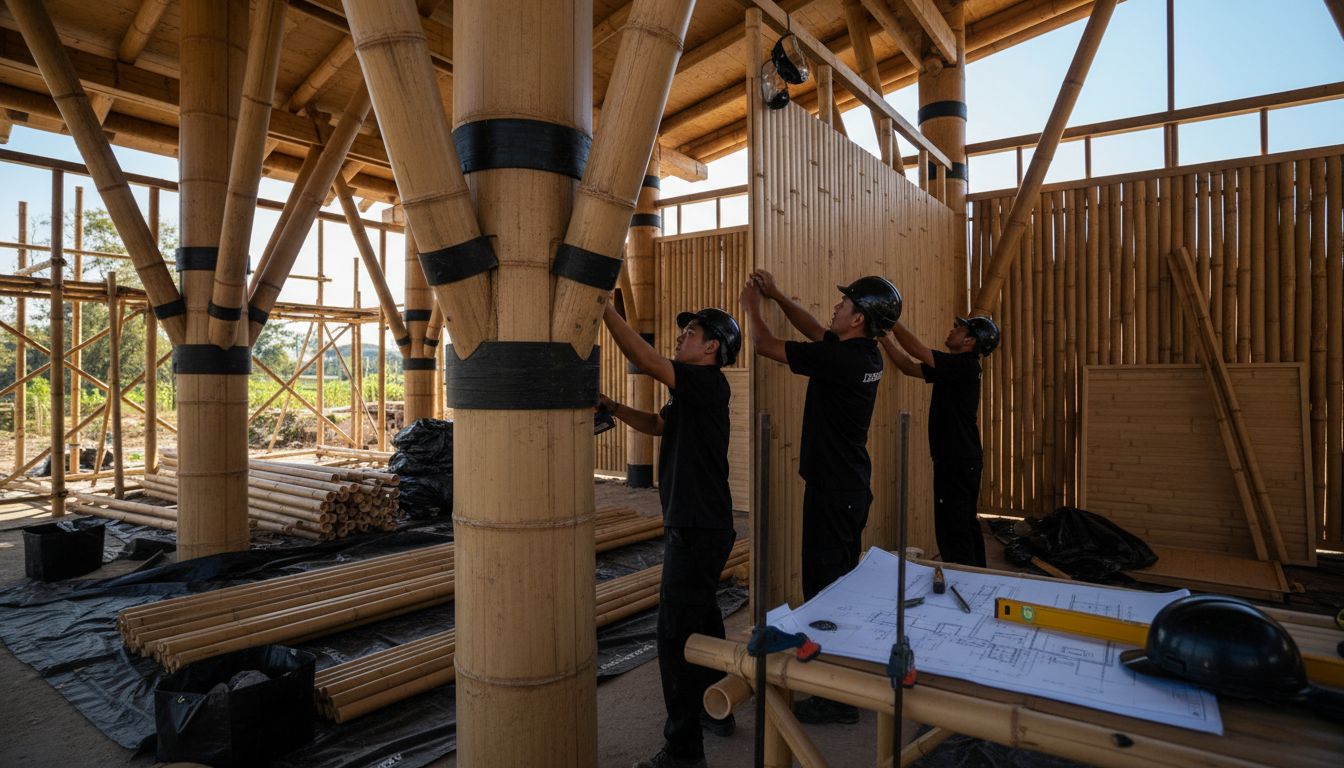
Bamboo represents a revolutionary construction material that offers remarkable structural capabilities far beyond traditional building resources. According to FAO, bamboo can be utilized for virtually every component of a building, from posts and roofs to walls, floors, beams, trusses, and fences. Its versatility makes it an exceptionally valuable alternative to conventional wood and steel.
Structural Strength and Performance
The mechanical properties of bamboo make it an extraordinary construction material. AboutCivil highlights that bamboo exhibits impressive strength characteristics, particularly in tension and compression. Its tensile strength is comparable to mild steel, while maintaining a significantly lighter weight. This unique strength-to-weight ratio enables architects and engineers to design lightweight yet incredibly robust structures.
Key Construction Advantages
Bamboo offers several compelling advantages for construction applications:
Moreover, bamboo’s natural flexibility allows structures to withstand high winds and earthquake conditions, making it particularly valuable in regions prone to environmental challenges. When treated and processed correctly, bamboo-based panels and boards can provide hard, durable surfaces that successfully substitute traditional hardwood products.
For more insights into bamboo’s sustainability and potential uses, explore our comprehensive guide on bamboo wood types and uses.
Bamboo emerges as a groundbreaking construction material with extraordinary environmental and structural advantages. World Economic Forum highlights its remarkable carbon sequestration potential, with bamboo absorbing approximately 17 tonnes of carbon per hectare annually. This unique characteristic makes it a powerful tool in combating climate change while providing an innovative building solution.
Environmental Sustainability
Green Building Solutions reveals bamboo’s exceptional environmental credentials. The material thrives in diverse global conditions without requiring fertilizers, pesticides, or intensive irrigation. Incredibly, bamboo produces 35% more oxygen and absorbs more carbon dioxide compared to equivalent tree mass, significantly enhancing air quality and environmental health.
Key Advantages of Bamboo Construction
Bamboo offers multiple compelling benefits for construction projects:
Beyond its environmental attributes, bamboo provides exceptional structural performance. Its natural strength, lightweight composition, and flexibility make it an ideal material for architects and builders seeking sustainable, resilient construction solutions. By choosing bamboo, construction professionals can simultaneously address environmental concerns and create high-performance building structures.
To gain deeper insights into bamboo’s sustainable potential, explore our guide on understanding bamboo’s eco impact.
Bamboo has revolutionized modern construction with its versatile and innovative applications across multiple building sectors. The Constructor highlights that bamboo is extensively used in critical construction areas including walls, partitions, roofing, and scaffolding. Its unique combination of lightweight structure and exceptional sturdiness makes it an ideal material for diverse architectural requirements.
Structural and Architectural Uses
NACHI reveals bamboo’s remarkable potential in housing components, showcasing its utility in creating doors, roofs, and floors. The material’s high tensile strength and impressive strength-to-weight ratio enable architects and builders to design innovative, resilient structures that challenge traditional construction methodologies.
Key Construction Applications
Bamboo finds extensive application in various construction domains:
The material’s flexibility allows for creative design approaches, particularly in regions prone to seismic activity or challenging environmental conditions. Its natural properties provide excellent resistance to wind loads and structural stress, making it an increasingly preferred choice for sustainable construction projects.
For deeper insights into modern bamboo design principles, check out our overview of modern bamboo design techniques.
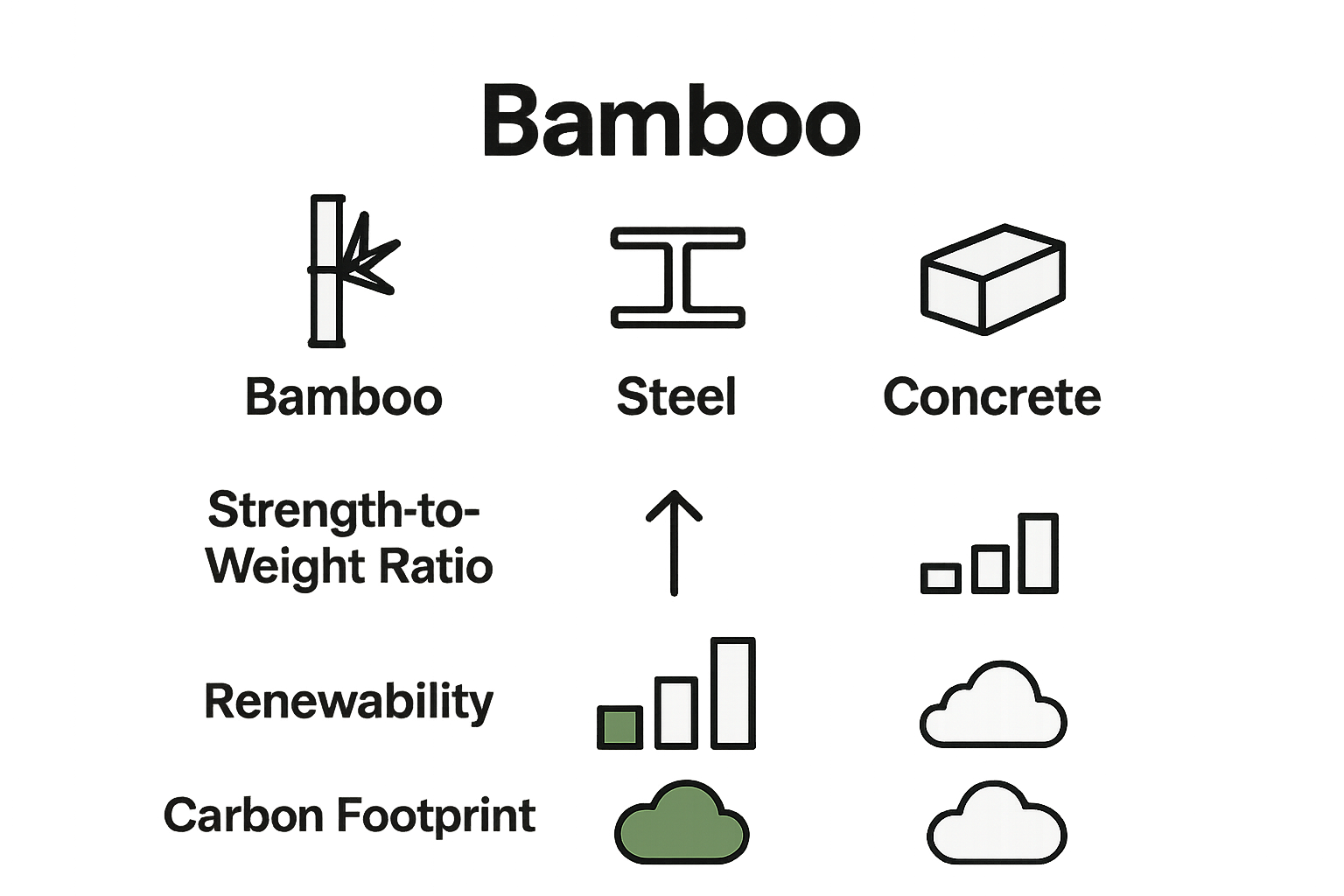
Bamboo stands as a revolutionary alternative to traditional construction materials, challenging long-established building practices with its exceptional performance characteristics. Veterinaria research demonstrates that bamboo exhibits remarkable tensile strength and durability, positioning it as a promising substitute for conventional materials like steel and concrete. Experimental tests reveal that bamboo-reinforced structures can achieve comparable load-bearing capacity and deformation behavior, signaling a potential paradigm shift in construction methodology.
Performance and Environmental Impact
The Constructor highlights bamboo’s extraordinary potential to reduce environmental impact. Notably, bamboo-reinforced structures can diminish embodied carbon by an impressive 60–80% compared to traditional steel-reinforced equivalents, while maintaining service lifespans exceeding 50 years when properly engineered.
Comparative Advantages
Key differences between bamboo and traditional materials include:
Traditional materials like concrete and steel require extensive processing and emit substantial carbon during production, whereas bamboo offers a naturally sustainable alternative. Its remarkable strength-to-weight ratio, combined with exceptional environmental credentials, positions bamboo as a transformative material in modern construction practices.
For a comprehensive exploration of bamboo’s advantages, explore our complete guide to bamboo versus traditional wood.
Sustainable Construction Solutions
Human Research Publications reveals bamboo’s remarkable potential as a sustainable construction material, highlighting its ability to reduce reliance on scarce resources like steel while promoting environmental conservation. Its rapid growth cycle and renewability position bamboo as a critical alternative in responsible building practices, addressing both ecological and economic considerations.
Safety and Structural Performance
Bamboo demonstrates exceptional safety characteristics in construction environments. According to research from IISTE, bamboo structures offer remarkable resilience, particularly in seismic zones. The material’s lightweight and flexible composition allows it to absorb energy during potential earthquake events, significantly reducing potential structural damage and enhancing overall building safety.
Cost and Economic Advantages
Key economic factors of bamboo construction include:
Compared to conventional construction materials like mild steel, bamboo provides a cost-effective alternative without compromising structural integrity. Its natural properties enable builders to create durable, resilient structures at a fraction of traditional material expenses, making sustainable construction more accessible and economically viable.
To explore more about sustainable home solutions, check out our guide on reasons to choose bamboo for sustainability.
Building with bamboo offers unmatched strength, flexibility, and eco-friendliness as detailed in the Complete Guide to Using Bamboo in Construction. If you want to bring those same benefits into your everyday spaces, Cozee Bay delivers premium bamboo products crafted for both home and commercial use. Our bamboo paper towel dispensers and organizers combine sustainability with stylish functionality, making it easy to create greener environments without sacrificing quality or design.

Explore how bamboo’s extraordinary qualities can transform your space today. Don’t wait to reduce environmental impact with our handcrafted bamboo solutions designed to suit any setting like restaurants, schools, or senior living centers. Get started now by visiting Cozee Bay and learn more about our full range of eco-friendly bamboo products. Experience the balance of durability, elegance, and sustainability in one place.
Bamboo offers exceptional structural advantages due to its impressive strength characteristics, particularly in tension and compression. Its tensile strength is comparable to mild steel while being significantly lighter, which allows for designing lightweight yet robust structures.
Bamboo exhibits lower carbon footprints and a rapid renewable growth cycle compared to traditional materials. It can achieve comparable load-bearing capacities while reducing embodied carbon by 60–80% compared to steel-reinforced concrete.
Bamboo is a sustainable and rapidly renewable resource that does not require fertilizers or pesticides, making it environmentally friendly. It produces 35% more oxygen and absorbs significant amounts of carbon dioxide, considerably improving air quality.
Bamboo can be utilized in various construction applications, including residential building components, roofing structures, flooring solutions, scaffolding, and decorative architectural elements, thanks to its flexibility and strength.
Comments will be approved before showing up.